
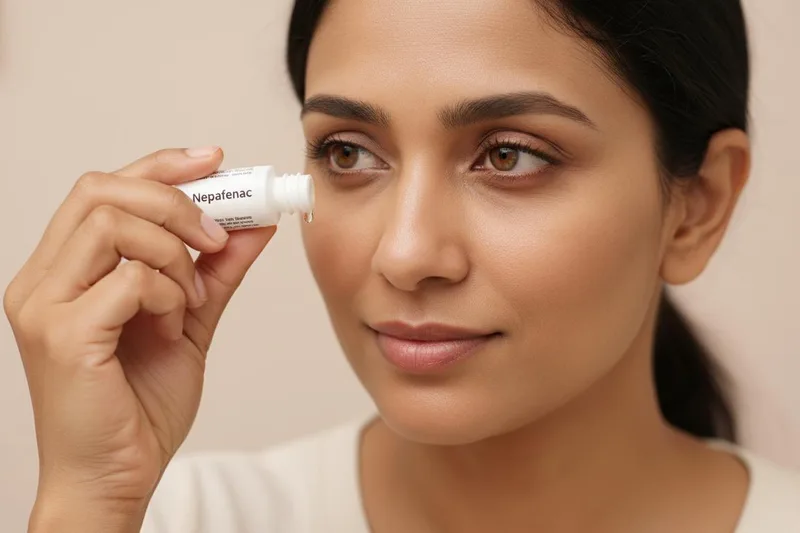
Are you scheduled to have an eye surgery, such as cataract surgery? Or have you recently had one? When that happens, it is normal to feel a little pain, redness, and discomfort in the eye. So, Nepafenac is an eye drop that doctors prescribe and use frequently. When you receive this medicine, you may have many questions in your mind about how to use it and what precautions you need to take. Let's talk about all of that simply and clearly today.
What exactly is Nepafenac?
Simply put, Nepafenac is a medicine that is given to control pain and inflammation after eye surgery. Just like we take painkillers, this is a painkiller that is applied to the eye itself. It belongs to a group of drugs called NSAID (Nonsteroidal Anti-inflammatory Drug). To be precise, it reduces the production of chemicals inside the eye that cause pain and inflammation. Therefore, the discomfort you feel after surgery decreases quickly. You can see this medicine under various brand names like Nevanac in Sri Lanka.
Things you need to tell your doctor before using this medicine
It is very important for your doctor to have a complete understanding of your health before prescribing this medication, as some medical conditions require more caution when using this medication.
| If you have these conditions... | Why is it important to inform the doctor? |
|---|---|
| If you have bleeding disorders or are taking blood-thinning medications (such as Warfarin) | This medication may slightly increase the risk of bleeding, so it's important for your doctor to be aware of this. |
| Diabetes (Diabetes Mellitus) | The healing process of the eyes of people with diabetes can sometimes be a little slower. The doctor pays special attention to this. |
| Asthma or other respiratory diseases | NSAID medications may be contraindicated in some asthma patients, so it is important to inform them about this in advance. |
| Dry eyes or other eye diseases | If the doctor is aware of a pre-existing eye condition, it becomes easier to plan treatment. |
| Allergy to Nepafenac, Aspirin or other NSAID medications | If you have had a previous allergic reaction, you should avoid using that medicine again. That's why this is very important. |
| Being pregnant or trying to get pregnant | You should always consult your doctor before using any medication during pregnancy. |
| Being a breastfeeding mother | Inform your doctor to confirm whether the ingredients of the medicine pass to the baby through breast milk or not. |
How do you use this eye drop correctly?
This is the most important part. To get the full benefit of the medicine, you need to apply it exactly to the eye.
1. Wash your hands: Wash your hands thoroughly with soap and water before and after applying the medicine. This can help prevent germs from getting into your eyes.
2. Shake the bottle: Shake the medicine bottle well before use. Some medicines can settle to the bottom of the bottle.
3. Correct posture: While sitting in a chair or lying down in bed, tilt your head back slightly.
4. Create a pouch: Gently pull down your lower eyelid with your index finger. This will create a small pouch between your eyelid and your eye.
5. Apply the medicine: Hold the bottle in your other hand and drop the prescribed number of drops (usually one drop) into the bag. Very important: Do not let the dropper tip touch your eyes, fingers, or anywhere else. Doing so can introduce germs into the bottle.
6. Close your eyes: After applying the medicine, slowly close your eyes and wait for about a minute. Do not close your eyes tightly or rub them. Closing your eyes slowly will help the medicine spread throughout your eyes.
7. Blurred vision: Your vision may be slightly blurred for a few minutes after applying the medicine. This is normal, so don't worry about it.
8. Other medications: If you have been prescribed other eye drops, you should wait at least 5 minutes after using one medication before using the other medication.
If you wear contact lenses, remember this: Do not wear contact lenses while using this medicine. Consult your doctor about this.
What if I take too much medicine or don't take it on time?
If you accidentally put too much medicine in your eye, don't panic. But if you feel unwell, immediately call the National Poisons Information Centre at the Colombo National Hospital . Or go to the Emergency Treatment Unit (ETU) of the nearest hospital.
If you miss a dose, take it as soon as you remember. But if it is almost time for your next dose, skip the missed dose and take the next dose at the scheduled time. Never take two doses at once to make up for a forgotten dose.
What are the possible side effects of this medicine?
Like any medication, some people may experience minor side effects. But most people don't. The important thing is to know what those side effects are and if they occur, see a doctor immediately.
| Type of side effect | Characteristics |
|---|---|
| If you experience these symptoms, see a doctor immediately. | |
| Allergic reactions | Skin rash, itching, swelling of the lips, tongue, face or throat. |
| Bleeding in the eye | Red bloodshot eyes, the white part of the eye, the iris, or the middle part of the eye. |
| Vision changes | Blurred vision, seeing halos around lights, loss of vision. |
| New or increasing difficulties | If you experience increased eye pain, redness, inflammation, or discharge from the eye. |
| Symptoms that are usually not serious, but should be reported to the doctor if they persist | |
| Temporary blurring | Slight blurring of vision immediately after applying the medicine. |
| A slight inflammation of the eye | A slight burning or discomfort at the injection site. |
| Increased tears | Tears flow from the eyes after applying the medicine. |
How should I store the medicine?
To maintain the quality of the medicine, it must be stored correctly.
- Keep out of reach of children: Keep out of reach of small children and pets.
- Temperature: Store between 2 and 25 degrees Celsius (36-77 Fahrenheit). That means normal room temperature is fine. Do not store in extreme heat, sunlight, or in the freezer compartment of the refrigerator.
- Expiration date: If the expiration date on the bottle has passed, do not use the medicine. Throw away any remaining medicine.
Take-Home Message
- This medicine should only be used as prescribed by your doctor. Do not use it for longer than prescribed or stop taking it halfway.
- Be sure to tell your doctor about any other medications you are taking (blood thinners, other eye drops) and any medical conditions you have (diabetes, asthma).
- Wash your hands thoroughly before applying the eye drops. Do not let the tip of the bottle touch your eye or anywhere else.
- If you experience bleeding in the eye, severe pain, or allergic symptoms (such as facial swelling), see your doctor immediately.
- This medicine is for you only. Do not let anyone else use your medicine for any reason.





💬 Comments (0)
No comments yet. Be the first to share your thoughts here.
Add Your Comment