
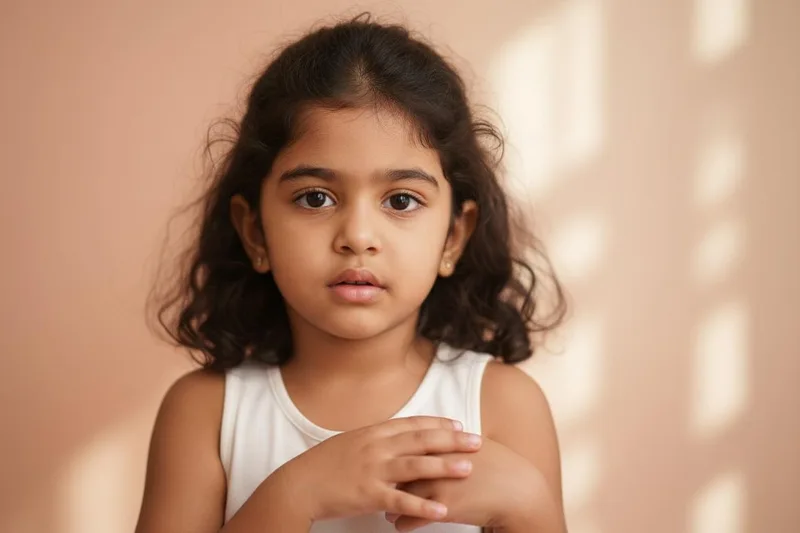
Does your child sneeze often? Does he get red bumps on his body? Or does something strange happen when he eats certain foods? These things could be signs of an allergy. Many parents are not aware of this. So today we will talk about allergies , that is, allergies, in simple terms.
What is an allergy?
Simply put, an allergy is an abnormal response by our body's immune system . This response occurs to things that are usually harmless to us. We call these things 'allergens' . When our child comes into contact with these allergens, the body thinks, "Oh, this is a big enemy." That's when the symptoms of an allergy appear. Sometimes these symptoms are just a minor annoyance, but sometimes they can be severe enough to be life-threatening. For example, some foods, dust, pollen, and some medications can be allergens. Often, children and adults alike can have an allergy.
How does this allergy develop?
Okay, now let's look at how an allergy develops. Imagine that your child is allergic to something. As we mentioned earlier, that thing is called an allergen. So, when the child is exposed to this allergen, whether it enters the body or comes into contact with the skin, the child's immune system mistakenly thinks, "This is something harmful to the body." Then this immune system overreacts. As if getting ready for a fight.
To protect the body, the immune system produces a special protein called 'Immunoglobulin E' or `(IgE)' antibodies. These `(IgE)' antibodies cause some cells to release chemicals like 'Histamine' into the blood. These chemicals are what fight the "invader".
The release of these chemicals is what causes an allergic reaction . These reactions can affect areas like the eyes, nose, throat, lungs, skin, and intestines. If you are exposed to the same allergen again, the allergic reaction will occur again. Do you understand?
What are the most common types of allergies in children?
Children can develop allergies to many different things. Let's look at some of the main types.
Airborne Allergies
Some children can develop allergies to even the smallest things in the air. We call these airborne allergies. These can be caused by:
- Dust mites: These are tiny creatures that are invisible to the naked eye. They live in homes with dust. They are common in places like mattresses, pillows, and sofas.
- Pollen: Some people are allergic to pollen from trees and flowers. Some people also call this 'Hay Fever' . This is more common in the spring.
- Types of mold: Molds that grow in damp places, such as bathrooms and walls.
- Pets: Some children are also allergic to the fur, saliva, and dead skin cells (what we call 'animal dander') of animals like dogs and cats.
- Cockroaches: Cockroaches and their droppings are a major allergen.
Food Allergies
Food allergies are very common among young children. Sometimes they can be quite dangerous. The foods that cause the most allergies in children are:
- Cow's milk or cow's milk protein: This is common for young children.
- Eggs
- Types of fish (Fish)
- Shellfish: Like shrimp, crab, and squid.
- Peanuts and tree nuts: Like cashews, almonds, and walnuts.
- Soy
- Wheat
- Sesame
Important: It is not a good idea to give even a small amount of that food to a child with a food allergy. So, you need to be very careful about this. Sometimes even a very small amount can cause a severe reaction.
Other Common Allergies
Children can also be allergic to some other things.
- Insect sting allergy: An allergy to animal stings such as wasps, hornets, and bees. This can be very severe for some people.
- Medicines: Some medications, such as antibiotics , as well as some over-the-counter painkillers, can cause allergies.
- Chemicals: Some cosmetics and laundry detergents can cause rashes (we call them 'hives') in some children. This is because the child's body reacts to the chemicals in those products. Some children are also allergic to certain dyes, household cleaners, and pesticides.
Why do young children develop these allergies?
Many mothers have a question: "Why does only our child develop allergies?" In fact, the main reason for allergies is hereditary . That is, children can inherit the tendency to develop allergies from their parents through genes. For example, if either the mother or the father has asthma, hay fever, or eczema, the child is more likely to develop allergies.
However, it is not certain that children will develop allergies just because their parents have allergies. Also, a child does not inherit a specific allergy, only the possibility of developing allergies. Some children can develop allergies even if no one in the family has allergies.
The other thing is that a child who is allergic to one thing is more likely to develop allergies to other things as well.
Some children can also experience what is called 'cross-reactions' . This may sound a bit complicated, but it's simple: For example, a child who is allergic to birch pollen may have allergic symptoms when they eat an apple. This is because a protein in the apple is similar to a protein in the pollen. For reasons that are not yet clear, people who are allergic to latex (found in rubber gloves and some hospital equipment) are more likely to have allergies to foods such as kiwi, chestnuts, avocados, and bananas.
How do you accurately diagnose an allergy? (Diagnosis)
If your child has cold-like symptoms (frequent sneezing, runny nose, itchy eyes) for more than a week or two, or if they seem to get a "cold" at the same time every year, be sure to talk to a doctor. The doctor can then suspect an allergy and prescribe the necessary medication. Alternatively, they can refer you to a doctor who specializes in allergies, an 'allergist' , to do allergy tests.
To find the cause of an allergy, allergists usually do skin tests on common environmental substances and foods. This involves placing a drop of the allergen on a small area of the skin and lightly scratching it. If the area turns red and swells up like a mosquito bite within 15-20 minutes, it means that you may be allergic to that substance. However, for children who have skin conditions, take certain medications, or are very sensitive to a particular allergen, blood tests may be done. This blood test measures the levels of the `(IgE)` antibodies we talked about earlier.
But one thing to remember. Even if a test shows that there is an allergy, in order to accurately diagnose a child with an allergy , there must be symptoms. Simply put, imagine a small child who tests positive for dust mites and sneezes frequently when he plays on the floor. That is when we say that the child is allergic to dust mites.
How to treat allergies? (Treatment)
There is currently no way to completely cure allergies. However, the symptoms can be controlled. The best thing to do is to stay as far away from the things that cause allergies as possible, that is, allergens. We call this 'Avoidance' . As parents, you should always talk to your child about this allergy and the reactions that can occur if those things enter the body or come into contact with it.
It is very important to clearly tell everyone who cares for your child (kindergarten staff, teachers, family, parents of your child's friends) about your child's allergy.
If avoiding environmental allergens is not possible or does not help, doctors may prescribe medications. For example, antihistamines , eye drops, and nasal sprays. Many of these can be purchased over-the-counter at a pharmacy. However, it is best to use them as directed by your doctor.
In some cases, doctors recommend allergy shots , also known as immunotherapy . This involves gradually exposing a person to an allergen in a controlled manner. This can reduce the immune system's response to that allergen. However, these are only useful for allergies caused by things like dust, mold, pollen, animals, and insect stings. This method is not usually used for food allergies.
Okay, then remember this too! (Take-Home Message)
Let me remind you of the most important points from what we talked about today:
- Allergies are not something to be taken lightly. Sometimes, severe reactions like anaphylaxis can occur, which can be life-threatening.
- If you suspect your child has an allergy, be sure to seek medical advice. Do not self-medicate.
- Once you have identified the exact cause of an allergy, try to keep your child as far away from that allergen as possible . Adjust the home environment accordingly.
- Inform everyone at school, in class, at relatives' houses, and at friends' houses about your child's allergy.
- Give the medicine exactly as prescribed by the doctor, on time. Do not stop taking the medicine until the doctor tells you to.
- If you have a child with food allergies, read food labels carefully. Be careful of foods that have warnings like "May contain." Don't give suspicious foods.
- If your child has been prescribed an epinephrine auto-injector (e.g., EpiPen) by a doctor for severe allergic reactions or anaphylaxis, make sure you, your child (depending on age), and other caregivers know exactly how to use it. Keep it with your child at all times.
Remember, with proper management and awareness, you can help your child live a normal, healthy, and happy life even with allergies. Don't worry, with the support of doctors, this condition can be well controlled.
` Childhood allergies, allergies, food allergies, dust allergies, allergy symptoms, allergy treatment, skin allergies


💬 Comments (0)
No comments yet. Be the first to share your thoughts here.
Add Your Comment