
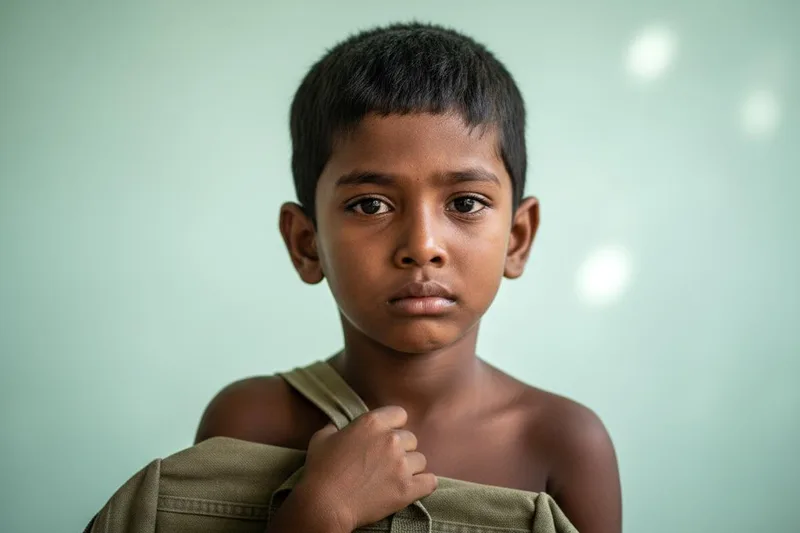
Does your child not want to go to school? Is he afraid to get on the bus or go to the playground? Sometimes this could be because he is being bullied . This is not a small thing. This bullying can cause deep emotional scars in a child. In some extreme cases, it can escalate to acts of violence, destruction of property, and serious injury to a child. Therefore, if your child is being bullied, it is very important to help stop it.
What exactly is 'bullying'?
First, let's understand what bullying is. Sometimes little kids tease each other, right? If it's a little prank from a sibling or a friend, and it's fun for both of them, there's no big deal. That's normal.
But, if this joke continues to hurt others, causing trouble , that's where the problem begins. That's what we call 'bullying'.
Simply put, bullying is when a child of the same age intentionally and repeatedly hurts another child physically, verbally, or mentally. The child who bullies here believes that he or she has a power imbalance over the other child. This can include pushing, hitting, scolding, threatening, and teasing. Sometimes this includes taking money or other things by force. Other children bully others by ostracizing them and spreading false rumors.
Imagine, how would your child feel if he was being bullied like this every day at school by another child or a group?
Another serious form of bullying today is cyberbullying . It means embarrassing and hurting others through social media, texting, and WhatsApp messages. This is just as serious as other forms of bullying.
This bullying should not be taken lightly . It is wrong to think, "That's just how kids are, we just need to put up with it." Because this has a huge impact on children's self-esteem and sense of security. In some extreme cases, there have been reports in the world that this bullying has led children to commit suicide and commit terrible things like school shootings. Therefore, this is a very serious matter.
Why do children bully others like this?
Most of the time, kids bully others for a variety of reasons. Some kids think they can feel more important, popular, or in control, and they pick on a kid who they think is mentally or physically weaker than them, or who looks or acts a little differently. The kid who bullies isn't always bigger or stronger than the other kid.
Sometimes, children bully others because they have been treated the same way. If everyone in their family or environment is always yelling and swearing at each other, they may think that this is normal. You see, even on some TV shows, it is normal to treat others badly, to marginalize others, to make fun of others for their looks or lack of talent. This also affects them.
How do you know if your child is being bullied?
Unless your child tells you directly, or unless there are visible signs of injury, it can be difficult to know for sure if he or she is being bullied.
However, there are some warning signs that we, as parents, can look out for:
- If you notice a change in your child's behavior , or if they just seem anxious .
- If he doesn't eat properly, doesn't sleep well , or doesn't want to do things he usually enjoys.
- If you seem moodier than before, or if you get easily offended by even the smallest things .
- If certain things get in the way (for example, not wanting to ride the school bus, avoiding certain parts of school).
- If you often complain of things like not wanting to go to school, stomach aches, or headaches (especially on school days).
- Books and clothes are often lost or damaged.
- If you see things like being scared or crying in your dreams .
If you suspect something like this, but your child doesn't want to talk about it, try to start the conversation in a slightly indirect way, rather than asking direct questions . Imagine that you saw an incident like this on TV and asked something like, "Son/daughter, what do you think about this?" or "What do you think that child should have done?" Then, you could ask, "Have you ever seen something like this happen?" or "Have you ever had something like this happen to you?" Perhaps you could talk about an experience that you or someone else in your family had at that age.
The most important thing is to make your child understand that if they are being bullied or if they see someone else being bullied, it is important to talk to a trusted adult about it. This could be you, another adult (a teacher, a school counselor, a family friend, or even a sibling).
What can we do as parents?
If your child tells you about bullying, listen calmly . Offer comfort and support . Children often don't want to tell adults about it. They are embarrassed, they feel bad about it, or they are afraid that their parents will be upset, angry, or react in the wrong way.
Sometimes children think it 's their fault . If they had been different, if they had acted differently, this wouldn't have happened. Other times they're afraid that if the bully finds out what they said, they'll bully even more. Some children think their parents don't believe them, or won't do anything about it. Others are afraid that their parents will tell them to "go away," but they're too afraid to do it.
So, first, praise your child for telling you this . Remind them that they are not alone, and that many people experience bullying at some point in their lives. Explain that the child who is bullying is the one who is behaving badly, not your child . Reassure them that you and they will work together to find a solution.
Surveys show that many children and young people say that this bullying happens most often at school . So, tell someone at school (whether it's the principal, school nurse, counselor, or teacher) about the situation. Often, they can pay attention to it and take action to stop it from becoming a problem.
Because bullying can occur in a variety of situations, there is no one-size-fits-all solution . What works in one place may not work in another. The best course of action depends on many factors, including the age of the children involved, the severity of the incident, and the nature of the bullying.
If your child says, "If they find out what I said, they'll hurt me even more," or threatens to hurt you physically, take it seriously . Sometimes talking to the child's parents can be helpful. However, in many cases, it's best to first contact teachers or counselors . If you've tried that and still want to talk to the child's parents, it's best to have the conversation in the presence of a school official, such as a counselor. This will help reduce the risk of unnecessary problems.
Many schools have policies and anti-bullying programs regarding bullying. Also, many countries and our country have laws regarding this. Research the laws in your area. In some cases, if you have serious concerns about your child's safety, you may need to contact legal authorities.
What things do you want to teach your child?
Parents can teach their children how to deal with bullying. Some parents or caregivers may feel like telling their child to "go and hit him." This is understandable, because you feel angry when you see your child suffering, and perhaps you were told to "stand up for yourself" when you were a child. Or you may be afraid that your child will continue to be bullied, so hitting him is the only way to stop him.
However, it is important to teach children not to respond to bullying or to bully back . This can quickly escalate into violence, cause more problems, and even hurt someone. Instead, the best thing to do is to leave the situation, socialize with other people, and tell an adult .
Here are some other ways to help children turn things around and feel better:
- Tell an adult: School teachers, the principal, parents, and cafeteria workers can help stop this bullying.
- Avoid the bully and use the 'buddy system': Use a different bathroom if the bully is nearby, don't go to your locker when no one is around. Don't be alone with the bully, stay with someone . On the bus, in the hallway, at the playground - wherever the bully is likely to be, get a buddy. If your friend needs help, do the same.
- Control your anger: It's normal to get angry at a bully, but that's what bullies like to do. It gives them a sense of power. Practice not crying, not blushing, and not getting upset . This takes a lot of practice, but it's a good way to avoid being noticed by a bully. Some children find that 'cool down strategies' like counting to 10, writing down the angry words on a piece of paper, taking deep breaths, and walking away are helpful. Sometimes it's best to teach your child to keep a calm face until there's no danger (smiling or smirking can only irritate the bully even more).
- Be brave, walk away, and ignore the bully: Firmly and clearly tell the bully to "stop" and walk away. Practice ways to ignore hurtful comments, such as pretending not to be interested or texting someone on your phone. Ignoring the bully shows that you don't care. Over time, the bully will get tired of bothering you.
- Talk about it: Talk to someone you trust. It could be a school guidance counselor, a teacher, a sibling, or a friend. They can give you good advice. Even if they can't fix the situation, it can help you feel a little less alone.
How to build a child's mental strength (confidence)?
Bullying can undermine a child's self-confidence . To help rebuild it, encourage your child to spend time with positive influences . Participating in clubs, sports, or other activities they enjoy can help build mental strength and friendships.
Listen carefully when your child talks about difficult times, and encourage them to tell you about the good things about their day, and listen carefully to those things. This will help everyone develop a habit of open communication . Always let them know that you trust them and that you will do everything you can to help them through any challenges.
Remember, creating a home environment where children feel loved, safe, and accepted is a great strength for them to face these kinds of problems.
Finally, the most important thing to remember...
Bullying can have a very negative impact on children's lives. It should never be dismissed as something normal .
- Talk openly with your child. Encourage him to trust you if he is being bullied.
- Listen calmly to what the child says, support him, and make him understand that he is not wrong .
- Work together with the school. Teachers and counselors will help solve these problems.
- Teach your child how to deal with bullying , but never resort to violence.
- Help build your child's mental strength and self-confidence .
While doing these things, the most important thing is to create an environment at home where your child feels loved and safe . This will give them the strength to face any problem.
` bullying, harassment, children, school, parents, mental health, cyberbullying


💬 Comments (0)
No comments yet. Be the first to share your thoughts here.
Add Your Comment