
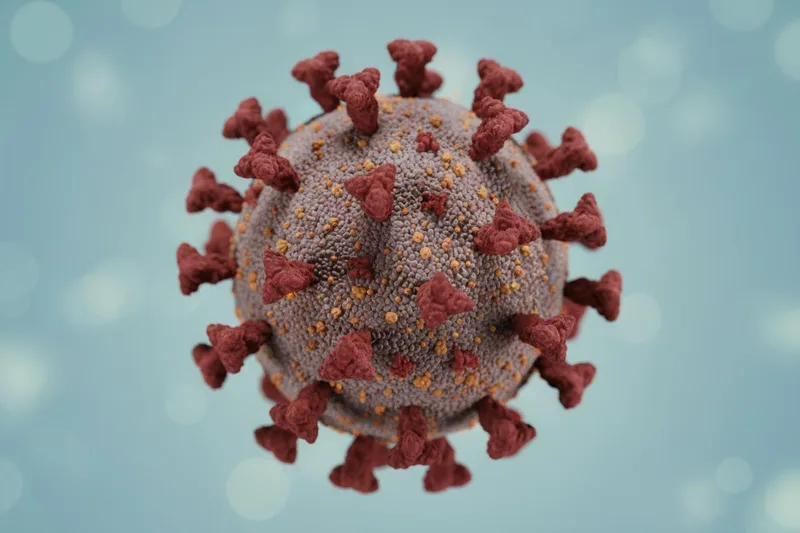
This Covid-19 `(COVID-19)` pandemic has been around for a while now, hasn't it? At first, we were all very scared, because so many things were new. But by now, we have become somewhat accustomed to living with this virus. However, some people still have questions about it, and some things may not be clear. So, today we will talk about some important things like what this Covid-19 is, how to protect yourself from it, and what to do if you get sick. Just like talking to a friend, simply.
What is COVID-19? Have you heard of it?
Simply put, it was in late 2019 that this new type of coronavirus, which doctors call `(SARS-CoV-2)` , began to cause flu-like symptoms in people. The disease caused by this virus is what we all know as `Covid-19` . This is a virus that spreads very quickly and easily from person to person. That is why people all over the world have felt its effects.
Now look, the most important thing in this is that everyone over 6 months of age must have their Covid-19 vaccine `(vaccine)` renewed, that is, kept `(up to date)` . Because, with the current updated vaccine, we get good protection from the most common virus strains in society. So don't forget that, okay?
So, what is a pandemic? We hear this word all the time.
Yes, we heard this word a lot during the Covid period, didn't we? Imagine, if in a certain village or city, more people than we expected get the same disease, we call it an `Epidemic` . Now, if this disease is not limited to one country, but spreads to many countries, or even the whole world, that is what is called a `Pandemic` . Just like Covid-19 has spread all over the world.
These pandemics can sometimes have waves . That is, periods when more people are infected at once. If the virus is highly contagious, it is more likely to occur when infected people gather in one place, such as when they are not wearing masks or vaccinated. It is also possible that the virus mutates into a less contagious, more dangerous form.
Sometimes, a disease can be endemic . That is, the disease has always been present in a certain community or limited area, but does not suddenly spread in large waves. An endemic disease spreads in a stable, predictable way. For example, diseases like the common cold and flu are endemic infections. It now seems that Covid-19 may also be endemic. The World Health Organization (WHO) declared Covid-19 a global public health emergency in May 2023. That means there is no longer as much fear as before, but we need to be careful.
What are the symptoms of COVID-19?
Now you may be wondering, 'What are the symptoms of COVID?' Let me ask you this... COVID-19 can cause a variety of symptoms. Some people may experience them more severely, while others may experience them less severely. The most common symptoms are fever, cough, shortness of breath, and stomach problems (like stomach cramps, nausea, vomiting, and diarrhea) .
In addition, some people also experience things like:
- Headache
- Body aches (like after exercise)
- Loss of taste and smell (this is something many people have experienced)
- Skin damage
- Symptoms of a cold (like a runny nose, itchy throat)
Young babies can be a little different . They may be irritable, have a poor appetite, or even just have a fever. So if a young child is behaving in an unusual way, you should be concerned.
The important thing is that some people do not show any symptoms even if they are infected with the virus. They can unknowingly spread the virus to others.
What is MIS-C? Is it something different for children?
Yes, this is especially true for children. Some children who have COVID-19, and sometimes even weeks after they have recovered, may develop new symptoms due to inflammation throughout their body. This is what doctors call Multisystem Inflammatory Syndrome in Children (MIS-C) .
Imagine your son/daughter got better after getting COVID, but two or three weeks later suddenly develops a fever, complains of stomach ache, and body aches... Then you have to think about `(MIS-C)`. This can cause fever, make the child look very sick, and can also affect various body systems, such as the heart, blood cells, blood vessels, skin, eyes, and gastrointestinal system.
The most common characteristics of `(MIS-C)` are:
- Stomach ache
- Diarrhea
- Vomiting
- Skin lesions
- Red eyes (like when you don't get enough sleep)
- Dizziness
`(MIS-C)` is a serious condition that can cause organ damage if not treated quickly. But, the good news is that this is very rare , and most children recover completely after receiving medical treatment. So don't panic, but see a doctor right away if you notice any of these symptoms.
So what is this "Long COVID"?
Ah... this is something that many people are talking about. Some people may have symptoms for a long time (usually more than a month) after they recover from COVID-19. This condition is also called long-term COVID or 'post-COVID-19 condition' .
Sometimes these symptoms can start right away, but surprisingly, some people can develop them later, even after they have fully recovered from the illness, or even in people who have been infected without any symptoms.
Here are some of the symptoms that can be seen in ``Long COVID``:
- Feeling tired all the time (no matter how much sleep you get, it doesn't seem like enough)
- Headache
- Insomnia or sleep problems
- Difficulty breathing (even with slight exertion)
- Difficulty concentrating (some people also call this 'brain fog' , as if your head is covered in fog)
- Muscle and joint pain
- Heart palpitations (fast or irregular heartbeat)
- Changes in taste and/or smell (some things taste different)
This is really psychological for some people, because they think, "Why am I still not feeling well?" But this is a real condition, and doctors are still researching this.
Wouldn't it be good to know how Covid-19 spreads?
Absolutely! Knowing how the disease spreads makes it easier for us to find ways to protect ourselves from it. The `(SARS-CoV-2)` virus spreads mostly through the air . Just like smoke, when someone smokes a cigarette, the smoke also spreads to those around them.
It can be spread from infected people, that is, those with symptoms, to others, even those without symptoms . When an infected person breathes, talks, sings, laughs, sneezes, or coughs, tiny, invisible virus particles (droplets and aerosols) are released into the air. These can enter the nose, mouth, or eyes of another person, or can be inhaled.
Sometimes these particles can stay in the air for minutes to hours, traveling in air currents. However, the greatest risk is when people are close to each other, spend a lot of time together, gather indoors (i.e., inside homes, offices), and the indoor space seems to have poor air circulation . That's why it's important to keep windows and doors open.
Another way is that people can get infected by touching a surface that has the virus on it (for example, a doorknob, a table) and then touching their nose, mouth, or eyes. However, it is said that this way of spreading is much less likely than through the air .
Doctors are still looking into other ways the virus can spread. The virus has been found in things like feces, tears, and semen, but it has not yet been confirmed that it can be spread through them. It is not spread through food or water . Rarely, it has been spread from people to animals, but the risk of the virus spreading from pets to people seems to be very low. The risk of the virus being transmitted from an infected pregnant mother to her baby in the womb is also low.
Is COVID-19 dangerous for children? As parents, we need to be aware of this.
This is a question that many parents have. In fact, children are just as likely to get the virus as adults. But most children develop mild symptoms, sometimes without any symptoms at all . That's comforting. However, some children develop more severe symptoms (like the `(MIS-C)` condition we talked about earlier), and sadly, some children have died from COVID-19. So it's not something to take lightly.
COVID-19 can sometimes lead to a condition called myocarditis, which is an inflammation of the heart muscle. In children, the most common symptoms are fatigue, shortness of breath, chest pain, or abdominal pain . Most children recover completely from myocarditis, but sometimes it can be more serious and cause long-term damage to the heart.
Another thing is that doctors have noticed that during this pandemic, especially after the outbreak of COVID-19, a higher number of children than usual have been diagnosed with diabetes mellitus . There has also been a corresponding increase in the number of cases of POTS (Postural Orthostatic Tachycardia Syndrome) , a condition in which the heart rate becomes abnormally fast when standing. The reasons for this association are not yet fully understood, but more research is being done to investigate this.
How is COVID-19 treated if you get sick?
Okay, now let's look at what to do if you get COVID-19. Most people with mild symptoms, including children, don't need any special treatment . They usually:
- To have a good rest
- Drinking more fluids (like water, porridge, fruit juice)
- If you have a fever, take fever-reducing medication (as directed by your doctor).
These things make them feel good.
However, some children who are at higher risk of becoming seriously ill with COVID-19 (for example, children with other chronic illnesses) may be given antiviral medicines to prevent them from becoming very ill and needing to be hospitalized. These should be prescribed by a doctor.
Some people with severe symptoms may need hospital treatment, possibly in an intensive care unit (ICU) . There, doctors can monitor them closely, give them oxygen if needed, give them IV fluids , and treat any complications. Rarely, antiviral drugs or steroids may be given. People who have severe difficulty breathing may need to be connected to a breathing machine (called a ventilator ).
What should I do if my child has symptoms of COVID-19? What should I do without panicking?
This is very important. If your child has symptoms of COVID-19, the ``MIS-C'' we talked about earlier, or just doesn't feel well or is behaving in an unusual way, don't panic, and definitely talk to your family doctor or pediatrician .
Tell the doctor if your child has recently been around someone with COVID-19, or if they live in or have traveled to an area where the disease is widespread. The doctor can then decide if your child should:
- Do I need to get tested for the infection (`(COVID-19 test)`)?
- Can I treat it at home?
- Do you want to come see the doctor?
- Can I get advice over a video call or through a telehealth service?
If your child has any of the following symptoms, take them to the hospital or call emergency services immediately. These could be signs of a serious condition:
- Difficulty breathing (rapid breathing, chest tightness when breathing)
- Severe stomach ache
- Chest pain or pressure
- Confused and unable to understand what is being said (not speaking in a way that is appropriate for age, impaired memory)
- Difficulty staying awake (very sleepy)
- If your lips or face appear blue
It is very important to pay attention to these symptoms.
What else do I need to know to stay safe from COVID? (Prevention methods)
It's always good to do these simple things to stay safe from any germ, not just COVID-19. Making these a part of our daily routine is a big deal.
- Wash your hands thoroughly and often . Rub your hands together with soap and water for at least 20 seconds. If soap and water are not available, use a hand sanitizer that contains at least 60% alcohol.
- Avoid people who look sick, have a cough, or have a cold as much as possible.
- Keep frequently touched objects (such as doorknobs, counters, tables, phones, light switches) clean by wiping them with disinfectant liquid at least once a day, if possible.
- When coughing or sneezing, cover your mouth and nose with a tissue or the inside of your elbow.
- It is still a good practice to wear a face mask when going to crowded, poorly ventilated areas.
Where can I find more information and the latest information about COVID-19?
Information is constantly changing with pandemics like this. Therefore, it is important to get information from reliable sources. You can check the website of the US Centers for Disease Control and Prevention (CDC) and the website of the World Health Organization (WHO) . Also, pay attention to the announcements issued by the Ministry of Health in your country.
The most important things we should take home from this story
Well, we've talked a lot about COVID-19, haven't we? Finally, the most important thing I want to tell you is that COVID-19 is something that can still be among us. So the important thing is not to panic, but to act wisely.
Remember:
- Getting vaccinated correctly and on time is very important. It can protect you, your family, and society.
- Be aware of symptoms . If you notice anything unusual, seek medical advice.
- Be especially concerned about the safety of children . Be aware of their symptoms and conditions such as `(MIS-C)`.
- Don't forget about cleanliness . Simple things like washing your hands can provide great protection.
By following these things, we can stay healthy and protected from not only COVID-19, but also many other diseases. If you have any other questions, never be afraid to talk to a doctor.
` [Covid-19, COVID-19, pandemic, symptoms, children's health, vaccination, prevention, health tips]


💬 Comments (0)
No comments yet. Be the first to share your thoughts here.
Add Your Comment