
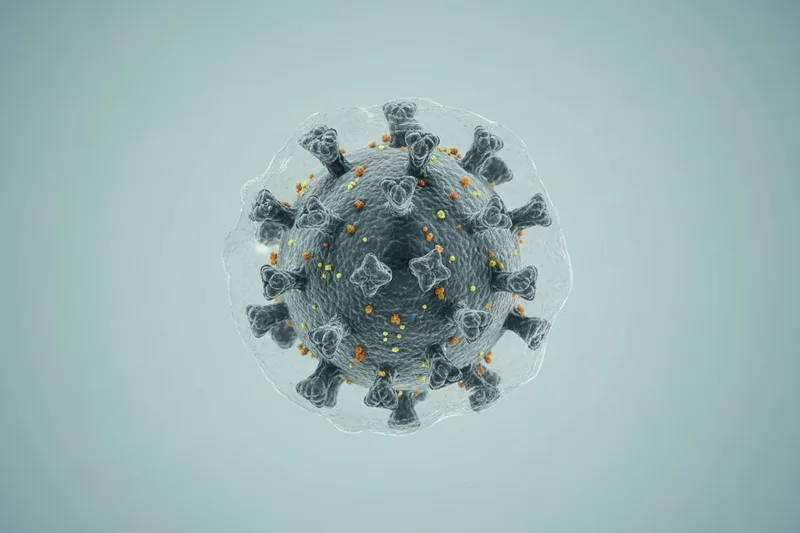
Today we are going to talk about a virus that is common among many people, but can sometimes be serious. This is the cytomegalovirus, or `CMV` for short. You may not have heard of this name. But we are all likely to be infected with this virus at some point in our lives.
What is `CMV` `(Cytomegalovirus)`? Is it really dangerous?
Simply put, this virus called `CMV` is closely related to the virus that causes chickenpox, as well as the virus that causes `mononucleosis` (mono). This `CMV` infection is very common. In fact, most of us will get it at some point in our lives.
The best part is that most people who are infected with CMV do not show any symptoms. Or, if they do, they only have a few mild symptoms. Even if a healthy child gets a CMV infection, it is rarely serious. If any symptoms do occur, they are usually very mild and get better after a while.
But there is a small risk here. In particular, if the mother is infected with this virus during pregnancy, it can cause problems for the baby in the womb. Also, CMV can be a problem for people with weak immune systems.
What are the symptoms if a baby in the womb is infected with CMV?
Now, if the mother contracts the CMV virus in the womb, that is, if a congenital CMV infection occurs, the symptoms can come in a variety of forms. Most of the time, babies infected in this way do not show any symptoms after birth. However, some babies may experience the following:
- Can be born prematurely.
- The baby may be born with low birth weight and small size.
- Jaundice may occur.
- The liver and spleen may become enlarged.
- The head may be smaller than normal (microcephaly).
- Feeding problems may occur when breastfeeding or eating.
These babies are at risk of hearing problems, vision problems, neurological problems, and developmental problems in the future. Most importantly, even babies without obvious symptoms can develop congenital hearing loss. In fact, CMV is the leading cause of non-genetic hearing loss at birth.
What happens if children develop CMV after infancy?
If young children become infected with CMV after the newborn period, it usually does not cause serious illness. However, some children may develop pneumonia, hepatitis, or a skin rash.
If older kids and teens get infected, they can develop symptoms similar to ``Mononucleosis`` (or ``mono``). These include fatigue, muscle aches, headache, fever, and swelling of the liver and spleen. These symptoms are usually not serious and get better in about two to three weeks.
Who is most at risk from CMV?
As we've said before, this 'CMV' can be very serious for some people. Especially:
- For patients who have had organ transplants.
- People with very weak immune systems, such as those with AIDS or HIV, or those undergoing chemotherapy for cancer.
If these people become infected with CMV, it can affect the lungs, nervous system, gastrointestinal tract, and eyes. In some cases, it can even cause blindness.
How long can a CMV infection last?
We now know that CMV does not always cause symptoms. If symptoms do occur, how long they last can vary from person to person. This depends on factors such as how the infection occurred, the person's age, and their general health.
Consider that if a severe CMV infection occurs before birth, it can cause lifelong developmental problems. However, if a young child develops a CMV infection, it can often resolve in two to three weeks, with no long-term problems.
There is another important point here. After a person has this infection, the virus remains in the body, but in a dormant state (`dormant`), meaning it is not active. But after weeks or even years, it can become ``reactivated``, meaning it can reappear. Especially in people with very weak immune systems (for example, people with ``AIDS``, or those taking ``chemotherapy``), if the virus becomes active again, it can cause serious illness. But for most people, ``CMV`` symptoms do not come back.
Is CMV contagious? How is it spread?
Yes, CMV is definitely contagious. There are several ways it can spread. Someone who has CMV can pass the virus on to someone else, whether they have symptoms or not. But this most often happens through close contact . The virus is spread through saliva, breast milk, vaginal fluids, semen, urine, and stool.
Now consider that in some countries, a small percentage of babies are infected with this virus before birth. This is because the mother first becomes infected with CMV during pregnancy, or because a previous infection reactivates. An infected mother can pass the virus to her baby before, during, or after birth.
Not only that, this virus:
- It can spread in childcare centers or preschool settings. The virus can be spread among children through contaminated toys or direct contact.
- It can be found in blood products and donated organs. Infection can occur after a blood transfusion or an organ transplant. However, there are preventive therapies for transplant recipients, and blood banks have measures in place to prevent the spread of CMV through blood products.
How do you find out if you have a CMV infection?
Doctors diagnose CMV infection by examining a sample of a person's throat, urine, blood, or other tissue or body fluid. They may also do blood tests to look for antibodies produced by the immune system in response to a CMV infection. Sometimes other tests are also used.
What are the treatments for CMV infection?
If a healthy child develops a CMV infection, there is no specific recommended treatment.
However, the infection can be serious, even life-threatening, for these people:
- Newborns infected before birth.
- Organ-transplant patients.
- People undergoing treatment for cancer.
- Children with severe immune deficiencies such as AIDS.
People with this condition are usually treated in a hospital with intravenous (IV) antiviral medicine. Once the infection is under control, oral antiviral medications can be given at home. Because these antiviral medications can have serious side effects, doctors use them with great caution, especially in young children.
The antiviral drug ganciclovir given intravenously (IV) can help fight CMV infection in bone marrow transplant patients. Rarely, a person may also be given CMV-immune globulin before an organ transplant.
Can CMV infection be prevented?
There is currently no vaccine to prevent CMV infection. However, washing hands well and often can reduce the risk of infection. This is especially important for:
- For pregnant women and those hoping to become pregnant.
- For those who work in daycare centers (`childcare workers`).
- For anyone who has close contact with young children.
Another thing is to avoid sharing eating utensils with young children and to avoid close contact with someone who has the infection.
If a mother has a CMV infection, she should not stop breastfeeding her baby. It is believed that the benefits of breastfeeding outweigh the risks of transmitting the CMV virus to the baby. Even if the infection occurs, the baby is less likely to develop symptoms.
Okay, so what are the most important things we need to remember about CMV?
Okay, I hope you have a good idea about `CMV` `(Cytomegalovirus)` from what we have discussed. Here are some things to remember in brief:
- CMV is a very common virus. Many people get it but don't experience any major symptoms.
- However, it can cause problems for babies in the womb of pregnant mothers and those with weakened immune systems. In particular, CMV is a major cause of congenital hearing impairment.
- The virus is transmitted through close contact with bodily fluids, such as saliva and urine.
- Frequent hand washing is the best protection available right now. Pregnant mothers and those with young children should be especially careful about this.
- A mother whose baby has CMV does not need to stop breastfeeding.
- If you have any doubts, or if your child has unusual symptoms, be sure to seek medical advice. Don't be afraid, doctors will help you.
` CMV, Cytomegalovirus, Cytomegalovirus, Pregnancy, Neonatal Infections, Hearing Impairments, Immunity


💬 Comments (0)
No comments yet. Be the first to share your thoughts here.
Add Your Comment