

Have you ever wondered how to keep the food you eat safe from harmful germs? Sometimes, simple daily mistakes in the kitchen can lead to serious health issues like upset stomachs or severe infections. Food safety is all about protecting yourself and your family from dangerous bacteria like Salmonella and E. coli.
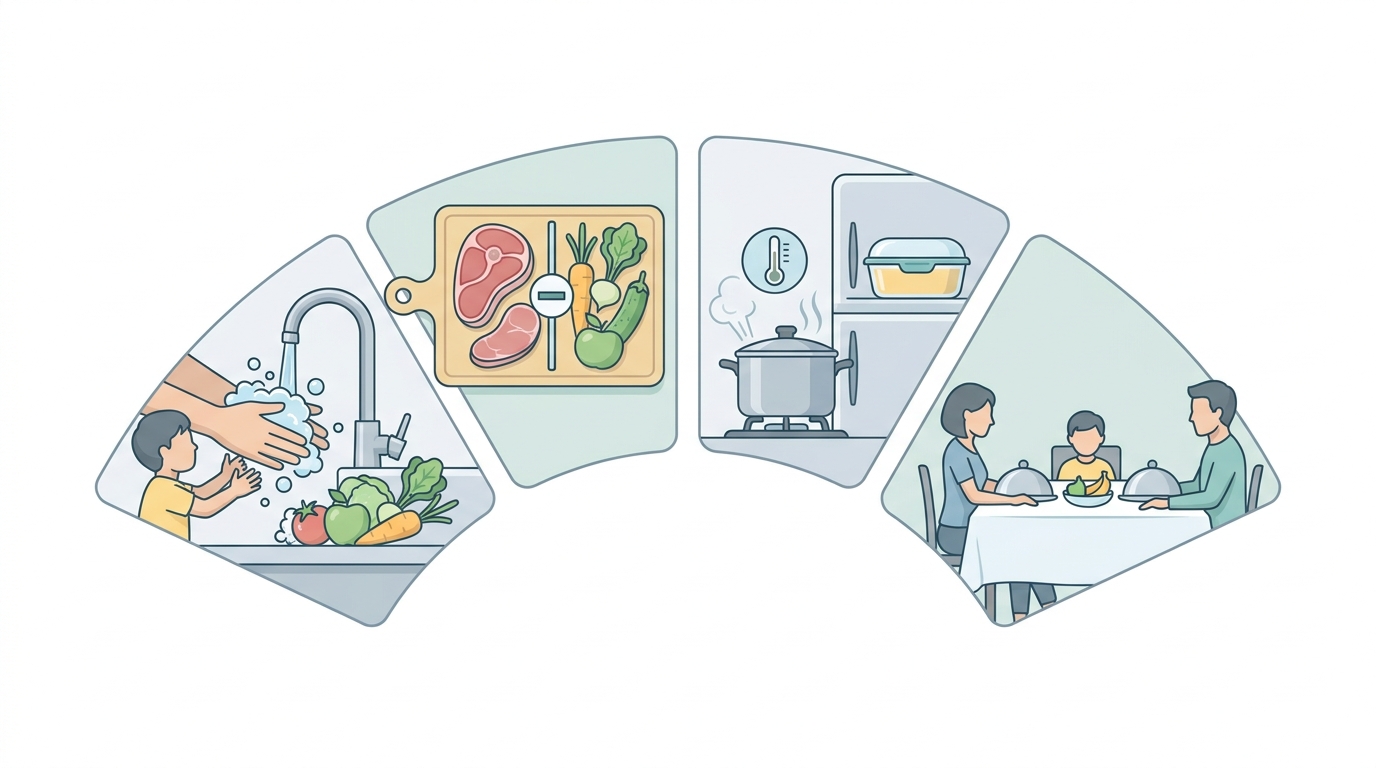
When you know the right steps to take during grocery shopping, food storage, preparation, and cooking, you can easily avoid foodborne illnesses. Let us walk through everything you need to know to keep your meals fresh, clean, and completely safe to eat every single day.
Key Takeaways for Safe Eating.
- Always pick up perishable items like meat, dairy, and eggs at the very end of your grocery trip.
- Keep raw meat and poultry completely separate from fresh produce in your shopping cart and refrigerator.
- Never wash raw chicken in your sink, as splashing water spreads dangerous bacteria across your kitchen.
- Use a clean meat thermometer to ensure your food reaches the proper internal cooking temperature.
- Refrigerate leftovers within two hours to prevent harmful bacteria from multiplying rapidly.
What to Keep in Mind When Grocery Shopping.
When you rush through supermarket aisles, it is easy to grab items without thinking much about safety. However, food safety actually starts the moment you select your items off the store shelf.
First, always grab the items that belong in the refrigerator or freezer at the very end of your shopping trip. This reduces the amount of time perishable foods spend at room temperature.
Second, make sure raw meat and seafood never touch your fresh fruits and vegetables in your shopping cart. Put raw meats into separate plastic bags to prevent juices from leaking onto other groceries.
If you have a long drive home from the store that takes more than an hour, pack your perishable items in an insulated cooler bag with ice packs. This keeps your fresh food at a safe temperature until you unpack it.
Always check the expiration date on packaged meats, poultry, and dairy before placing them in your cart. Even if the date looks fine, avoid buying meat if the package looks damaged, the color looks unusual, or it has an off odor.
Inspect egg cartons carefully before buying to ensure the shells are clean and completely free of cracks. Never purchase cracked eggs, as bacteria can easily enter through broken shells.
Avoid buying bruised or damaged fruits and vegetables, as bacteria thrive in damaged plant tissue. Also, stay away from unpasteurized ciders or juices, as they may contain harmful pathogens.
Finally, avoid pre-stuffed fresh turkeys or chickens unless you plan to cook them right away following strict safety guidelines. If these items are not stored properly in the store, bacteria can grow very quickly inside the stuffing.
How to Store Food Safely at Home.
Bringing home the best groceries from the store is only the first step of the process. Storing your food correctly at home is equally important to stop bacteria from growing.
Using Your Fridge and Freezer Properly.
Set your refrigerator temperature to 4 degrees Celsius or 40 degrees Fahrenheit, and keep your freezer at negative 18 degrees Celsius or 0 degrees Fahrenheit. These cold temperatures slow down or stop bacterial growth in your food.
If your refrigerator does not have a built-in thermostat, place a small appliance thermometer inside to check the temperature regularly. Put your groceries away right away after you return home from the grocery store.
Store eggs in their original carton on an inner refrigerator shelf rather than in the door. The temperature in the refrigerator door fluctuates too much, which can cause eggs to spoil faster.
Keep raw meat, poultry, and seafood wrapped securely in separate plastic bags on the lowest shelves of your fridge. This stops any liquid from dripping onto other foods stored below them.
If you do not plan to cook raw meat, poultry, or fish within a couple of days, put them straight into the freezer. You can store unopened hot dogs in the fridge for up to two weeks, but once opened, eat them within seven days.
Deli meats should be consumed within three to five days after opening the package to prevent listeria growth. Always keep raw juices away from ready-to-eat foods to prevent cross-contamination.
Think about this: If you place a package of raw meat on a high refrigerator shelf where it leaks, the juices can easily drip onto fresh salad greens below. That simple mistake can easily make you sick.
Preparing Fresh Fruits and Vegetables Cleanly.
Fruits and vegetables provide essential nutrients that keep your body healthy and strong. However, if you do not clean them properly, they can carry harmful dirt and germs.
Before washing your produce, cut away any bruised, damaged, or spoiled sections with a clean knife. Wash all fresh fruits and vegetables thoroughly under running tap water before you peel or cut them.
Even if you plan to discard the outer peel, washing removes lingering pesticide residues, dirt, and surface bacteria. For firm produce like carrots, cucumbers, and melons, scrub the outer surfaces gently with a clean produce brush.
For melons like cantaloupe and watermelon, wash the outer rind thoroughly before slicing into them. If you skip this step, your knife can push bacteria from the dirty rind directly into the sweet flesh inside.
After washing your fresh produce, pat them dry using a clean cloth towel or a disposable paper towel. Dry produce stores better and prevents moisture-loving mold from forming.
Handling Raw Meat, Poultry, Seafood, and Eggs Safely.
Raw animal products are the most common sources of foodborne illness if they are not handled with care. Follow strict hygiene rules every time you prepare these ingredients.
Should You Wash Raw Meat?
Never wash raw chicken in your kitchen sink before cooking it. Splashing water from the faucet scatters invisible bacteria all over your countertops, utensils, and nearby food.
Cooking raw chicken thoroughly at high heat kills all harmful bacteria naturally. Therefore, washing raw chicken is completely unnecessary and creates a major contamination risk in your kitchen.
How to Thaw Frozen Foods Safely.
Never thaw frozen meat, poultry, or seafood by leaving it out on your kitchen counter at room temperature. Warm room temperatures allow bacteria to multiply rapidly on the outer layers of the food.
The safest way to thaw frozen food is to place it on the bottom shelf of your refrigerator. Alternatively, you can use the defrost setting on your microwave, but you must cook the food right away afterward.
Tips for Marinating Meat.
Always marinate meat, poultry, and fish inside the refrigerator rather than leaving the bowl on the kitchen counter. Cover the container tightly while it sits in the cold fridge.
Never reuse leftover marinade that was in contact with raw meat unless you boil it first to kill bacteria. It is safest to discard any leftover liquid used for raw meat preparation.
Cooking Food to the Right Temperature.
Cooking your food completely is the most important step to destroy harmful germs. Make sure meat dishes are cooked until all juices run completely clear.
Ground meats and poultry should never show any pink color in the center when you cut into them. Cook eggs until both the white and the yolk are firm and solid, avoiding runny yolks.
Avoid eating homemade foods that contain raw eggs, such as raw cookie dough, homemade eggnog, or certain traditional ice creams. If a recipe calls for raw eggs, use pasteurized eggs instead to stay safe.
The most accurate way to check if your food is fully cooked is to use a clean food thermometer. Insert the thermometer into the thickest part of the meat, away from bones or fat.
| Food Type. | Minimum Safe Temperature. |
|---|---|
| Poultry (Whole, pieces, ground). | 74°C (165°F). |
| Beef, Veal, Lamb, Pork (Steaks, roasts). | 63°C (145°F) plus 3 min rest. |
| Ground Meats (Beef, pork, lamb). | 71°C (160°F). |
| Fish and Seafood. | 63°C (145°F). |
| Egg Dishes and Casseroles. | 71°C (160°F). |
| Leftovers and Casseroles. | 74°C (165°F). |
Keeping Your Kitchen Clean.
Food safety extends beyond the ingredients themselves. Your kitchen environment must remain spotless. Germs can easily transfer from dirty surfaces to your clean meals.
Wash your hands often with warm water and soap before, during, and after food preparation. Always wash your hands right away after touching raw meat, poultry, or eggs.
Be careful with kitchen dish towels. Reusing the same damp cloth for multiple days spreads bacteria across your plates and counters. Use disposable paper towels, or wash and dry fabric towels often.
Store leftover food in the refrigerator within two hours of cooking. Eat your leftovers within three to four days, and discard anything older than that.
Wipe down your kitchen counters and dining tables using hot, soapy water after every meal preparation. Wash all dishes, utensils, and cutting boards thoroughly in hot soapy water or run them through a dishwasher.
Replace old cutting boards that have deep knife scars and scratches. Deep grooves trap bacteria and food particles that are impossible to wash away completely.
Use thin, fast-drying kitchen cloths instead of thick sponges that retain moisture and breed bacteria. Sanitize your cutting boards, sink basins, and trash cans regularly with a mild disinfectant solution.
When to Seek Medical Attention.
Emergency Warning Signs: When to Call 911 or 999.
Most food poisoning cases resolve on their own within a few days, but severe infections require immediate medical evaluation at your nearest Emergency Department (ER) or A&E. Seek emergency medical care right away if you experience:
- High fever exceeding 38.5°C (101.5°F).
- Blood in your stool or severe bloody diarrhea.
- Prolonged vomiting that prevents you from keeping liquids down, leading to signs of dehydration.
- Signs of severe dehydration, including excessive thirst, dry mouth, little to no urination, and dizziness.
- Neurological symptoms such as blurry vision, muscle weakness, or tingling sensations in your arms and legs.
Take-Home Message.
Practicing good food safety is the most effective way to protect your health and the health of your loved ones. Remember these four core rules every day:
- Clean: Wash your hands and kitchen surfaces often before, during, and after cooking.
- Separate: Keep raw meats away from fresh foods and ready-to-eat meals using separate cutting boards.
- Cook: Heat your foods, especially meat, poultry, and eggs, to their recommended safe internal temperatures.
- Chill: Refrigerate perishable foods promptly and store leftovers within two hours.
By following these simple habits, you can enjoy delicious, healthy meals with complete peace of mind. Your lifelong health and wellness depend on these small, daily kitchen routines.
A Note from Dr. Priya Sammani.
Maintaining proper food safety practices is essential for protecting your entire family from preventable illnesses. Simple habits like washing your hands, keeping raw meats separated, and cooking food to correct temperatures safeguard your digestive health. If you ever experience severe symptoms like high fever or persistent vomiting after eating, consult a doctor right away.


💬 Comments (0)
No comments yet. Be the first to share your thoughts here.
Add Your Comment