

It can sometimes feel a little difficult to provide your little one, a little older, that is, a school-age child, or a young child with good nutrition and healthy eating habits, doesn't it? We are all busy, so it seems easy to find something to eat quickly at the store. However, when it comes to our children's health and their development, these eating habits are very important. So today, let's talk about how to instill these good, healthy eating habits in our children, and help them eat with pleasure and joy. This is not a big deal, if we do a few small things right, we can succeed in this.
So, what can we do to develop these healthy eating habits?
Simply put, we can focus on five main things. These are like steps. Let's talk about each one in detail.
1. Make it a habit for the whole family to eat together at the same time.
2. Prepare a variety of healthy meals and snacks.
3. Be a good example yourself, which means eating healthy yourself.
4. Don't fight or force your children over food.
5. Involve the children in preparing this meal.
Now you're probably thinking, "Oh, how can I do all this with my busy life?" It's true, it's hard sometimes. But let's look at a way you can fit all of this into your busy life and do something good for your children.
Family Meals: More than just a meal!
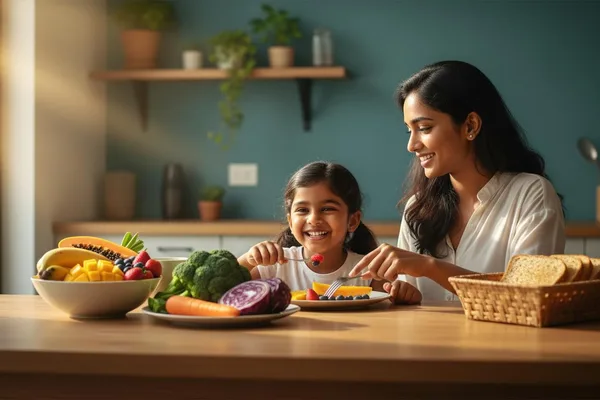
Think about how valuable it is to have the whole family sit down at the same table and eat a meal together, at least once a day. This is not just a filling meal. For young children, this feels like a great familiarity and security. It is also a great opportunity for parents to talk to their children, to ask about how their day went, what happened at school, and to understand what is on their minds.
What are the benefits of family meals for children?
Research has found that children who regularly eat meals together with their families:
- It's tempting to eat more fruits, vegetables, and grains. These are very good for the body.
- Reduces the consumption of unhealthy, low-nutritional snacks.
- It is said that they are less likely to engage in bad habits like smoking, using drugs like marijuana, and drinking alcohol.
Not only that, family meals are a great place to introduce new foods to children and set an example for parents about how to eat healthily.
Young children? How do you involve them in this?
Young children can sometimes be a little hesitant to join in on family meals. That's not surprising, because they're busy, want to spend time with friends, and want to be a little more independent. However, studies show that young children still want their parents' advice and input. So, the dinner table is a great place to reconnect with them and have a conversation.
Here are a few more ideas:
- Let your child invite a friend to dinner. That way, he'll be more willing to go.
- Involve your child when planning and preparing meals. Even asking small questions like, "What do you want to eat today?" is helpful.
- Don't preach or fight at the dinner table. It should be a calm and friendly time.
What is a "family meal"?
This is not a big deal. A family meal is any time you and your family get together to eat a meal. It can be takeout food or a delicious home-cooked meal. The important thing is to eat as nutritiously as possible and to set aside a time when everyone can come together. Maybe you have a young child who is going to sports practice and you have to eat dinner a little later. Or you can plan a special meal on the weekend, like Sunday morning, when everyone can get together.
Only healthy food should be in the house!
Children, especially young ones, often eat what they have at home. That's why we need to be very careful about the food we bring home, whether it's for main meals or snacks. Just like choosing groceries at the store, we also need to choose the food we bring home.
Here are some basic things to remember:
- Make it a habit to give your children fruits and vegetables every day. Aim to give them at least five servings of fruits or vegetables a day. Make sure to include a fruit or vegetable with each main meal. For example, a banana for breakfast, a smoothie for lunch, and a vegetable salad for dinner.
- Keep healthy snacks within easy reach for your child. Try fruit slices, vegetable sticks (like carrots and cucumbers), and low-fat yogurt, a piece of celery with peanut butter, or a piece of cheese with whole-grain crackers.
- Give your child foods that contain good protein, such as lean meats, fish, eggs, beans, and nuts. These are very important for their growth.
- Choose whole-grain breads and cereals with bran. These are high in fiber, which aids in digestion and helps you feel full.
- Limit your use of oil. Reduce fried foods as much as possible. Instead, use healthy cooking methods like boiling, grilling, roasting, and steaming. When choosing dairy products, choose low-fat or nonfat ones.
- Limit fast food and low-nutritional snacks, such as chips and candy, as much as possible. However, don't completely ban your children's favorite foods from the house. Doing so will only make them want them more. Instead, offer them as "snack foods," such as on special occasions. That way, your children won't feel deprived.
- Limit sugary drinks, such as soda and fruit-flavored drinks. These provide no nutrition and only add unnecessary sugar. Instead, offer plain water and low-fat milk.
Remember: Children eat the most of what is at home. So, we need to be very conscious about what we bring home.
You are the best example!
The best way to encourage children to eat healthily is to eat well and healthily yourself. Children imitate the adults they see every day. If you eat fruits and vegetables and avoid foods with low nutritional value as much as possible, you are sending a great message to your children.
Another way to be a good role model is to share food in appropriate portions and not eat too much. Especially with young children, talk about how you feel when you are full. You can say, "Oh, this tastes great, but I'm full now. So I'm going to stop eating." Also, parents who constantly criticize their bodies or control their food by saying they are "dieting" can create similar negative feelings in their children. So try to always have a positive attitude about food.
Don't fight with your children over food!
Food can easily become a source of conflict in the home. Even with good intentions, some parents try to negotiate or bribe their children into eating the healthy foods on their plates (like "I'll give you a chocolate bar if you eat this"). A better strategy is to limit the types of food available in the home while giving your children some control.
Children should decide when they are hungry, what they will eat from the food served, and when they are full. Parents should control what foods are served to their children at mealtimes and between meals. Here are some tips:
- Establish a specific schedule for meals and snacks. If both parents and children know when the next meal or snack is coming, it's okay for a child to skip meals sometimes.
- Don't force your child to finish their plate completely. Doing so will teach them to ignore their natural feeling of fullness.
- Don't bribe children with food or give them food as an incentive. In particular, avoid giving them dessert as a reward for eating the main meal.
- Don't use food as a way to show love. If you want to show your child love, hug him, give him some of your time, or talk to him with praise.
Don't turn the dinner table into a battlefield. It should be a place where you spend time happily and together.
Should we involve the children in the cooking process?
This is the fifth important point we talked about earlier. There are countless benefits to involving children in the food preparation process. It helps them try new foods and enjoy fruits and vegetables.
Why is this so important?
- Children are more likely to eat something they have made. Even a small contribution means a lot to them.
- They automatically gain knowledge about foods and their nutritional value.
- Working in the kitchen with Mom and Dad is fun for them, and it also strengthens family bonds.
How do you engage children in an age-appropriate way?
- For young children (2-5 years): You can let them wash vegetables and fruits, cut lettuce, and mix simple mixtures. However, do not bring sharp objects or hot objects near them. Safety comes first.
- For slightly older children (6-9 years old): You can get help breaking eggs, making cake mix, looking at a simple recipe and measuring ingredients.
- For young children (ages 10+): You can train them to cook even simple meals on their own. You can also help them find new recipes, make a shopping list, and help them choose items when they go shopping.
Imagine the joy you feel when your child asks, "Mommy, can I help you cook today?"
Finally, finally, remember this !
Instilling healthy eating habits in children is not something that can be done overnight. It takes time, patience, and dedication on our part as parents. However, these small efforts can help establish good health habits that will last a lifetime.
- Be positive: Talk positively about food and your body.
- Be patient: Children take time to get used to new foods.
- Be consistent: Keep the rules the same every time.
- Make it fun: Make preparing meals and eating together a happy family time.
There's nothing better than seeing your child healthy and happy. So, I hope these little tips will help you. If you have any more questions about this, you can also talk to your family doctor or a nutritionist.
` Children's nutrition, healthy eating, eating habits, family meals, vegetables and fruits, health, children's health




💬 Comments (0)
No comments yet. Be the first to share your thoughts here.
Add Your Comment