
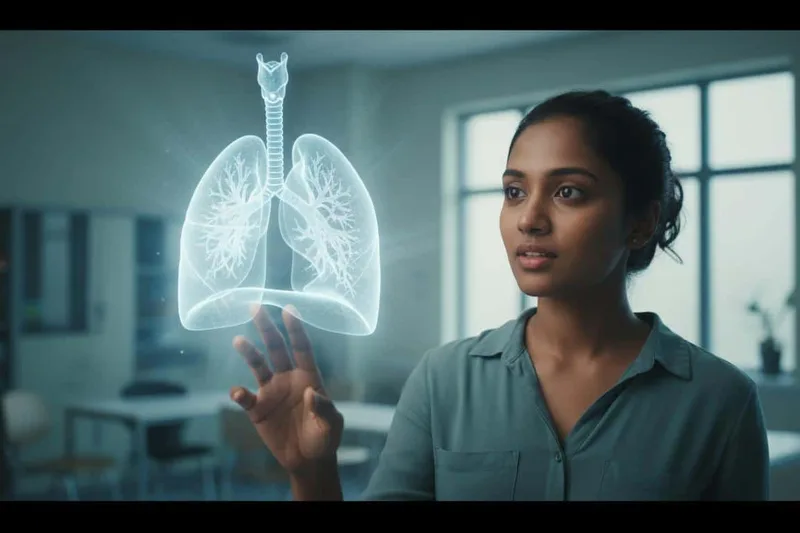
Hello! How are you? Today we are going to talk about something very important, and also very amazing. It is something that we all do constantly, but we don't think about it much - our breathing ! Yes, this story is about how your lungs, your entire respiratory system, work, and how to keep it healthy. It is like a small, but very powerful factory inside our body. Let's see what is going on inside this factory?
What is the Respiratory System? It may seem very simple...
Simply put, the respiratory system is a collection of organs and tissues in our body that help us breathe. Its main function is to take in oxygen , which is essential for us to live, and to remove carbon dioxide , which is unnecessary for our bodies. Just like gasoline is for a car, oxygen is for the cells in our body.
Now let's see who the main members of this respiratory system are and what they do.
- Nose and Mouth: These are the two main entrances for air to enter our body. Breathing through the nose is best. Did you know? The tiny hairs and mucus membrane inside the nose clean, warm, and moisten the air that enters. This does not happen when you breathe through the mouth.
- Throat (Pharynx and Larynx): The air that enters through the nose and mouth next goes through the throat. The back of the throat is called the `Pharynx` . Air and food pass through this. Then there is the ` Larynx` or the `voice box` that produces sound when we speak. This directs air into the windpipe and protects it from any food that may enter the windpipe. Here is a small flap called the `Epiglottis` , which closes the windpipe when we swallow. Isn't it amazing?
- Trachea: We also call this ' Bronchi '. This is the main tube that carries air from the throat to the lungs. It is made up of cartilage rings. Therefore, it does not get clogged easily. Inside the trachea, there are small hair-like things called `Cilia` (micro hairs) and `Mucus` (mucus) . These are used to catch dust particles and germs that enter and expel them with a cough.
- Bronchi and Bronchioles: The trachea is like a tree trunk. When it enters the chest, it divides into two main branches. These are called `Bronchi` . One goes to the right lung and the other to the left lung. Then these `Bronchi` divide into smaller branches. Just like the branches of a tree. These smaller branches are called `Bronchioles` .
- Lungs: These are the two main characters in our story! The lungs are two organs that are like sponges, filled with air. They are located on either side of our chest. The right lung has three lobes, and the left lung has two lobes. The left one is a little smaller, you know? Because it needs to accommodate our heart.
- Alveoli: The tiny air sacs at the end of the bronchioles are called alveoli . There are millions of these in our lungs. Think of them as little balloons. These are where the oxygen I mentioned earlier is taken in and carbon dioxide is released.
- Diaphragm : This is a large, flat muscle located below the lungs, separating the chest and abdomen. It moves up and down when we breathe. It is very important for the breathing process.
Have you seen how many things have to work together to breathe?
How do we breathe? This is an amazing thing!
Although we don't think much about breathing, it's actually a very complex and amazing process. Let's take a look at how this happens.
- Inhalation - Breathing in:
- When you breathe in, your diaphragm contracts and moves down. At the same time, the muscles between your ribs (intercostal muscles) pull your ribs up and out.
- What happens then? Your chest cavity gets bigger. The pressure inside your lungs decreases.
- The air pressure outside is high, and the pressure inside the lungs is low. So, the air just flows in through the nose. It's like drawing medicine from a syringe.
- Exhalation - Breathing out:
- When you exhale, the diaphragm moves up and relaxes, just like it used to. The muscles between the ribs also relax.
- Then the chest cavity collapses again, increasing the pressure inside the lungs.
- Now the pressure inside the lungs is higher than the air outside. So, the air is just pushed out of the lungs.
This breathing and exhalation happens unconsciously, about 12-20 times per minute.
- How Gas Exchange Occurs - Oxygen in, Carbon Dioxide out:
- I was talking about the alveoli (air sacs) , that's where this most important work happens.
- Very thin blood vessels (capillaries) are spread out like a mesh around the air sacs.
- When we breathe in, the oxygen that enters the air sacs is absorbed into the blood through these tiny blood vessels.
- At the same time, carbon dioxide, a waste product in the blood, moves from the blood into the alveolar air sacs.
- Then, when we exhale, that carbon dioxide gas leaves the body.
- The clean blood, which is enriched with oxygen, goes to the heart and from there is distributed throughout the body. Every cell in our body needs oxygen to function.
Just think, all this happens within a matter of seconds. Isn't it amazing how this mechanism works in our body?
Things and diseases that affect our lung health
Our lungs are very sensitive organs. Many things like dust, smoke, air pollution, and germs can damage the lungs. Let's take a look at the most common lung diseases.
- Common Cold and Flu: Both are viral infections. They occur frequently. They usually affect the upper respiratory system - the nose and throat. Symptoms include cough, runny nose, fever, and body aches.
- Asthma: This is a disease that many people are familiar with. A person with asthma has swollen, blocked, and narrowed airways (bronchi) . This makes it difficult to breathe, causes wheezing, and coughing. Asthma can be aggravated by things like dust, animal dander, pollen, certain foods, and cold weather.
- Bronchitis: This is the inflammation of the bronchial tubes. There is a type that occurs suddenly and gets better in a few days (Acute Bronchitis), and there is a type that is ongoing and more common in smokers (Chronic Bronchitis). The main symptom is a cough with mucus.
- Pneumonia: This is a potentially dangerous infection. In this , the alveoli (air sacs) become swollen and filled with a fluid like water. This prevents oxygen from being properly absorbed into the blood. Pneumonia can be caused by bacteria, viruses, and fungi.
- COPD (Chronic Obstructive Pulmonary Disease): This is a somewhat complicated disease. `COPD` is a condition in which the lungs are damaged over time and make it difficult to breathe. It can include both `Chronic Bronchitis` (chronic inflammation of the airways) and `Emphysema` (emphysema - damage to the air sacs, causing them to swell and collapse). The main cause of `COPD` is smoking .
- Lung Cancer: This is also a very dangerous disease. It is caused by abnormal, uncontrolled growth of cells in the lungs. The main cause of this is smoking. It can also be caused by air pollution and exposure to certain chemicals.
- Tuberculosis (TB): This is a bacterial infection. It mainly affects the lungs. This disease is still seen in Sri Lanka.
- COVID-19: We all know about this by now. This virus mainly affects the respiratory system.
I'm not talking about these diseases to scare you. Being aware of them can help you protect yourself from them and help you seek medical advice quickly if you experience any symptoms.
Things we can do for a healthy pair of lungs
The good news is that there are many things we can do to keep our lungs healthy. Just like maintaining a car, we need to take care of our lungs.
- Avoid smoking completely! This is the number one thing. If you are a smoker, the best thing you can do is to quit. Also, being around other people who smoke (secondhand smoke) can damage your lungs. If you are having trouble quitting, get help from a doctor or a program that helps you quit. It's never too late to start!
- Protect yourself from air pollution: Wear a mask when going to places with a lot of dust, vehicle exhaust, etc. Keep the air inside your home clean. Keep windows and doors open for good ventilation. Be careful about the chemicals you use at home (cleaning products, sprays).
- Exercise regularly: When we exercise, our lungs have to work harder. It strengthens the lungs and increases their capacity. Even just walking for 30 minutes a day is enough.
- Good hygiene practices: Wash your hands often with soap and water. Cover your mouth and nose with a tissue or your elbow when you cough or sneeze. If you have a cold, take care not to infect others.
- Get vaccinated: Getting vaccinated, such as the flu vaccine, pneumonia vaccine (if recommended by your doctor), and COVID-19 vaccine, can protect you from some respiratory diseases.
- Balanced diet: Eat more fruits, vegetables, and greens. The antioxidants in these foods are good for our entire body and our lungs.
- Deep breathing exercises: Sometimes, taking deep breaths and holding them for a while before exhaling can improve lung function. This can also help calm the mind.
Imagine how much these little things can help your lungs!
If you have these symptoms, see a doctor immediately.
Sometimes our bodies give us signals that something is wrong. It's not good to ignore them at times like these. If you have any of these symptoms related to your lungs, it's wise to seek medical advice immediately.
- Difficulty breathing or shortness of breath: Especially if this is new, getting worse, or if it is difficult to breathe even when just standing still.
- Persistent cough: A cough that lasts for more than two to three weeks, especially if it is accompanied by blood or thick, colored phlegm.
- Chest pain: Pain when breathing, coughing, or just chest pain.
- Wheezing: A whistling sound coming from the chest.
- Frequent chest infections: If you have frequent chest infections within a few months and they become difficult to breathe.
- Unexplained weight loss and fatigue: If you lose weight for no reason, along with the respiratory symptoms mentioned above.
"Be attentive to the signals your body gives you. If you feel anything different or strange, don't delay in seeking medical advice. Some diseases are easier to treat and can be cured faster if they are identified early."
Briefly, the most important things to remember (Take-Home Message)
We've talked a lot about our respiratory system today, haven't we? So, here are the most important things you need to remember from this story:
- Our respiratory system is an amazing, essential system that keeps us alive.
- When we understand how it works, we realize how valuable it is.
- Living a healthy lifestyle goes a long way in protecting our lungs. It is especially important to avoid smoking .
- Never ignore warning signs for any reason. Many lung diseases can be successfully treated by seeking medical advice promptly.
- Every breath we take is precious. So, let's protect our lungs with love!
I hope you found this information useful. We'll talk about something more important like this another day. Take care!
Lungs, Respiratory System, Breathing, Lungs, Respiratory System, Healthy Lungs, Asthma, COPD, Pneumonia


💬 Comments (0)
No comments yet. Be the first to share your thoughts here.
Add Your Comment