
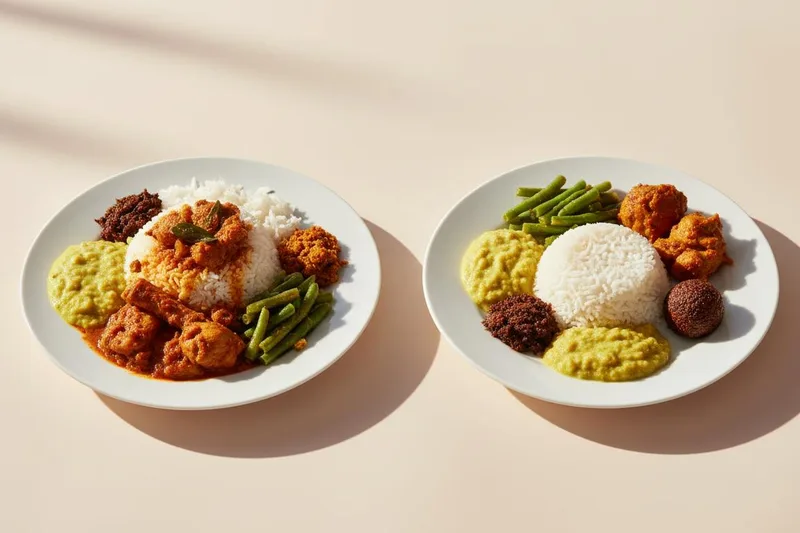
Do you sometimes feel like we eat a little too much? In fact, many of us eat too much these days without even realizing it. One reason for that is that we are now used to seeing and eating large portions of food. So, shall we talk in more detail today about portion control ? This is very important for you and your family.
Why do we need to think so much about food quantity? (Overeating problems)
Simply put, there are many harmful effects of eating too much. People who regularly overeat are more likely to gain weight, that is, become overweight/obesity. Not only that, but they may also face a host of other health problems.
Imagine, things like this could happen:
- High Blood Pressure
- High cholesterol
- Type 2 Diabetes
- Bone and Joint Problems : This could be why your knees hurt so much.
- Sleep apnea is when you suddenly feel like you're suffocating while sleeping at night.
- Sometimes this can also lead to conditions like depression .
This also increases the risk of serious conditions such as heart disease and stroke in older people.
Now look, when we go to a store or a restaurant, why do they try to serve us large portions? Because we think, 'What a waste of money, it's worth it if we buy a bigger one.' But, if that 'value meal' is unnecessarily full of oil, sugar, and calories, it will harm our health, not benefit it, right? That's why portion control is so important.
What is the 'serving size' on a food package? Let's understand a little.
You may have noticed that many food packages and cans we buy from the store have a 'serving size' on them. This doesn't mean the amount we *should* eat, but rather how much of that food people usually eat at one time. That is, if you eat that amount, you can see how many calories and nutrients – that is, how much oil, sugar, salt, etc. – you will get into your body.
Sometimes the serving size on the label can be much smaller than the amount you usually eat. In that case, the 'portion size' refers to the amount of food you choose to eat. It's important to understand the difference between the two.
Think about it this way. You buy a package of frozen vegetables from the store. Even though the serving size is '1 cup', if you want to eat about a cup and a half, that's fine. Because most vegetables are low in calories, low in fat, but very high in nutrition.
But, when we talk about foods that are high in calories, sugar, and fat, that (serving size) is very important. It's like a little warning to us, 'You might be eating too much, and it could be bad for your body.'
For example, let's say you bought a 100-gram packet of biscuits and ate them all in one go. But if the serving size on the label says '30 grams' (that's about 3 biscuits), that means you've eaten more than three servings! Not only that, you've also consumed three times the calories and three times the sugar listed on the label! Do you understand how dangerous that is?
So how much should we eat? (Recommended Amounts)
Okay, we now know that a serving size is the amount of food people usually eat and the nutrients it contains. However, it doesn't tell us what foods we should eat and how much to eat to stay healthy. That's why the concept of a balanced diet is important. In America, there is a system called 'MyPlate', which is how to mix foods in a way that suits you and your family and eat in the right amounts. We should also think about our diet in that way. You can ask your doctor or a nutritionist for more information about this.
The Divided Plate Method - A great tip to easily control your food intake!
A very easy and practical way to control the amount of food you eat is the concept of the 'divided plate'. It's like the 'MyPlate'. Imagine that your plate is divided into four parts.
- `#### A quarter of the plate for protein`
That means things like meat, fish, eggs, chickpeas, lentils, and soy. These are very important for body growth and muscle mass.
- `#### Another portion (1/4) of the plate is starches (like potatoes, sweet potatoes, cassava, corn) and grains (like bran rice, kurakkan bread, rotis made from atta flour, noodles)`
It's best to choose whole grains as much as possible. Things like whole-grain rice, buckwheat, and barley.
- `#### Half (1/2) of the plate should be vegetables (or fruits and vegetables)`
You can add any vegetable or fruit to this, such as leafy greens (mukunuvenna, gotukola, kankun), carrots, beets, pumpkin, beans, tomatoes, cucumbers. These provide vitamins, minerals, and fiber.
The most important thing is that you don't want to spill food from one section to another or pile it up like a mountain. Dividing your plate this way not only helps you control the amount of food you eat, but it also makes it easier for you to feed your family a more balanced meal.
Some more great tips to control your portion size (Portion Control Tips)
As parents, we can control the amount we eat and teach our children to do the same. Here are some more tips to help:
- Use small plates to divide the food. Then the food will look bigger. Think about it, when you have a sandwich on a large dinner plate, it looks very small. But if you put the same sandwich on a small side plate, you will feel like, 'Oh, there is enough.'
- When you're making a lot of food at once, divide leftovers into smaller portions before putting them in the fridge or freezer. Then when someone in the family goes to get something to eat, they'll just reach for the right size.
- Don't let children eat food out of packets or large containers. Divide it into separate plates or bowls. Make it a habit to eat at the kitchen table as much as possible.
- Eating in front of the TV, your phone, or any other screen is not good at all. When we do that, we end up eating more without even realizing it.
- When sharing food, do not bring the entire plate or dish to the table, but share it from the kitchen counter. If there is some food left over, think twice before sharing it a second time. If you ask for it a second time, give it a vegetable salad or some fruit.
- Try to eat three nutritious meals and one or two healthy snacks at regular times throughout the day. If you skip a meal, you'll be more likely to overeat the next time you eat.
- Add more salads and fruits to your family's meals. Especially when you start a meal with something like a salad, hunger is controlled and you feel full in no time. This also helps control unnecessary calorie intake.
- Don't rush when eating. Eat slowly. Chew your food thoroughly. Give everyone time to feel full, and then share again if you have to. Eating together as a family is a great opportunity to talk to each other and build relationships.
- Don't force your children to 'eat until the plate is clean.' Teach them to stop eating when they are full. This is very important.
- When you go to a restaurant, share your meal, or order an appetizer with your main course, or pack half of your meal to take home before you start.
- When ordering take-away, order smaller portions and share them with everyone at home (family style). When eating at fast food restaurants, choose meals that come with healthy options (like milk, fruit, carrots) for the little ones.
Should we teach the little ones about portion sizes? (Getting Kids Involved)
It's a great idea to actively involve children in helping them understand how much they should eat. You can make this into a game.
Just think, about a cup of rice is enough for one serving for a small child. So, give your child a scoop of ice cream and ask, "Shall we share rice cream today?" and have the family share the rice. It will be like a game for them, and they will enjoy it.
A piece of meat should be about the size of a deck of cards. So, take a piece of chicken and measure it. "Look, son/daughter, is this like a deck of cards?" Ask.
Also, take out the kitchen scale. While weighing and measuring food may not seem like fun to you, it can be a lot of fun for children. Not only that, but it's a great way to remember numbers and calculations.
Shall we measure it by the size of our hand?
If you don't have any measuring devices, a very easy way to get a rough idea of how much to eat is to use your hand. This is a good way to remind yourself that children need to eat less because their hands are smaller than adults'.
- A closed fist is the size of a child's closed fist (about the size of a child's closed fist) for a single serving of noodles, rice, breakfast cereal, vegetables, and fruits.
- Something like meat and fish is about the size of a child's palm.
- Limit the amount of oils added to food (such as butter, oil, mayonnaise, and salad dressing) to the size of the top of the child's thumb.
And don't forget the good news about portion sizes: this works both ways! Even if you want to reduce the size of a dish like spaghetti, you can divide vegetables like carrots or beans into more than one serving. This will make it easier to meet your '5 fruits and vegetables a day' goal, right?
Finally, the most important thing (Take-Home Message)
Finally, the role we play as parents in teaching children about portion sizes is very important . The way we eat, the way we choose food, the way we think about portion sizes – children are watching all of this.
If we eat mindfully, our children will learn from that example. So, food is something to be enjoyed with pleasure. At the same time, it is our responsibility to eat nutritious food in the amount that our bodies need. If so, we can live as a healthy, happy family. Do you understand? If you have any more questions about this, don't forget to talk to your family doctor.
` Portion Control, Food Quantity Control, Healthy Eating, Balanced Diet, Child Nutrition, Obesity, Serving Size, Overeating


💬 Comments (0)
No comments yet. Be the first to share your thoughts here.
Add Your Comment