
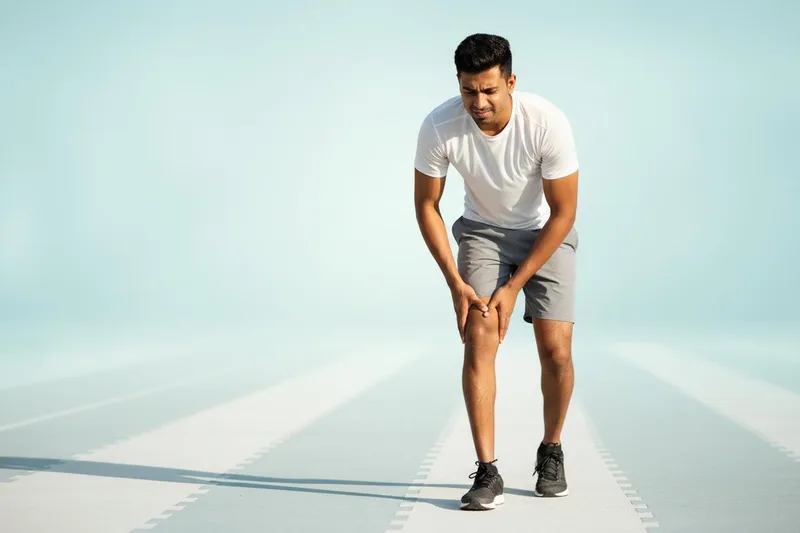
Do you also feel pain, tightness, or heaviness in your legs, especially in the calf area, when you exercise, run, or walk fast? Does it go away after a while, but does it come back when you start exercising again? Then it is very important for you to be aware of this condition called popliteal artery entrapment syndrome. Don't worry, let's talk about it simply.
What is popliteal artery entrapment syndrome (PAES)?
Simply put, Popliteal Artery Entrapment Syndrome (PAES) is a rare blood vessel condition. It mainly affects young, active people, especially those who play sports. The popliteal artery is the main blood vessel that runs from the thigh to the groin behind our knees. This artery is compressed by a muscle behind the knee, which is what happens in this condition.
Think of it like a water pipe. It supplies blood to the lower leg. Now, this artery can become constricted because of a change in the way our gastrocnemius muscle attaches to the thigh bone. Especially when we bend our foot down (this is called ``plantar flexion'' in medical terms), this gastrocnemius muscle contracts. Then that artery becomes more constricted.
When you exercise, the artery is constantly being pushed, causing it to spasm. What happens then? The amount of blood going to the leg decreases. This causes things like lactic acid and carbon dioxide to build up in the muscles and nerves. That's why you feel heaviness, pain, fatigue, and sometimes numbness in your legs and feet.
The good news is that these symptoms usually subside within three to five minutes of stopping exercise. However, if left untreated, over time, these symptoms can become more severe and last longer. This means that you will start to feel pain even after running for a short distance, and it will take longer to recover.
Who is most affected by this PAES condition?
This condition, called PAES, usually affects young athletes between the ages of 15 and 25. This risk is especially high for those who participate in sports that involve running. For example:
- Racing (Track)
- Cross country running
- Soccer
- Lacrosse
- Field hockey
Think of a child who participates in school track and field events, or a young man who plays soccer. They are more likely to have this condition because they use their legs constantly.
How common is PAES?
PAES is actually a very rare condition . It is estimated that less than 1% of the population has it. So it is difficult to say exactly how many people have it.
Are there other conditions that show symptoms similar to PAES?
Yes, there is. Chronic Exertional Compartment Syndrome (CECS) is a more common muscle and nerve condition than PAES, and is also caused by exercise. It can also cause pain and swelling in the muscles of the legs (and sometimes the arms). Although CECS can affect anyone, it is most common in young runners and those who play sports that involve frequent contact.
Sometimes, someone with PAES can also have CECS. It has been found that about 5% of people who have not been cured of PAES also have CECS. So it is important to remember that both conditions can exist at the same time.
What is the difference between PAES and CECS?
Your doctor will perform various tests to differentiate between these two conditions.
- For PAES: Blood pressure is measured in the leg while at rest and then checked to see if it decreases after exercise.
- For CECS: The pressure in the four muscle compartments in the leg is measured before and after exercise. In CECS, the pressure in these compartments increases abnormally.
How does it feel to have PAES?
When exercising, you may experience symptoms like these in your groin area and/or legs:
- A pain like a cramp
- Tired
- A heavy feeling
- Muscle cramping
- Numbness
- Inflammation
These symptoms usually go away after three to five minutes of rest. However, as we mentioned earlier, if left untreated, these symptoms can recur over time and take longer to recover.
What are the causes of PAES?
There are mainly two ways that this thrust can occur:
1. Anatomic compression: This is seen in about 10% of cases. It seems to occur slightly more in men. In about 70% of cases, it occurs in only one leg.
2. Non-anatomic compression, functional or physiologic compression: This occurs more frequently in women. In more than 90% of cases, it can occur in both legs.
Anatomic compression
This happens because part of your gastrocnemius muscle lies above or below the popliteal artery. Perhaps a tendinous band in the muscle can damage the artery. This is because:
- An ulcer or sore may develop.
- A blood clot may form.
- Over time, the artery may become completely blocked (occluded) or the arteries below it may become blocked.
In this way, there are four different ways in which the muscle is positioned relative to the artery.
Functional or physiologic compression
In this case, all of your muscles are positioned normally. However, the muscle usually attaches just above the thigh bone, or in a groove on the inside of the knee. So when you bend your foot down (plantar flexion), the muscle pulls inward and presses on the artery.
Sometimes this pressure can also be caused by another muscle (popliteus muscle) located under the artery. Researchers say that this active pressure has not been found to cause damage to the artery.
How is PAES diagnosed?
A vascular specialist can diagnose this condition. He or she will examine you and check for a drop in your leg and popliteal pulse. They may also check for a change in your pulse when you move your leg up and down against something.
If you have PAES, your doctor may:
- You can feel your pulse when you are at rest.
- But when you exercise, your pulse may decrease when you bend or straighten your leg.
What tests are done to check for PAES?
These tests measure blood flow through the knee, leg, and foot. These imaging tests can show the following:
- Is the artery normal?
- Whether an artery injury will occur.
- Are there any blood clots?
- Is the artery swollen (aneurysm - a blood vessel that is 50% larger than normal).
- Does a muscle compress an artery?
Some of the tests done for this are:
- Ankle-brachial index with exercise: This measures the blood pressure in your arms and legs before and after exercise. Normally, blood pressure in your arms and legs is the same, and both increase during exercise. However, if your arteries spasm while running, your blood pressure in your legs after exercise can drop by more than 90% of your blood pressure in your arms.
- Duplex ultrasound of the popliteal artery with plantar flexion: This uses sound waves to create an image of the artery and measure blood flow. This allows your doctor to see how the arteries in your leg feel when your leg is bent and at rest, and to see if there is any muscle spasm.
- Computed tomographic angiography (CTA) with plantar flexion: This is also a type of CT scan. A special dye is used to look at the condition of the arteries in the leg and to see if there is any muscle spasm when the leg is bent and at rest.
- Magnetic resonance angiography (MRA) with plantar flexion: This test uses a magnetic field and radio waves to look at the condition of the arteries in the leg and to see if there is any muscle spasm when the leg is bent and at rest.
How is PAES treated?
Your doctor can perform surgery to remove a small portion of the gastrocnemius and popliteus muscles. This will relieve the blockage and allow blood to flow normally to the leg.
This surgery usually takes about an hour. It is performed under general anesthesia.
Sometimes, in severe cases where the artery is damaged and blocked due to anatomical popliteal entrapment, the surgeon may need to clean the artery, patch it, or create a new path around the blockage (bypass).
Surgery is the most effective treatment for PAES, as it is a very successful procedure for most people. More than 90% of people who undergo surgery experience significant improvement in their symptoms.
For those with functional PAES, a non-surgical treatment option is Botulinum toxin A. Under CT or ultrasound guidance, the doctor injects either `Botox®` or `Dysport®` into the muscle that is causing the twitching. This temporarily paralyzes the muscle. The hope is that the muscle will then contract permanently.
But this only lasts for three to six months. If the muscle is not reduced, the symptoms can return. This treatment has been successful in less than 60% of people after a year of treatment.
How long does it take to recover after these treatments?
It can take four to six months to fully recover after surgery.
After surgery, you will need to stay in the hospital overnight. Then, you will need to do physical therapy (such as stretching exercises) for the first two weeks. After two weeks, you will need to do strength and conditioning exercises until you are completely healed.
What happens to someone with PAES?
If you have functional popliteal entrapment and your leg pain during exercise is not severe, you may want to limit your exercise. Your doctor can monitor your condition.
However, as we have said before, surgery is more than 90% successful, and the risk of recurrence is low. Most athletes return to their normal activities after surgery.
If there is anatomic entrapment, doctors recommend surgically removing the abnormal muscle tissue. This is because, if not done, the artery can become damaged over time. If you delay treatment and have structural PAES that has damaged the popliteal artery, you may have constant leg pain when you walk. In rare cases, a leg may need to be amputated. But that is very rare .
When should I see the doctor again?
After surgery, you will need to see the doctor:
- In a month.
- In six months.
- In twelve months.
At these meetings:
- An ultrasound examination of your repaired artery will be performed.
- They're checking the blood pressure in your legs.
If your artery has returned to normal, no further appointments will be needed unless symptoms return or you need to have an artery bypass.
What questions should I ask my doctor?
- Do I have anatomic PAES or functional PAES?
- Do you recommend surgery for my condition?
If you are young and have leg pain, be sure to see a doctor. There can be several causes for this pain. The sooner you get an accurate diagnosis, the sooner you can start treatment. If you have popliteal artery entrapment syndrome, talk to your doctor about whether surgery is a good option for you. This has been a successful treatment in many cases.
The most important things to remember (Take-Home Message)
Okay, so let's summarize some of the things you need to remember from what we've talked about:
- PAES is a condition in which the main artery behind the knee, a muscle, constricts, reducing blood flow to the leg.
- This mostly affects young athletes , especially those who run.
- If you experience symptoms such as pain, heaviness, or tingling in the groin area during exercise, but they subside when you rest, you may have PAES.
- There is also a condition called CECS that has similar symptoms, so an accurate diagnosis is important.
- The disease can be confirmed by having a specialist examine you (such as `Ankle-brachial index`, `Duplex ultrasound`, `CTA`, `MRA`).
- Surgery is often the most effective treatment . Some people are given injections of `(Botulinum toxin A)`.
- If left untreated, over time, the artery can become damaged and the condition can worsen.
- Therefore, if you have these symptoms, it is very important to seek medical advice without delay.
Don't worry, if you recognize this condition, there are good treatments. The main thing is to see a doctor quickly, without ignoring the symptoms. Then you can be healthy and active again!
` popliteal artery entrapment syndrome, PAES, leg pain, hip pain, exercise, young athletes, blood vessels, popliteal artery


💬 Comments (0)
No comments yet. Be the first to share your thoughts here.
Add Your Comment