
Getting an RDW Blood Test 15%–18% (High) flag on your online lab portal can feel unsettling. Be honest—you probably saw that red arrow pop up next to a three-letter abbreviation you barely recognized and typed the numbers straight into Google, didn't you? That is completely understandable. Almost every week, patients bring in a printout of their routine blood work worried that a slightly elevated RDW means something serious is hiding in the background.
Let's sit down and talk this through clearly, the same way we doctors explain it face-to-face in the clinic. Your red cell distribution width (RDW) is simply a measurement included in a standard complete blood count (CBC—often called a full blood count, or FBC, in the UK and Australia). Rather than counting how many red blood cells you have, it measures how uniform they are in size. When your number sits between 15% and 18%, it is a useful nudge for your healthcare team to look a little closer—and most of the time, the reason behind it is very manageable once we spot it.
📌 Key Takeaways at a Glance
- What 15%–18% means: Normal RDW typically falls between 11.5% and 14.5% (depending on the lab), so 15%–18% shows a mild-to-moderate mix of differently sized red blood cells.
- Never read in isolation: We doctors always interpret a high RDW alongside your average red blood cell size (mean corpuscular volume, or MCV) and hemoglobin level.
- Most common culprits: Early iron deficiency, low vitamin B12 or folate, heavy menstrual bleeding, or ongoing low-grade inflammation are frequent, treatable causes.
- Recovery takes patience: Because red blood cells live for about 120 days, your RDW can take three to four months to return to normal after starting treatment.
What Does an RDW Blood Test of 15%–18% (High) Actually Mean?
An RDW blood test result between 15% and 18% means your red blood cells vary more in size than the typical 11.5%–14.5% normal range. In everyday practice, this mild-to-moderate elevation is most commonly an early clue pointing toward iron, vitamin B12, or folate deficiency, chronic inflammation, or recent blood loss.
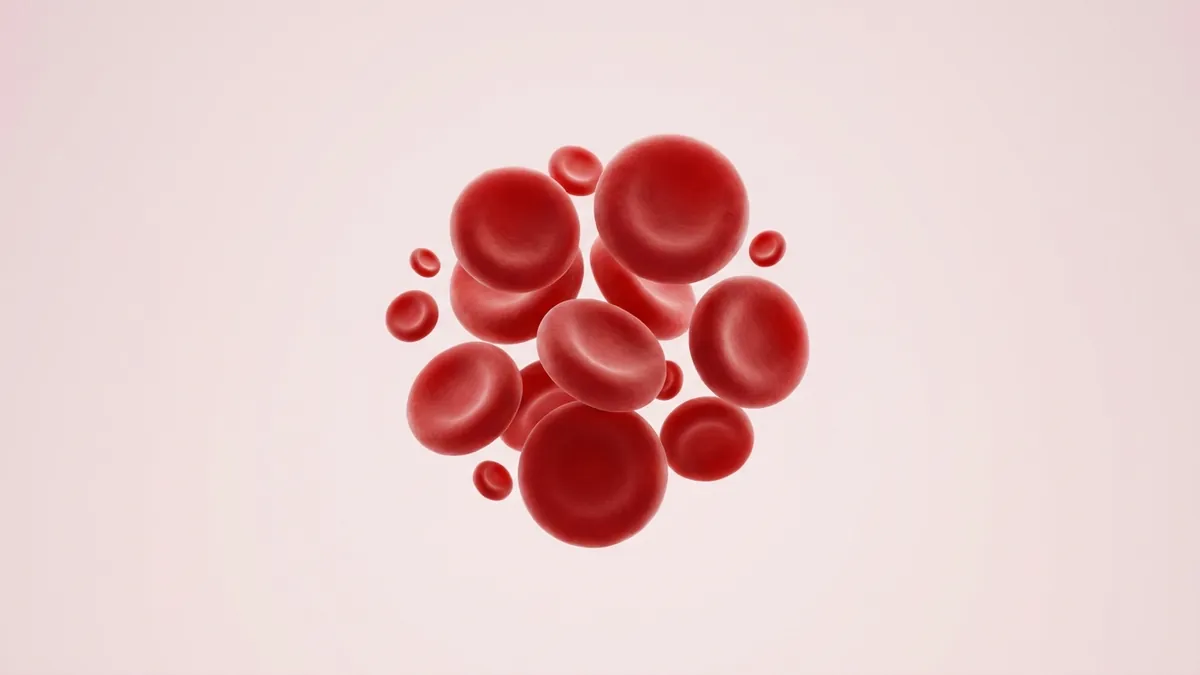
Think about it for a second. Imagine opening a carton of eggs at the grocery store. Usually, every egg inside is almost the exact same size. Healthy red blood cells coming out of your bone marrow are much the same—mostly uniform, flexible little discs carrying oxygen from your lungs to the rest of your body. When your lab report flags an RDW between 15% and 18%, it is telling us that your "carton" has a noticeable mix of smaller and larger cells—a pattern we doctors call size variation among red blood cells (anisocytosis).
Most labs in the US, UK, Canada, and Australia report this percentage as RDW-CV (coefficient of variation), where the standard reference interval sits right around 11.5% to 14.5%. Some labs also list RDW-SD (standard deviation), measured in femtoliters (fL), with a typical normal range around 39 to 46 fL. Makes sense, right? At 15% to 18%, your bone marrow is sending an early signal that the raw ingredients or conditions needed to build uniform red blood cells have shifted slightly—often well before you even feel severely run-down.
Why Do Doctors Always Pair High RDW With Your MCV Result?
Have you ever wondered why your doctor glances across three or four different lines on your blood test before saying a word about your RDW? It is because RDW on its own is like a smoke alarm—it tells us something changed, but it does not tell us which room the smoke is coming from. To narrow down the exact cause, we doctors pair your RDW with your average red blood cell size (mean corpuscular volume, or MCV) and your oxygen-carrying protein level (hemoglobin).
Look at what happens when we put those two numbers side by side. Your MCV tells us whether your red blood cells are generally too small (microcytic), normal-sized (normocytic), or too large (macrocytic). Meanwhile, your RDW tells us whether all the cells are roughly that same size or scattered across a wide range. Pretty clever system, right?
Here is a great example. Two people can both have small red blood cells (low MCV). One person has iron deficiency anemia, where older normal-sized cells are mixed with newer tiny iron-starved cells—giving a high RDW of 15%–18%. Another person might have an inherited trait like thalassemia minor, where almost every cell is uniformly tiny—leaving their RDW completely normal. See? That is exactly why we never jump to conclusions from a single number on a portal screen.
What Are the Most Common Causes of an RDW Between 15% and 18%?
When a patient walks into their Primary Care Physician (PCP) or family doctor's clinic with an RDW in the 15%–18% bracket, our mental checklist starts with the everyday, fixable causes first. What do you think tops that list almost every time?
- Early or active iron deficiency: This is easily the most common driver we see. In fact, RDW is often the very first lab value to creep upward as your body's iron stores (ferritin) run low—sometimes weeks before your hemoglobin actually drops into the anemia range. Heavy periods, frequent blood donation, pregnancy, or slow digestive-tract bleeding from stomach irritation or ulcers frequently sit behind it.
- Vitamin B12 or folate deficiency: Your bone marrow needs both nutrients to divide cells smoothly. Without enough B12 or folate, it starts turning out oversized, fragile red blood cells alongside your older normal ones, stretching your RDW upward. This is especially common in older adults, vegans, people with celiac disease, or those taking long-term acid-reflux medications (proton pump inhibitors) or metformin.
- Mixed nutritional deficiencies: Believe it or not, you can be low in iron and vitamin B12 at the same time. The small cells and large cells cancel each other out on your MCV average, making your MCV look deceptively normal while your RDW jumps into the 15%–18% zone!
- Recent blood loss or active bone marrow recovery: After surgery, an injury, or starting iron supplements, your marrow rushes out a fresh wave of slightly larger newly made red blood cells (reticulocytes). Mixing those bigger "baby" cells with mature cells temporarily pushes RDW up.
- Chronic medical conditions: Ongoing inflammation (such as rheumatoid arthritis or kidney disease), regular heavy alcohol intake, liver conditions, or an underactive thyroid (hypothyroidism) can all gently disrupt red blood cell sizing over time.
How Do RDW and MCV Combinations Narrow Down the Cause?
Remember how we talked about pairing RDW with MCV a moment ago? To help you read your own complete blood count (CBC) printout more calmly before your follow-up appointment, here is how we doctors typically interpret a 15%–18% RDW alongside your other values.
| Lab Pattern With RDW 15%–18% | What It Usually Suggests & Your Next Step |
|---|---|
| High RDW + Low MCV (Small, uneven cells) |
This classic pattern strongly points toward iron deficiency anemia, where your bone marrow lacks enough iron to pack full-sized cells. Less commonly, it can reflect anemia of chronic inflammation. What you should do: Ask your family doctor for an iron panel and a ferritin test, and talk honestly about heavy periods, digestive symptoms, or regular NSAID painkiller use. |
| High RDW + Normal MCV + Normal Hemoglobin (Early uneven sizing) |
Often an early warning sign of shrinking iron, vitamin B12, or folate stores before full anemia develops, or a "mixed" deficiency where small and large cells average out. What you should do: Schedule a routine check-in at your Primary Care Physician (PCP) or family doctor's clinic to test ferritin, vitamin B12, and folate rather than guessing with random supplements. |
| High RDW + High MCV (Large, uneven cells) |
Commonly linked to vitamin B12 deficiency, folate deficiency, liver stress, regular heavy alcohol use, or an underactive thyroid (hypothyroidism). Certain medications can also cause this. What you should do: Have your doctor check vitamin B12, folate, liver enzymes, and thyroid-stimulating hormone (TSH), and review all prescription medicines and weekly alcohol intake. |
| High RDW + Low Hemoglobin (Confirmed anemia) |
Your oxygen-carrying capacity has dipped, which explains symptoms like fatigue, cold hands, brittle nails, or getting winded walking up a single flight of stairs. What you should do: Book an appointment promptly so your doctor can pinpoint the exact type of anemia, look for any hidden blood loss, and start targeted treatment. |
| High RDW After Starting Iron or B12 (Temporary recovery spike) |
When treatment kicks in, your bone marrow releases a burst of larger young red blood cells (reticulocytes), briefly making cell sizes even more varied—which is actually a sign of healing. What you should do: Stay consistent with your prescribed dose and wait for your scheduled repeat blood test in 6 to 12 weeks before judging progress. |
What Follow-Up Tests and Treatments Might Your Doctor Recommend?
When you bring a 15%–18% RDW result to your Primary Care Physician (PCP) or family doctor's clinic, we do not treat the RDW number itself—we look for the engine driving it. Usually, that starts with a quick conversation about your energy levels, diet, medications, menstrual history, and bowel habits, followed by a focused set of follow-up blood tests.
Depending on your MCV and symptoms, your doctor may order an iron study with ferritin (iron stores), vitamin B12 and folate levels, a count of newly made red blood cells (reticulocyte count), a microscopic look at your blood cells (peripheral blood smear), and basic liver, kidney, and thyroid panels. If iron deficiency shows up without an obvious cause—especially in men or postmenopausal women—we doctors often refer you to a digestive specialist (gastroenterologist) for a closer look, such as an upper endoscopy or colonoscopy, just to rule out slow, silent stomach or bowel bleeding.
Once we find the root cause, treatment is usually straightforward:
- Targeted supplements: For low iron, many doctors now recommend taking oral iron tablets every other day with a splash of vitamin C (like a small glass of orange juice) to boost absorption and keep stomach upset down. For low B12, high-dose oral tablets or periodic B12 injections quickly rebuild your stores.
- Smart everyday nutrition: Pair medical treatment with iron- and folate-rich foods you already find at the supermarket—lean beef, chicken thighs, salmon, eggs, spinach, lentils, black beans, and iron-fortified breakfast cereals.
- Watch your tea and coffee timing: Here is a little clinic tip many people miss—tannins in black tea, green tea, and coffee block iron absorption! Wait at least an hour after your iron pill or iron-rich meal before pouring your cup. Pretty surprising, right?
How Long Does It Take for a High RDW to Return to Normal?
We rarely stop to think about how slowly blood renews itself, do we? Every red blood cell circulating in your veins lives for roughly 120 days—about four months. That means even after you fix an iron or vitamin B12 shortage, the older, unevenly sized cells stay in circulation until they naturally retire.
Because of that lifecycle, your energy often perks up within two to four weeks of starting treatment, yet your RDW may actually rise a touch higher at first as fresh, healthy young cells flood the bloodstream. Most doctors recheck a complete blood count (CBC) and ferritin around 8 to 12 weeks to confirm you are moving in the right direction, with RDW settling back below 14.5% over three to four months.
You may also stumble across news headlines linking elevated RDW to long-term heart or inflammation risks. Just take a breath before letting those articles scare you. In large population studies, chronically high RDW can act as a quiet bystander reflecting underlying inflammation, poor sleep, smoking, or unmanaged blood pressure—not a standalone diagnosis. Working with your doctor to fix deficiencies and keep your overall heart health steady is the smartest move you can make.
✔️ What You Should Do & ❌ What to Avoid
- ✔️ Do review your RDW alongside your MCV, hemoglobin, and past lab trends with your family doctor.
- ✔️ Do pair plant-based iron foods like spinach and lentils with vitamin C sources such as citrus fruit or bell peppers.
- ✔️ Do track subtle clues like unusual tiredness, hair shedding, pale lower eyelids, or heavy menstrual cycles before your visit.
- ❌ Avoid starting high-dose iron supplements on your own before testing—excess iron can harm your liver and mask other conditions.
- ❌ Avoid washing down iron tablets with coffee, black tea, milk, or calcium supplements, which sharply cut absorption.
- ❌ Avoid panicking over a single 15%–18% result without checking whether your other blood counts are completely normal.
🚨 When to Seek Immediate Emergency Care (Red-Flag Symptoms)
If you or someone near you develops any of these red-flag symptoms, do not wait — call 911 (US & Canada), 999 or 111 (UK), or 000 (Australia) immediately or go straight to the nearest hospital Emergency Room (ER / A&E):
- Sudden chest pain, pressure, tightness, or pain spreading to your jaw, neck, or arm
- Severe shortness of breath at rest or feeling like you cannot catch your breath
- Fainting, severe lightheadedness when standing up, or sudden confusion
- A racing, pounding, or irregular heartbeat that does not settle down
- Black, tarry stools, bright red blood in the toilet, or vomiting blood
- Sudden yellowing of the skin or eyes (jaundice) alongside dark tea-colored urine
💡 Key Take-Home Message
- An RDW between 15% and 18% means your red blood cells vary more in size than usual—it is a helpful early warning light, not a diagnosis on its own.
- Pairing your RDW with your MCV and hemoglobin helps your doctor quickly narrow down causes like iron, vitamin B12, or folate deficiency.
- Skip self-prescribing supplements until your doctor confirms which nutrient is actually low and checks for any hidden cause.
- Once you treat the root issue, give your bone marrow three to four months to replace older cells and bring your RDW back into range.






No comments yet. Be the first to share your question or experience below.