
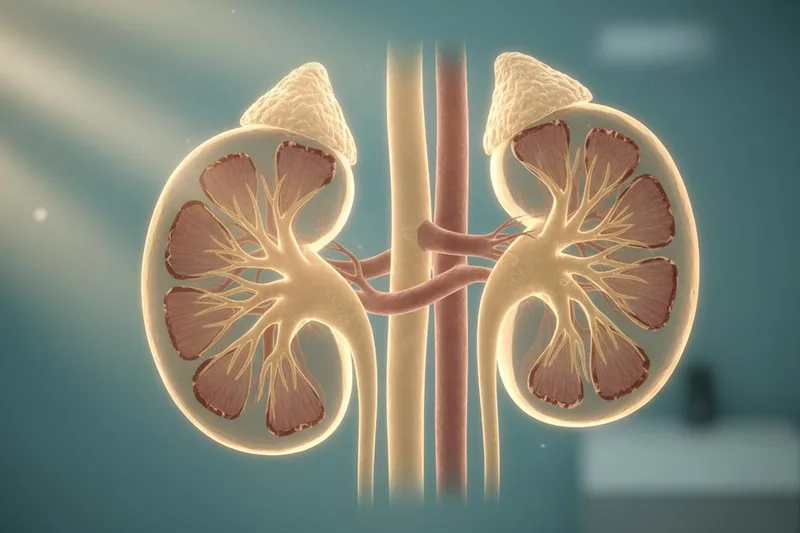
Do you know how much work the two little kidneys in our body do? In fact, the kidneys are the main organs that filter out waste products and purify the blood in our body. However, sometimes these kidneys can also develop diseases that we don't expect. Today we are going to talk about a condition that is a little serious, but if you are aware of it, it can help you control and prevent it.
How do the kidneys work? What is Renal Papillary Necrosis?
Simply put, our kidneys are like two super filters in our body. Their main job is to filter out the unwanted waste products in the blood and excrete them as urine. To do this, blood enters the kidneys and passes through many small channels. These waste products are collected from the outer part of the kidney and then come to the middle of the kidney, which is the kidney medulla . Here are funnel-shaped parts. The tip of these funnels, which are called the renal papilla, collects urine. From there, the urine goes through the ureters to the bladder and out. That's how our kidneys work.
The renal papillary necrosis we are talking about now is the death of cells and tissues in the middle part of the kidney (`Medulla`) and the renal papilla (`Renal Papilla`) that I mentioned earlier. Just think, when those areas don't work properly, the work done by the kidneys doesn't work properly, right? Because of this, the kidneys gradually weaken, and can eventually lead to kidney failure .
Who is most at risk for this condition?
This condition (Renal Papillary Necrosis) is most common in people over the age of 60. Doctors also point out that women are more likely to develop it than men.
What are the causes of Renal Papillary Necrosis?
There are several main causes that contribute to the occurrence of this disease. Let's take a look at what they are.
- Diabetes Mellitus : This is the single most important and common cause. People with poorly controlled diabetes are at high risk of kidney damage. High blood sugar levels over a long period of time damage the delicate blood vessels in the kidneys.
- Overuse of painkillers (NSAIDs) : If you regularly use painkillers (non-steroidal anti-inflammatory drugs, or NSAIDs) like aspirin, ibuprofen, or naproxen for a long time without consulting a doctor, you should be very careful. Taking too much of these can cause the blood vessels in the kidneys to narrow and damage the renal papillae.
- Sickle Cell Disease : This is a genetic disease. In this disease, the shape of red blood cells changes and they can get stuck in the blood vessels. This can also lead to impaired blood supply to the kidneys (Renal Papillary Necrosis).
In addition to these main causes, several other conditions can also cause Renal Papillary Necrosis:
- Chronic Liver Disease
- Pyelonephritis, a bacterial infection of the kidneys (which can damage the renal papillae)
- Renal Tuberculosis, a disease that affects the kidneys outside the lungs
- Renal Vein Thrombosis (blood clot in the vein that carries blood from the kidneys)
- Ureteral Obstruction (for example, due to urinary stones)
- Vasculitis, an inflammation of the blood vessels
The important thing is that not everyone who has one or more of these causes will develop (Renal Papillary Necrosis). But the risk is higher.
Does this affect both kidneys?
Yes, it is reported that in about seven out of ten people , this condition (Renal Papillary Necrosis) affects both kidneys .
What are the symptoms of (Renal Papillary Necrosis)?
In the early stages of this disease, there may be no symptoms . That's why it's difficult to recognize and treat it early. Imagine, you don't have any problems, but your kidneys may be damaged from the inside. However, it's also possible that this is accidentally detected when testing for another disease.
However, when the condition (Renal Papillary Necrosis) becomes more severe, symptoms such as these may appear:
- Painful urination (Dysuria)
- Fever and chills (especially if accompanied by an infection)
- Blood in the urine (`Hematuria`) - The amount of blood may be visible to the naked eye (the urine may turn red or brown), or it may be so small that it can only be seen under a microscope.
- Frequent need to urinate at night (`Nocturia`)
- An abnormal increase in the number of white blood cells in the urine (`Pyuria`) - this means that the urine may look like pus, and the urine may appear cloudy.
- Severe pain on either side of the back, between the ribs and hip bones (where the kidneys are). This pain can come on suddenly or gradually increase.
- Frequent urinary tract infections.
How is Renal Papillary Necrosis diagnosed?
Doctors will perform several tests to diagnose this condition (Renal Papillary Necrosis). After listening to your symptoms and medical history, they may order tests such as:
- Urography : This involves taking an X-ray, CT scan, or MRI of your kidneys. Before the test, you will be given a special dye (a dye) through a vein. This can help to clearly see areas of damage to the kidneys, such as changes in the papillae.
- Ureteroscopy : This involves inserting a thin, flexible tube (with a camera on the end) through the urethra to look directly inside the bladder, ureters, and kidneys. This allows the condition of the papillae to be clearly seen.
- Kidney Biopsy : In this test, a small piece of tissue is taken from the kidney using a special needle and examined under a microscope. This can help determine if cells have died or the tissue has been damaged.
Blood and urine tests
In addition, blood and urine tests to check kidney function are also very important:
- Blood urea nitrogen (BUN) test : This measures the amount of urea nitrogen in the blood. This is a waste product. This level increases in the blood when the kidneys are not working properly.
- Creatinine test : Creatinine is another waste product produced during normal muscle function. It is normally excreted by the kidneys. If its level is high in the blood, it also indicates that the kidneys are not functioning properly.
- Estimated Glomerular Filtration Rate (eGFR) : This is calculated by taking into account factors such as your blood creatinine level, age, gender, and body size. The eGFR value tells you how much blood your kidneys filter per minute. The lower this value, the less functional your kidneys are.
- Urinalysis : This involves taking a urine sample and examining it visually (color, clarity), microscopically (for blood cells, pus cells, bacteria, papillary debris), and chemically (for protein, sugar). Sometimes, fragments of the renal papillae can also be seen under the microscope.
- Urine protein/creatinine ratio : This measures how much protein is in the urine. Healthy kidneys excrete very little protein. High levels of protein in the urine are a sign of kidney damage.
What are the possible complications of (Renal Papillary Necrosis)?
If this condition (Renal Papillary Necrosis) is not treated properly, the condition can worsen and lead to serious complications.
- Chronic Kidney Disease (CKD) : Due to continuous damage to the kidneys, their function gradually decreases, leading to chronic kidney disease.
- Kidney Failure : If the condition worsens, the kidneys may stop working completely, which can lead to kidney failure.
- To survive, you may need dialysis (cleaning your blood with a machine) or a kidney transplant .
- It has also been found that this condition increases the risk of developing a type of cancer called transitional cell cancer, which develops in the kidney or ureter.
- There is also a risk of severe infection (sepsis).
How is Renal Papillary Necrosis treated?
There is no specific treatment for Renal Papillary Necrosis. The main treatment is to treat the underlying cause of the condition . For example:
- If it is due to diabetes, then it is important to control the diabetes well.
- If it is due to NSAID use, stop taking those medications.
- If it's due to an infection, give it antibiotics.
- If there is a blockage in the urinary tract, it should be removed.
The primary goal is to limit further damage to the kidneys and preserve kidney function as much as possible.
The success of treatment depends on the extent of kidney damage and the cause of the disease. In some severe cases, the disease may continue to worsen despite treatment. However, in less severe cases, and if the cause is treated quickly, kidney function may stabilize or even improve slightly.
Can I protect myself from Renal Papillary Necrosis?
Yes, there are things we can do to protect ourselves from this situation, to a large extent.
- The most important thing is to maintain your overall health . Eating a balanced diet, drinking enough water, and exercising regularly are important.
- If you are taking over-the-counter painkillers (NSAIDs), use them only as directed on the package or as directed by a doctor. Do not take them more often or for longer periods of time than necessary. Do not take them routinely for minor aches and pains or for headaches.
- If you have diabetes (Diabetes Mellitus), sickle cell disease (Sickle Cell Disease), or other diseases that can cause kidney disease (Renal Papillary Necrosis), follow your doctor's instructions exactly. Go to clinics on time. Take the prescribed medications. Follow a proper diet.
- It is very important to have lab tests to check kidney function at regular intervals as directed by your doctor, and to identify any changes early.
What is the recovery rate for someone with this disease?
Your prognosis depends on the cause of the disease, the extent of kidney damage, your overall health, and how quickly you start treatment.
- For people with diabetes, the results may be a little less favorable , as diabetes is a long-term disease and is not always well-controlled. If you have diabetes, controlling it as well as possible will go a long way in preventing kidney damage.
- In severe cases (Renal Papillary Necrosis), it can lead to dialysis and kidney transplantation . If infection occurs, it can be life-threatening. There is a possibility of death due to kidney failure.
- In sickle cell disease, renal papillary necrosis is just one of several complications that can occur in the kidneys. When all of these complications are combined, the patient's life expectancy can be significantly reduced.
When should I see a doctor?
If you have one or more of these symptoms, don't waste time and definitely see a doctor :
- If you have blood in your urine (urine turns red, pink, or brown).
- If you have a fever or chills (especially with other symptoms).
- If you have pain or burning when urinating.
- If you have new or worsening pain on either side of your back, in the area between your hip bones and ribs (kidney area).
- If you get frequent urinary tract infections.
- If you experience decreased urination or swelling in your legs and ankles (these may be signs of decreased kidney function).
Remember, these symptoms can also be caused by other illnesses. However, it is important to get checked out by a doctor to find out the exact cause.
Finally, what to remember (Take-Home Message)
Our kidneys are an indispensable organ for our body, performing a silent and important function. They filter out waste products and maintain a balance of water and salt in the body. Uncontrolled diabetes, excessive use of painkillers (NSAIDs), and various other medical conditions can damage the kidneys, leading to serious conditions such as Renal Papillary Necrosis.
The worst part about this disease is that you may not have any symptoms in the early stages. So, if you have diabetes, are a frequent user of NSAIDs, or have other risk factors for kidney disease, talk to your doctor about ways to protect your kidneys. By getting regular checkups and following a healthy lifestyle, you can keep your kidneys healthy. Early awareness and action are always the best thing to do.
` Kidney, renal papillary necrosis, kidney disease, diabetes, NSAIDs, kidney failure, urine


💬 Comments (0)
No comments yet. Be the first to share your thoughts here.
Add Your Comment