
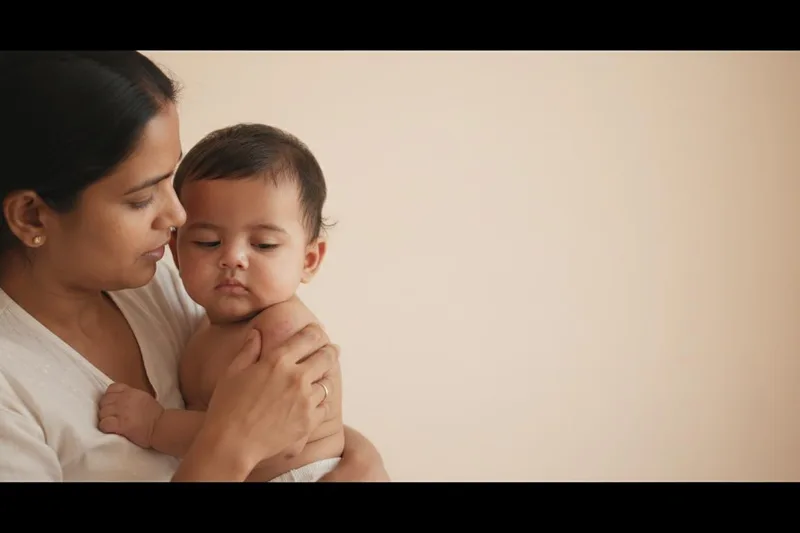
Has your little one suddenly developed a high fever for no apparent reason? Has the fever lasted for three or four days, and then, as soon as it subsided, they developed small pink spots all over their body? Many parents are worried about this. But most of the time, it's nothing to worry about. Today, we're talking about 'roseola', or roseola, which is very common among young children, but not many people know about it.
Simply put, what is Roseola?
Roseola is a viral infection. It most commonly affects babies and young children under the age of two. The main symptom is a sudden, high fever. This fever can last for three to four days. After that, the fever usually subsides. However, after the fever subsides, some children develop pink spots or blisters on their bodies. These spots usually heal on their own in two to three days.
In most cases, this is not serious, and the child can recover at home within a week. However, it is important to be aware of one complication that can come with this. That is febrile seizures . Although this is a very scary thing to see, it usually gets better quickly without harm. However, in a child with a weak immune system, roseola can cause more serious complications.
Although this disease can occur at any time of the year, it is more common in the spring and autumn. This is a contagious disease. It is spread through saliva and respiratory droplets. The special thing is that it can be transmitted even from a person who does not show symptoms. After 24 hours after the child's fever has subsided, it is not contagious to others.
This disease is also known by several other names:
- Roseola infantum
- The Sixth Disease
- Baby measles
- Three-day fever
How common is this condition?
Roseola is very common. By the time a child is two years old, they have probably had at least one episode of the disease. Some studies show that roseola accounts for 45% of all fevers in babies. And only 12% of babies who are brought to the emergency room (ETU) with fever have roseola.
Although it can develop at any age, it is most common in babies and young children. It is very rare in older children or adults.
What are the symptoms of Roseola?
The main symptom is a sudden, high fever, usually reaching 39.5 to 40.5 degrees Celsius (103-105 degrees Fahrenheit) . After the fever subsides, the rash spreads throughout the body.
Other symptoms that may accompany fever
During a fever, before the rash appears, some children may also show these symptoms:
- Vomiting
- Bloating (diarrhea)
- Appetite
- Cough
- Sore throat
- Cold (cold)
- Pink eye
- Swelling of the eyelids or around the eyes
- Swelling of the neck or back of the head (lumps)
- Small pink or red spots inside the throat
Details about the rash that appears after the fever subsides
A rash may begin to appear within 24 hours of your child's fever. In fair-skinned children, these appear pink-red, but in darker-skinned children, these rashes may be a little harder to see. Some of these rashes may be level with the skin, while others may be slightly raised. If you press on one of these rashes with your finger, it will turn pale.
The rash usually starts on the baby's chest, back, and stomach. It then spreads to the face, neck, arms, and legs. It's normal for mothers to be scared when their baby suddenly has rashes all over their body, but don't worry. The rashes that appear in rosacea don't itch or cause pain . They usually go away on their own within two to four days.
Remember! In rosacea, these symptoms appear after the fever has completely subsided. This is one of the most important signs to recognize this disease.
How is this different from measles?
Measles can also cause damage to the body. But there are clear differences between the two diseases. It is very important for you to understand this.
| Characteristic | Roseola | Measles |
|---|---|---|
| The color of the leaves | Pink-red in color. | Red or reddish-brown in color. There may be small white blisters on top of the red spots. |
| The joining of the dots | The leaves are located separately from each other, individually. | The lesions can coalesce and form large spots. |
| Where the pain begins | It starts in the chest, back, and stomach and spreads to other areas. | It starts from the face and spreads down the body. |
| Does the skin go away when the wound heals? | The skin doesn't peel off. | As the wound heals, the skin peels off. |
If you have any suspicion that your child has measles, see your doctor immediately . Measles is a disease that can cause more serious and dangerous complications than rubella. Measles is also very contagious through the air. If your child has been vaccinated against measles, they can be protected from measles.
How does rosacea develop? Is it contagious?
Roseola is caused by a virus. It's called Human Herpesvirus 6 (HHV-6) . Sometimes it's also caused by a virus called Human Herpesvirus 7 (HHV-7). Although it has 'Herpesvirus' in its name, it's not related to the herpes virus that causes genital herpes or cold sores. So don't worry about it.
Yes, roseola is contagious. It is spread through droplets of saliva or respiratory droplets from coughing or sneezing from an infected person (even before symptoms appear). Symptoms can appear between 5 and 15 days after the virus enters the body.
A child can spread the disease to others while they have a fever and for up to 24 hours after the fever has subsided. So, even if your child is playing well, avoid sending them to daycare centers or outside to play until the fever has completely subsided for 24 hours. If they only have sores on their bodies, they are not contagious.
Are there any complications to be afraid of?
Most children do not develop any complications. However, the most common complication that can occur is a febrile seizure . This condition occurs in about 10%-15% of children aged 6-18 months with roseola. It usually occurs on the first day of fever.
Symptoms of a febrile seizure are:
- The child's body is twitching, stiff, or twitching.
- The child loses consciousness and his eyes roll up.
- This can include vomiting, drooling, and unintentional urination or defecation.
If your child has never had a febrile seizure before and is showing these symptoms, take them to the nearest hospital emergency department (ETU) immediately . Do not try to treat a first seizure at home.
Do not give your child more paracetamol or ibuprofen than the doctor has prescribed to prevent a febrile seizure. Doing so may damage the child's liver or kidneys.
Very rarely, more serious complications can occur, especially in children with weakened immune systems due to conditions such as cancer or autoimmune diseases. For example:
- Lung infections and inflammation (Pneumonia)
- Aseptic meningitis (swelling of the membranes covering the brain and spinal cord)
- Brain swelling (Encephalitis)
How does the doctor diagnose the disease? What is the treatment?
Usually, a doctor diagnoses this disease by asking you about your symptoms and examining your child. When you hear the story that "the fever went down and then the child was born," the doctor becomes suspicious. In most cases, blood tests are not necessary.
Regarding treatment:
- There is no specific treatment for rosacea.
- Since this is a viral infection , antibiotics will not help.
- Since the lesions on the body do not itch or hurt, they do not require treatment.
- The doctor may recommend a medicine like paracetamol or ibuprofen to control your child's fever. Never give aspirin to a child under 17 years of age. It can cause a dangerous condition called Reye's syndrome.
You can see a doctor anytime!
It's normal to feel a little scared when your child has a fever. In these cases, it's important to know whether you need to call a doctor or go to the hospital right away.
| Status | What to do |
|---|---|
| Talk to your doctor... | |
| The child's fever is above 39 degrees Celsius (102 F) for 24 hours. | Seek medical advice even if you have no other symptoms. |
| The child is not as healthy and playful as usual even after the fever has subsided. | Inform the doctor about the child's condition. |
| Itching or pain in the body. | See a doctor to make sure it's not another condition. |
| Signs of dehydration (dry mouth and lips, no tears when crying, no urination for 6-8 hours). | Seek medical advice immediately. |
| Go to the Emergency Treatment Unit (ETU) immediately... | |
| The child has their first febrile seizure. | Don't waste time and take him to the nearest hospital. |
| Febrile seizures lasting more than 5 minutes. | This is an emergency. Hospitalize immediately. |
| Difficulty breathing. | This may be a symptom of a condition such as pneumonia. |
| Neck pain or stiffness, frequent vomiting, excessive sleepiness. | These could be signs of a brain infection. Go to the hospital immediately. |
Take-Home Message
- Roseola is a viral infection that is common among young children. It starts with a high fever and then spreads to the body after the fever subsides.
- The bruises on the body are pink, don't itch or hurt, and heal on their own in a few days.
- Most of the time, this is not a serious illness. But be careful about febrile seizures. If you have a seizure for the first time, go to the hospital immediately.
- Treatment is to control the fever and keep the child comfortable. Antibiotics do not cure this disease.
- If you have any doubts or concerns about your child's condition, always consult your doctor.




💬 Comments (0)
No comments yet. Be the first to share your thoughts here.
Add Your Comment