
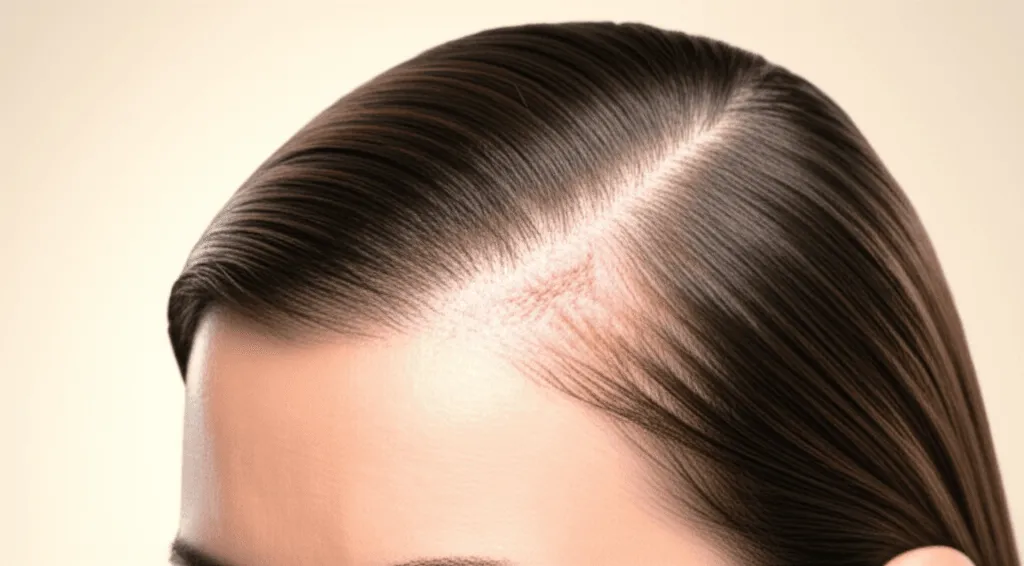
Have you ever looked in the mirror and noticed smooth, shiny bald patches on your scalp? Sometimes these areas might also look red or feel itchy and flaky.
Finding unexpected hair loss can feel stressful and scary. Today, we will explore a specific type of hair loss known as scarring alopecia, or cicatricial alopecia.
In simple terms, this condition happens when the tiny pockets where your hair grows, called hair follicles, are permanently destroyed and replaced by scar tissue.
Key Takeaways at a Glance.
- Scarring alopecia permanently destroys hair follicles, meaning hair cannot grow back in those specific spots.
- It is not contagious, and anyone can develop it, though it is more common in adults.
- Early diagnosis by a dermatologist is essential to stop the inflammation and prevent further hair loss.
- Treatment usually focuses on calming the immune system and reducing inflammation using prescription medicines.
Know your body mass index (BMI) and weight classification
What is Scarring Alopecia?
Scarring alopecia is a group of hair loss disorders where inflammation destroys your hair follicles.
Think of your hair follicles like tiny seeds in the ground. If the soil and the seed pouch are completely destroyed, a new plant cannot grow there.
That is why hair loss from scarring alopecia is usually permanent.
Several underlying issues can cause this destruction:
- Infections: Severe bacterial or fungal infections on your scalp can damage the skin.
- Harsh Chemicals: Strong chemical treatments or improper hair products can injure the scalp.
- Burns: Physical burns or severe trauma can destroy hair follicles.
- Autoimmune Disorders: Your body's immune system mistakenly attacks your own healthy hair follicles.
Because the hair follicles turn into scar tissue, they lose their ability to produce hair.
That makes early detection extremely important for protecting your remaining hair.
The Impact of Scarring Alopecia.
This condition can develop anywhere on your body that has hair, but it most often appears on the scalp.
When patches of hair disappear, it can change your physical appearance greatly.
Because hair is closely tied to self-image, this condition often creates emotional and psychological distress.
You might feel anxious, embarrassed, or hesitant to engage in social activities.
Recognizing the emotional side of hair loss is just as important as treating the physical symptoms.
What Does Scarring Alopecia Look Like?
Scarring alopecia typically shows up as distinct bald patches on your scalp.
You might have just one smooth patch or several scattered across your head.
The skin in these bald areas often looks smooth, tight, and shiny because scar tissue has formed beneath the surface.
However, appearance varies from person to person depending on the underlying cause.
Some people experience additional skin changes in the affected areas, including:
- Redness or discoloration of the scalp.
- Flaking, scaling, or peeling skin.
- Small fluid-filled blisters or pimples around the edges of the patch.
If you spot any of these warning signs, schedule an appointment with a doctor right away.
Difference Between Scarring and Nonscarring Alopecia.
People often confuse scarring alopecia with nonscarring hair loss.
Understanding the difference helps you know what to expect from your treatment plan.
| Feature. | Scarring Alopecia. / Nonscarring Alopecia. |
|---|---|
| Follicle Status. | Scarring Alopecia.: Permanently destroyed and replaced by scar tissue. Nonscarring Alopecia.: Follicles remain alive and intact. |
| Hair Regrowth. | Scarring Alopecia.: Usually impossible in the affected areas once scarred. Nonscarring Alopecia.: Often temporary; hair can grow back. |
| Common Example. | Scarring Alopecia.: Lichen planopilaris or central centrifugal cicatricial alopecia. Nonscarring Alopecia.: Male or female pattern baldness. |
Different Types of Scarring Alopecia.
Medical experts divide cicatricial alopecia into two main categories:
1. Primary Scarring Alopecia: Inflammation or an autoimmune disorder directly attacks and destroys the hair follicles.
2. Secondary Scarring Alopecia: External trauma, severe burns, deep infections, or radiation therapy destroys the skin and follicles indirectly.
Primary Scarring Alopecia Types.
There are several specific subtypes of primary scarring alopecia that doctors diagnose:
- Central Centrifugal Cicatricial Alopecia (CCCA): This type often affects adult women, especially women of African descent, often starting around age 30. It typically begins at the crown of the head and spreads outward. Chemical relaxers, hot styling tools, tight hairstyles like weaves, and genetics may contribute to its development.
- Chronic Cutaneous Lupus Erythematosus (CCLE): This condition stems from lupus erythematosus affecting the skin. Alongside hair loss, you may experience skin rashes, discoloration, and high sensitivity to sunlight.
- Folliculitis Decalvans: This rare inflammatory condition is often linked to bacterial infections like Staphylococcus aureus. Persistent inflammation gradually destroys hair follicles across the scalp.
- Lichen Planopilaris: This is one of the most common forms of primary scarring alopecia, especially in women over 50. It causes scalp scaling, burning, intense itching, and small purple-red bumps around hair openings.
Does Scarring Alopecia Spread or Spread to Others?
Scarring alopecia is not a contagious disease.
You cannot catch it from another person, and you cannot transmit it through physical contact or sharing items like hairbrushes.
However, within your own body, the condition can slowly spread across your scalp if left untreated.
That is why early intervention by a medical professional is so vital.
Who Can Get Scarring Alopecia?
Anyone can develop scarring alopecia, but it occurs much more often in adults than in children.
Certain types affect specific groups more often.
For instance, CCCA is diagnosed primarily in women of African descent. This lichen planopilaris often affects middle-aged and older adults.
How Common is Scarring Alopecia?
Hair loss clinics report that scarring alopecia accounts for roughly 7% of all hair loss patient visits.
Compared to common nonscarring hair loss conditions—which affect over half of adults over 50—scarring alopecia is relatively rare.
What Causes Scarring Alopecia?
In most primary forms of scarring alopecia, inflammation targets a specific region of the hair follicle called the bulge.
This bulge area houses essential stem cells and oil glands needed to regenerate hair.
When chronic inflammation destroys this bulge, the follicle turns into scar tissue through a process called fibrosis.
Healthy scalps feature visible tiny openings where hairs emerge, known as follicular ostia.
In scarring alopecia, these tiny openings close up permanently.
Unlike nonscarring hair loss, which damages the lower bulb portion while sparing stem cells, scarring alopecia destroys the crucial regenerative machinery entirely.
Can Cancer Treatments Cause Scarring Alopecia?
Chemotherapy drugs often cause hair loss, but they do not cause scarring alopecia.
Chemotherapy disrupts rapidly dividing cells in hair follicles, causing hair shafts to break or fall out.
However, chemotherapy rarely destroys the follicle stem cells permanently, which is why hair usually regrows after cancer treatment ends.
In contrast, radiation therapy to the head can cause secondary scarring alopecia.
High radiation doses can burn the skin and permanently destroy hair follicles.
Symptoms of Scarring Alopecia.
The primary symptom is gradual or sudden hair loss, leaving behind smooth patches on the scalp.
Some people notice hair shedding slowly over several years. This others experience rapid bald spot expansion.
In addition to losing hair, you might experience uncomfortable or painful physical sensations on your scalp:
- Bleeding or oozing from irritated areas.
- Blister formation or crusting.
- A persistent burning or stinging sensation.
- Severe itching, tingling, or localized scalp tenderness.
- Pus-filled bumps or pustules.
- Noticeable redness or abnormal skin color changes.
If you experience any combination of these symptoms, consult a doctor promptly.
How is Scarring Alopecia Diagnosed?
Doctors use several diagnostic steps to confirm this condition:
1. Physical Examination: Your doctor examines your scalp closely, checking the pattern of hair loss, skin texture, and whether follicular openings remain visible.
2. Medical History Review: Your doctor asks about your general health, family medical history, current medicines, and hair care routines.
3. Skin Biopsy: This is the only clear way to confirm scarring alopecia. Your doctor removes a tiny sample of scalp skin and sends it to a pathology lab. A specialist examines the tissue under a microscope to identify inflammatory immune cells and scar tissue.
Are There Different Stages of Scarring Alopecia?
Yes. Sometimes a skin biopsy reveals dense scar tissue without active inflammatory cells.
Doctors call this End-Stage Scarring Alopecia (ESSA).
ESSA means the condition has passed its active inflammatory phase and settled into permanent scarring.
Treatments offer fewer benefits once the condition reaches this final stage.
What Kind of Doctor Diagnoses Scarring Alopecia?
A dermatologist is the medical specialist best equipped to diagnose and treat scarring alopecia.
Because diagnosing hair disorders requires specialized training, try to find a dermatologist who focuses specifically on hair and scalp disorders.
Is There a Cure for Scarring Alopecia?
Currently, there is no complete cure for scarring alopecia.
Medical treatments focus primarily on controlling inflammation, stopping the condition from spreading, and preserving your remaining hair.
Cosmetic approaches can help manage the appearance of bald patches.
How is Scarring Alopecia Treated?
Treatment plans depend entirely on the specific type of scarring alopecia you have.
Doctors often prescribe anti-inflammatory medicines to calm the immune cells attacking your hair follicles.
These medicines may include oral pills like hydroxychloroquine or corticosteroid injections directly into the scalp.
Topical creams and specialized medicated oils also help soothe localized inflammation.
If a bacterial infection drives the condition, doctors prescribe oral antibiotics such as doxycycline or minocycline.
Patients often take these medicines consistently for six to twelve months until inflammation subsides and hair loss stops. If symptoms flare up later, doctors may restart treatment.
Can You Get a Hair Transplant if You Have Scarring Alopecia?
Hair transplants move healthy hair follicles from one part of the scalp to a thinning or bald area.
However, hair transplants are generally not recommended for people with active scarring alopecia.
Scar tissue beneath the skin lacks a healthy blood supply, making it difficult for transplanted follicles to survive.
If your condition has been completely inactive for many years, a dermatologist might evaluate you for a small surgical procedure.
Always discuss surgical options thoroughly with your specialist first.
Can You Use Platelet-Rich Plasma (PRP) Therapy?
PRP therapy uses a concentrated solution of your own blood platelets to reduce inflammation and promote tissue healing.
While PRP helps treat nonscarring hair loss effectively, its role in scarring alopecia is less established.
Some clinical studies suggest PRP may help manage certain conditions like lichen planopilaris, but more research is needed.
Consult your dermatologist to see if PRP therapy makes sense for your specific case.
Will My Hair Grow Back if I Have Scarring Alopecia?
Because scarring alopecia permanently destroys hair follicles, hair usually does not grow back in fully scarred areas.
However, if you catch the condition in its very early stages, medical treatment can stop the inflammation and save hair follicles before they scar permanently.
This highlights why acting quickly upon noticing symptoms is so crucial.
When to Seek Immediate Medical Help:
If you experience sudden, severe scalp pain, spreading infection, high fever, blistering skin reactions, or heavy bleeding on your scalp, contact a doctor right away or visit your nearest Emergency Department (ER or A&E). Call 911 (US/Canada) or 999 (UK) if you experience severe allergic reactions or systemic medical emergencies.
Can Scarring Alopecia Be Prevented?
Preventing scarring alopecia can be difficult because researchers do not fully understand all of its triggers.
Starting medical treatment promptly helps prevent the condition from expanding and protects your remaining hair.
Avoiding harsh chemical treatments, tight hairstyles that pull on roots, and excessive heat styling can also support overall scalp health.
What is the Long-Term Outlook?
Your long-term outlook depends heavily on how early you begin treatment.
Some people experience minor hair loss in just one small area. This others develop larger bald patches.
Because flare-ups can recur, some patients require ongoing medical supervision and long-term management.
Questions to Ask Your Doctor.
To make the most of your medical appointments, consider asking your dermatologist these helpful questions:
- Are there any home remedies or gentle hair care routines that can support my scalp?
- What are the potential side effects of taking anti-inflammatory medicines long-term?
- Can diet or lifestyle changes help me manage this condition?
- What are the chances that my hair loss will spread further across my scalp?
💡 Take-Home Message.
Managing scarring alopecia can feel challenging due to both physical symptoms and emotional hurdles.
While the condition does not typically cause severe internal health emergencies, coping with visible hair loss can feel overwhelming.
Open up to your doctor about how the condition affects your daily life so they can connect you with proper support and counseling resources.
Remember that early diagnosis and consistent medical care remain your best tools for controlling the condition.
Stay informed, communicate openly with your healthcare team, and take proactive steps to protect your scalp health.
References.
- 📚 Griggs J et al. Fibrosing alopecia in a pattern distribution. J Am Acad Dermatol. 2021.
- 📚 Almohanna HM et al. The Role of Vitamins and Minerals in Hair Loss: A Review. Dermatol Ther (Heidelb). 2019.
- 📚 Jimenez F et al. Hair transplantation: Basic overview. J Am Acad Dermatol. 2021.
- 📚 Starace M et al. Female Androgenetic Alopecia: An Update on Diagnosis and Management. Am J Clin Dermatol. 2020.





No comments yet. Be the first to share your question or experience below.