

Imagine you are sweeping your yard or cleaning out old storage boxes in the garage. Suddenly, you feel a sharp, piercing pain in your hand or foot as if a needle just poked you hard. You pull your hand back quickly and look down to see a scorpion scurrying across the floor and away from you.
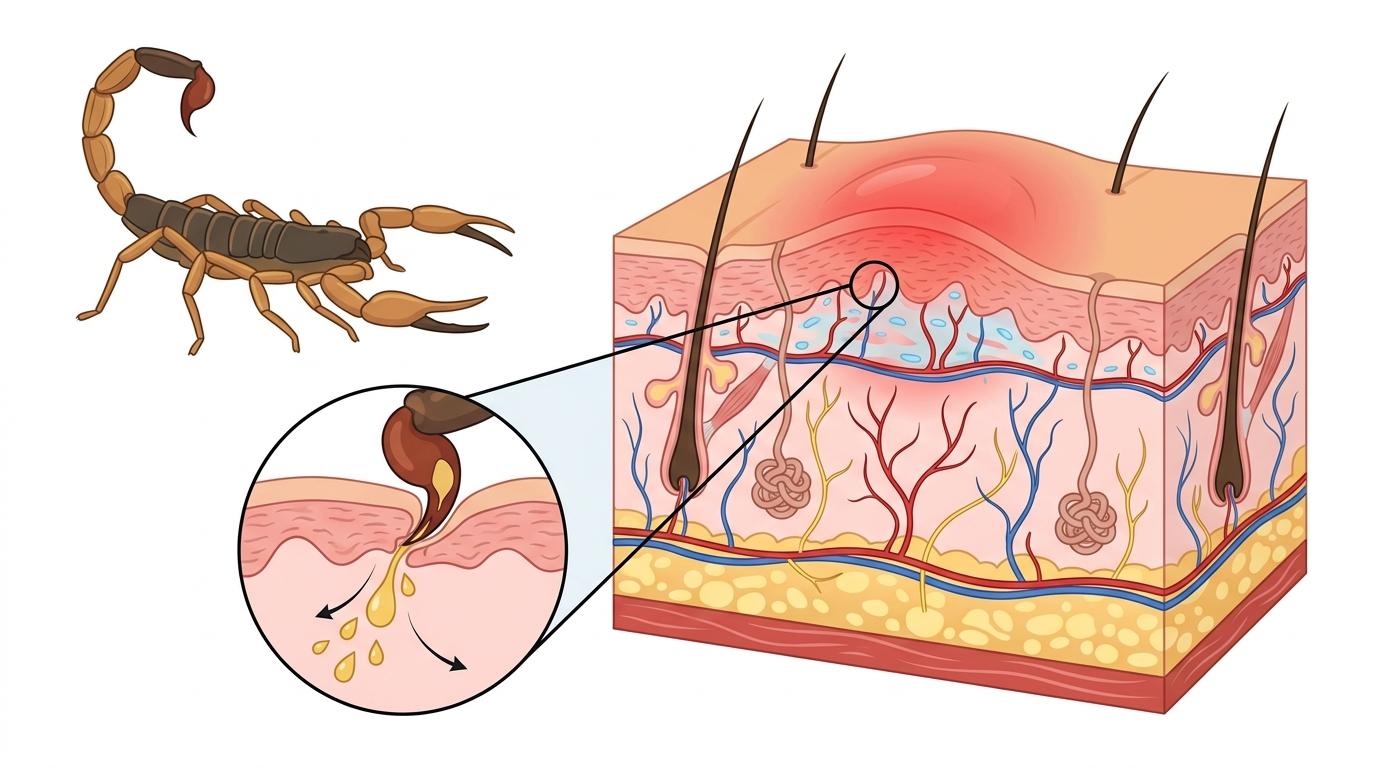
Feeling terrified and panicked in this exact moment is completely normal. However, rather than giving in to panic and running around in circles, knowing precisely what steps to take next is your absolute best defense. Let us walk through everything you need to know about scorpion stings, how to treat them safely at home, and when to seek emergency medical care.
Key Takeaways About Scorpion Stings.
- Most scorpion stings cause only localized pain and swelling that you can safely manage at home.
- Always stay calm because anxiety speeds up your heart rate and spreads venom faster through your bloodstream.
- Wash the sting wound thoroughly with soap and clean water to prevent any secondary skin infections.
- Apply a cool compress or an ice pack wrapped in a cloth to reduce pain, inflammation, and swelling.
- Watch closely for whole-body symptoms like trouble breathing, racing heart, or severe vomiting, and get emergency help right away.
What Happens Inside Your Body When a Scorpion Stings You?
First of all, you should know that the vast majority of scorpion species do not possess dangerously lethal venom. In most cases, the resulting signs and symptoms stay strictly localized to the exact spot where the stinger pierced your skin.
However, certain situations require extra caution, especially when young children, older adults, or people with pre-existing chronic health conditions get stung. also, if you encounter a high-risk species such as the Indian Red Scorpion, your body can experience much more severe systemic reactions.
Let us break down the common signs and symptoms into two distinct categories so you can monitor your health accurately.
| Symptom Category. | Detailed Description & What to Look For. |
|---|---|
| Local Symptoms (At the Sting Site). |
These local signs occur most often after a standard sting:
|
| Systemic Symptoms (Whole Body). |
These whole-body signs can become life-threatening emergencies. If you notice any of these, go to the hospital right away:
|
Always remember that not every scorpion sting turns severe or dangerous. Even so, staying vigilant and watching your symptoms closely over the first few hours is essential for your safety.
Quick Home First Aid Steps You Should Take Right Away.
The moment a scorpion stings you or a family member, take a deep breath, stay calm, and follow these simple step-by-step first aid guidelines:
1. Stay Calm and Relax: Try your best not to panic. When you panic, your heart beats much faster, which pumps the venom through your bloodstream much more quickly.
2. Clean the Wound Thoroughly: Wash the sting site gently using mild soap and clean running water. This simple hygiene step prevents bacteria from entering and causing a secondary skin infection.
3. Apply a Cold Compress: Wrap a few ice cubes in a clean washcloth or towel. Press the cold compress gently against the sting area for about 10 minutes, remove it for 10 minutes, and then repeat. This cold therapy helps numb the pain and lower local swelling. Never place bare ice directly onto your skin because extreme cold can cause frostbite or tissue damage.
4. Elevate the Limb: If the scorpion stung your hand or foot, try to keep that arm or leg propped up higher than the level of your heart. Resting it on a pillow works wonderfully to reduce throbbing and swelling.
5. Take Simple Pain Relief: You can take an over-the-counter pain medicine like paracetamol to ease mild discomfort. However, if you are treating a child, have underlying health conditions, or take other regular medicines, always consult a doctor or pharmacist before giving any pills.
6. Manage Itching Safely: If you develop localized itching around the bite, an over-the-counter oral antihistamine or a mild hydrocortisone cream can provide relief. Checking with a doctor first ensures you use the safest product for your specific health needs.
Dangerous Mistakes You Must Never Make!
Many traditional myths and dangerous home remedies persist within communities. You must avoid these harmful practices entirely:
- Never cut, slice, or scratch the wound open with a knife or razor blade in an attempt to bleed out the venom.
- Never try to suck out the venom with your mouth, as this introduces bacteria from your mouth into the wound and does not remove the venom.
- Never tie a tight tourniquet, rope, or band around the limb above the sting site to cut off blood circulation.
- Never apply crushed leaves, tree bark, mud, or unverified herbal mixtures directly onto the broken skin. These unsterile substances often cause severe bacterial infections and tetanus.
When Do You Need to See a Doctor Right Away?
Certain situations demand immediate professional medical evaluation. If any of the following conditions apply, do not waste time trying home remedies. Go directly to the nearest hospital Emergency Department (ER) or call 911 (US/Canada) or 999 (UK) right away.
- A young infant, small child, or frail older adult receives a scorpion sting.
- The affected person has underlying health problems such as heart disease, chronic high blood pressure, asthma, or severe allergies.
- You notice any of the whole-body systemic symptoms we discussed earlier, such as trouble breathing, a racing heartbeat, dizziness, or frequent vomiting.
- The local pain grows steadily worse over time and becomes completely unbearable or impossible to control at home.
- You suspect the sting came from a highly venomous species, such as the Indian Red Scorpion.
If it is safe to do so without risking another sting, you can safely capture the scorpion in a secure, sealed container and bring it to the hospital. Seeing the creature helps medical professionals identify the exact species and give appropriate antivenom or supportive treatment much faster. Never put yourself or others in danger trying to catch it.
If you have any doubts or questions while at home, you can also call your local poison control center or health hotline for professional guidance.
How to Prevent Scorpion Stings in and Around Your Home.
As the old saying goes, prevention is always better than cure. Keeping scorpions away from your living spaces protects you and your loved ones year-round. Practice these simple preventative habits:
- Wear Protective Footwear: Always put on shoes or slippers when walking outside, especially after dark or when walking through grassy and wooded areas.
- Wear Work Gloves: Put on thick gardening gloves when working in the yard, stacking firewood, moving rocks, or clearing out old lumber piles.
- Check Shoes and Clothing: Shake out your shoes and boots thoroughly before sliding your feet inside, especially if you left them outside or in a garage overnight. Shake out towels and clothing left hanging on outdoor lines before wearing them.
- Keep Your Yard Tidy: Clear away piles of leftover wood, loose bricks, stone piles, and garden debris from around your house. These dark, damp spaces make perfect hiding spots for scorpions.
- Inspect Bedding Regularly: Shake out your blankets, sheets, and pillows before going to sleep at night, especially in rural areas or regions known for scorpion populations.
- Seal Cracks and Gaps: Repair cracks in your foundation, seal gaps around doors and windows, and install fine window screens to stop scorpions from crawling inside your home.
⚠️ Emergency Red Flags: When to Call 911 or 999.
Call emergency services or rush to the nearest hospital emergency room right away if the stung person experiences severe breathing difficulty, chest pain, uncontrollable muscle spasms, excessive drooling, or confusion. Quick medical intervention saves lives when dangerous venom is involved.
Take-Home Message.
- Most scorpion stings are not life-threatening, but you must monitor all symptoms closely for any sign of worsening.
- Stay calm, wash the wound carefully with soap and water, and apply a cool ice pack wrapped in cloth to reduce pain.
- Seek emergency medical attention right away if a child, an older adult, or someone with chronic health issues gets stung.
- Never ignore whole-body red flag symptoms like breathing trouble, racing heartbeat, or repeated vomiting.
- Always wear protective shoes and gloves when working outdoors, and keep your living environment clean and free of debris.
A Note from Dr. Priya Sammani.
Most common scorpions found in tropical regions possess mild venom that causes localized pain and inflammation rather than fatal toxicity. However, stings from high-risk species like the Indian Red Scorpion or stings affecting young children require immediate hospital evaluation. Never hesitate to seek professional medical advice if you feel unsure about your symptoms.


💬 Comments (0)
No comments yet. Be the first to share your thoughts here.
Add Your Comment