
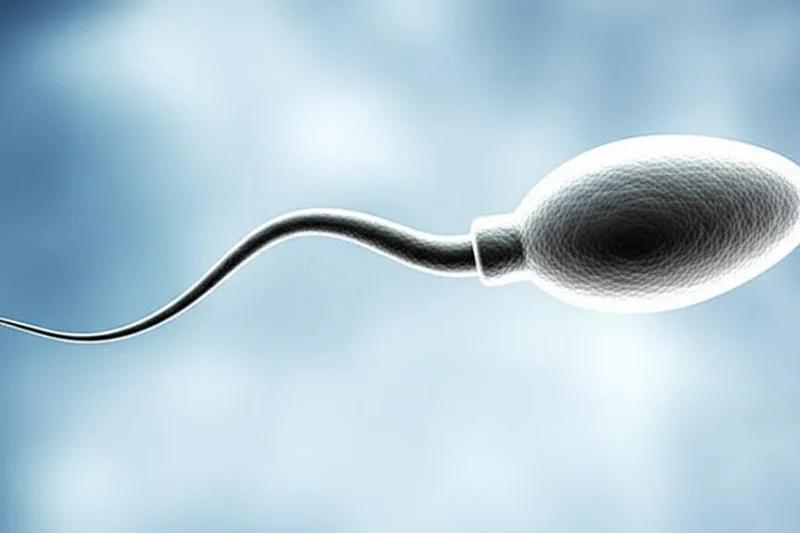
You've probably heard of "Semen" or seminal fluid. It's a very important thing, especially for men. But you may have questions about what it is, how it's produced, what happens to it, and what problems can arise from it. Don't worry, today we'll talk about all this in a simple way that you can understand. Just like talking to a friend.
What is semen? Simply put...
Semen is a thick, sticky, whitish-gray fluid that comes out of the male reproductive system. Many people think that it only contains sperm. But that's not true. Semen contains sperm, but it also contains many other things that nourish and protect the sperm, and help it to easily enter the vagina and join with an egg to achieve conception.
Some people call it something like this:
- Seminal fluid
- Ejaculate
- Some people also say "cum" in colloquial speech.
So, what actually happens to this semen?
The main thing is that semen helps carry sperm out of your body, into the female reproductive system, where they can join with an egg and begin the process of developing into an embryo. Simply put, it is essential for conception. It is like the "vehicle" that sperm need to travel to their destination.
When does this semen come out?
Normally, during sexual stimulation, semen is released from the penis as soon as an orgasm occurs (we call this ejaculation). However, sometimes semen can be released even without orgasm. Such conditions are called ``Anorgasmia'' or ``Ejaculatory anhedonia''.
Where is this semen produced?
Your seminal vesicles and prostate gland produce a white fluid. This fluid combines with sperm produced in your testicles to form semen.
Imagine, a semen sample has approximately the following composition:
- Between 65% and 75% of the fluid comes from the seminal vesicles.
- Between 25% and 30% of the fluid comes from the prostate gland.
- Sperm makes up between 1% and 5% .
You see, sperm is only a small part of this.
So, where is this semen stored?
A tube behind your testicles (called the epididymis) stores sperm until they mature. Then, these sperm combine with the previously mentioned seminal vesicle fluid and prostate fluid to form semen.
What does semen contain?
Semen mainly contains:
- Water
- Mucus (this is a lubricant, different from the mucus that comes from the nose)
- Plasma
In addition, there are also these things in small quantities:
- Calcium
- Citrate
- Fructose (this is a type of sugar)
- Glucose (a type of sugar)
- Lactic acid `(Lactic acid)`
- Magnesium
- Potassium
- Zinc
These nutrients nourish the sperm, giving them the energy to travel the necessary distance to achieve conception, much like fuel for a car.
What are the common conditions that affect semen?
There are some medical conditions that can be associated with semen. Let's take a look at what they are:
- Sexually transmitted infections (STIs): Yes, various STIs can be transmitted through semen. For example, human papillomavirus (HPV), herpes simplex, gonorrhea, and the human immunodeficiency virus (HIV), which causes AIDS. Therefore, safe sex is very important.
- Pyospermia: This is the presence of too many white blood cells in the semen. This can be caused by infections, STIs, inflammation of the urethra (called urethritis), or inflammation of the prostate gland (prostatitis).
- Retrograde ejaculation: This is a bit of a strange condition. What happens here is that instead of ejaculating out of the penis, the semen goes backwards into the bladder.
- Semen allergy: This is very rare. It is an allergic reaction to proteins in semen.
What are the signs of changes in semen?
If there is a change in your semen, it may show up in symptoms like these:
- Yellow semen: Some foods, smoking, some medications, or vitamins can temporarily turn semen yellow. Jaundice and some infections can also cause semen to turn yellow. Semen can also turn slightly yellow as you age.
- Blood in the semen (Hematospermia): Blood in the semen can be seen due to things like a ruptured blood vessel during ejaculation, recent surgery in the area, a genital injury, or some STIs. If you see this once or twice, it may not be anything to worry about, but if it persists, it's a good idea to see a doctor.
- Reduced amount of fluid released during ejaculation: This can be caused by a blockage in the passage, the previously mentioned retrograde ejaculation, or hormonal imbalances.
Important: If you notice any unusual changes in the color, smell, quantity, or other characteristics of your semen, it's best to talk to a doctor about it. Don't be embarrassed or afraid.
What are the common tests that check the health of semen?
The main and most common test that examines semen is the semen analysis. This test:
- It measures how much semen you produce and its quality.
- The health and quantity of your sperm are checked.
- They check for white blood cells and inflammatory conditions in the reproductive system.
This test is very important to know about male fertility, especially for couples hoping to have children.
How to improve the quality of semen?
The amount and quality of semen can vary from person to person. However, the following can help improve the quality of your semen and sperm:
- Quitting smoking: This is a must-do. Smoking is very harmful to sperm.
- Limit alcohol consumption: Excessive alcohol consumption is also not good.
- Eating a diet rich in fruits and vegetables: A balanced, nutritious diet is very important.
- Maintain a healthy weight that suits you: Being overweight or obese can affect fertility.
- Increase physical activity (exercise): Exercising daily is good for overall health, as well as reproductive health.
- Use safe methods during sex: Protect yourself from STIs by using condoms, female condoms, and dental dams.
It is wise to seek medical advice before making such lifestyle changes.
A little story:
Let's say there is a man named Nimal, who and his wife are having a little delay in having a child. The doctor asked Nimal to do a ``Semen analysis''. It showed that his sperm count was a little low and his motility was a little slow. The doctor told Nimal to stop smoking if he was a smoker, to eat a lot of fruits and vegetables, and to exercise a little. When he did the test again a few months later, the situation had improved a lot. This shows how much we can do by changing our habits a little.
Are semen and sperm the same thing?
No, these two are not the same. Sperm is just one part of the semen. As we have discussed before, semen is made up of sperm, seminal vesicle fluid, and prostate fluid.
How many sperm are there in semen?
It varies. Normally, a healthy man's semen contains anywhere from 15 million to over 200 million sperm per milliliter. However, some men may have fewer than 15 million sperm (called ``Oligospermia''), or may have no sperm at all (called ``Azoospermia'').
At what age does a man stop ejaculating?
Many people experience a decrease in sexual activity and libido as they age. However, there is no set age at which ejaculation stops - it varies from person to person. Some men may experience ejaculation problems in their 30s, while others may continue to ejaculate into their 80s.
If you have any concerns about your sexual health, talk to a doctor. He or she will take into account many factors, such as your overall health, diet, stress, and other medical conditions, to assess what factors may be affecting your ejaculation.
Is "precum" the same as semen?
No, pre-ejaculatory fluid, or "precum," is not semen. It's a clear, lubricating fluid that comes out when your penis is erect, before you reach orgasm. It helps sperm travel through your body and into the female reproductive system.
Precum usually does not contain sperm. However, if sperm is already present in your urethra (for example, if you have recently ejaculated and then urinated and not cleaned your urethra), that sperm can mix with the precum. Therefore, if precum enters the vagina, there is a chance that pregnancy may occur. This is something that many people are not aware of.
Finally, things to remember (Take-Home Message)
You may not think much about it until you notice a change in the color of your semen, or until you and your partner are having trouble conceiving. However, if you notice any changes in your semen, or if you are having fertility problems, it is important to talk to your doctor about it. Don't be shy. Your doctor will do the necessary tests to see how much semen you are producing, how many healthy sperm you have, and whether there are any other problems.
In the meantime, you can help keep your semen healthy and help sperm move, be protected, and be nourished. For that,
- Quit smoking.
- Control alcohol.
- Protect yourself from STIs.
- Eat a balanced diet and exercise.
These things will be very beneficial for your overall health, as well as your reproductive health.
` Semen, semen, sperm, men's health, reproductive health, sexual health, ejaculation


💬 Comments (0)
No comments yet. Be the first to share your thoughts here.
Add Your Comment