

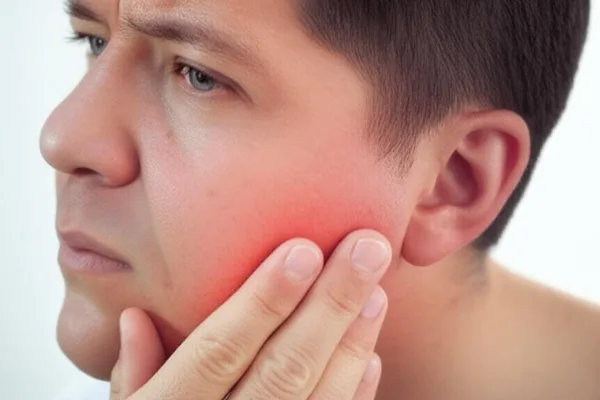
Have you ever noticed that your cheek, right under your jaw, suddenly swells up and hurts so much that you can't even touch it? It can hurt even when you try to eat, and sometimes you can even get a fever. It's normal to feel a little scared when something like this happens. So today we're going to talk about one condition that can cause this, which is an inflammation of the salivary glands, medically known as sialadenitis.
What are the salivary glands? What is their function?
Simply put, salivary glands are the small organs in our mouths that produce saliva (which we usually call 'spit'). This saliva is not just water. Saliva is very important to us.
Think about it, when we eat food, saliva makes it easier to swallow. It also helps start the digestive process. More importantly, it helps protect our teeth from decay and germs.
There are three main types of salivary glands in our mouth:
- Parotid glands: These are the largest salivary glands. They are located in front of the ears, on either side of the cheeks. Do you remember when you get mumps, these parotid glands swell up?
- Submandibular glands: These are located on the inside of the lower jaw, just below the jaw line.
- Sublingual glands: These are located under the tongue, at the bottom of the mouth.
In addition to these major glands, we also have hundreds of smaller salivary glands in places like our lips, inside our cheeks, and in our throat.
So, what is this sialadenitis?
Sialadenitis is the inflammation or swelling of one or more of the salivary glands we talked about. This causes the gland to become red, swollen, and painful. The parotid and submandibular glands are most commonly affected.
Sialadenitis can come in one of two forms:
- Acute: Symptoms may appear suddenly.
- Chronic: Symptoms such as swelling and pain may persist for some time.
- Recurrent: Can heal and then reappear from time to time.
This is not a very common disease, but it can happen to anyone.
Who is most likely to develop Sialadenitis?
As mentioned earlier, this condition can occur at any age. However, it is more common in adults over the age of 50, especially those who have salivary gland stones.
In addition, the following people are also more likely to develop sialadenitis:
- For newborn babies, in the first few weeks of life.
- For those who have undergone major surgery and are recovering.
- For those who are dehydrated and malnourished.
- For those with a weakened immune system, that is, those with a reduced ability to fight disease (immunosuppression).
Is this a dangerous situation?
Usually, if treated properly, it can be cured. However, if left untreated, this salivary gland infection can spread to the deeper tissues of the head and neck, causing a serious infection. Therefore, if you have these symptoms, such as pain, swelling, and fever, it is very important to see a doctor immediately.
What are the symptoms of Sialadenitis?
See if you have these symptoms:
- Swelling of one or more salivary glands, pain when touched, and a change in skin color (such as redness) in the area.
- Fever (especially if the inflammation progresses to an infection).
- Decreased saliva production (this can be seen in both acute and chronic sialadenitis).
- Feeling pain when eating. As if something is pricking the inside of the cheek.
- Dry mouth (xerostomia).
- Swelling in the cheeks and neck.
Imagine, a friend of yours, let's say Sunil, has been having pain on the side of his cheek for two or three days, with some swelling. He's having trouble eating and drinking. He's also running a fever. At a time like that, this could be sialadenitis.
If you have one or more of these symptoms, definitely seek medical advice.
Why do we get Sialadenitis? What are the causes?
There may be several reasons for this:
- Bacterial or viral infection: This is the main cause. For example, mumps is a virus that infects the parotid gland.
- Dehydration: Not drinking enough water can reduce saliva production and cause the glands to become blocked.
- Another recent illness.
- Certain medications: For example, certain medications such as diuretics, antihistamines for allergies, and beta-blockers for high blood pressure can cause this condition by reducing saliva production.
- Sjögren's syndrome: This is an autoimmune disease in which the body's immune system attacks its own cells, especially the glands that produce saliva and tears.
- Poor oral hygiene: If the mouth is not kept clean, germs can enter and cause infections.
- Salivary stones cause blockage of the salivary ducts .
Is this disease contagious?
Whether this is contagious or not depends on the cause of the sialadenitis.
- If the condition is caused by an infection (bacterial or viral), then yes, the infection can be spread to others. It can be spread through sneezing, coughing, or contact with infected saliva.
- However, if sialadenitis is caused by something like a salivary gland stone, it is not contagious to others.
How does a doctor accurately diagnose Sialadenitis?
When you go to a doctor, he or she will first ask you about your symptoms and do a physical examination. This means feeling the area that is swollen and examining the inside of your mouth.
Sometimes, an instrument called an endoscope, which has a small camera and light, may be used to look inside the salivary glands.
Scans may also be done to check for any blockages or stones in the salivary glands. This can include an ultrasound scan or a CT scan.
In some cases, you may be referred to an ear, nose, and throat specialist (ENT specialist - `otolaryngologist`) for further testing and treatment.
How do you cure swollen salivary glands? What are the treatments?
There are several ways to treat sialadenitis, depending on the severity of your condition.
There are mainly these types of treatments:
- Antibiotics
- Treatments you can do at home
- Non-surgical treatment
- Surgery
Antibiotics
In most cases, if sialadenitis is caused by a bacterial infection, the doctor will first prescribe antibiotics. For example, they may prescribe medications such as `(dicloxacillin)`, `(cephalosporin)`, or `(clindamycin).` It is very important to take these medications exactly as prescribed by your doctor, and for the correct amount of time.
Home Remedies
The doctor will also tell you things you can do at home to reduce pain and increase saliva flow, such as:
- Drink plenty of water. Drink at least 8 glasses of water a day.
- Drink some lemon juice, or suck on a sour toffee or lozenge. These things stimulate saliva production.
- Place a warm compress on the swollen area.
- Gently massage the area where the salivary gland is located.
- Maintain good oral hygiene. Brush and floss your teeth twice a day.
Nonsurgical treatments
In some severe cases, you may be hospitalized and given IV fluids, such as saline or dextrose, to maintain body fluid levels. Antibiotics may also be given through the IV to control infection.
Surgical treatments
If other treatments do not help, your doctor may recommend surgery.
- Sometimes, a pus-filled lump (abscess) can form inside the salivary gland. If this happens, it needs to be opened with a minor operation and some of the pus removed.
- If stones are lodged in the salivary gland, surgery may be required to remove them.
- Sometimes, an endoscope (a tube with a small camera on it) is used to look inside the salivary gland and remove any blockages. This is called a sialendoscopy .
How long does it take to recover from this condition?
In most cases, salivary gland infections heal within about a week with conservative treatment.
However, if you had to have surgery, it could take about two weeks to fully recover.
Will Sialadenitis heal on its own?
Sometimes, something like a minor swelling or infection can go away on its own or with home care. However, if you have persistent symptoms — such as swelling, pain, fever, or difficulty swallowing — you should definitely see a doctor. You may need emergency treatment.
What can we do to reduce the occurrence of sialadenitis?
It may not be possible to completely prevent this from happening, but you can do these things to reduce your risk:
- Drink enough water per day.
- Maintain good oral and dental hygiene.
- Eat a healthy diet.
- Avoid smoking and using other tobacco products.
If I have sialadenitis, what should I expect?
Usually, with simple treatments, you will start to feel better within a week. If you have surgery, it will take about two weeks for the swelling and bruising to subside.
Some people may experience recurring episodes of sialadenitis. While it is not possible to completely prevent recurrence, the risk can be reduced by maintaining good oral hygiene, drinking plenty of water, and avoiding smoking.
Can Sialadenitis be fatal? (This is a bit of a serious matter!)
This is very important: If left untreated, a salivary gland infection can spread to the tissues of the head and neck. This is a serious condition that can be life-threatening. If you have difficulty breathing or swallowing, call 911 immediately or go to the nearest emergency room.
When should I see a doctor?
If you have persistent symptoms of sialadenitis, such as facial swelling and fever for more than three days, make an appointment to see a doctor. Your doctor can determine the cause of your salivary gland swelling and prescribe appropriate treatment.
When do you need to go to an Emergency Treatment Unit (ETU) ?
If you develop severe symptoms of sialadenitis — such as difficulty breathing or swallowing — call 911 or go to the nearest emergency room (ER) immediately. You may need emergency treatment to prevent life-threatening complications.
The most important thing you need to remember from what we've talked about! (Take-Home Message)
In short, sialadenitis is an inflammation of the salivary glands. It usually resolves within a week with simple treatment.
However, if symptoms persist, or if you experience difficulty breathing or swallowing, you should definitely seek medical advice immediately.
Taking care of your oral health, drinking plenty of water, and avoiding smoking will help protect you from these conditions. So, always take care of your health!
` Salivary Glands, Sialadenitis, Swelling of the Salivary Glands, Swelling of the Cheeks, Dry Mouth, Salivary Stones, Parotid Gland, Salivary Glands, Sialadenitis




💬 Comments (0)
No comments yet. Be the first to share your thoughts here.
Add Your Comment