

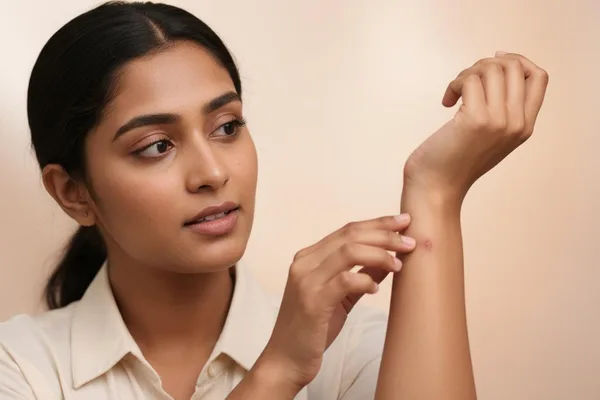
You may notice small changes in your skin sometimes, right? Maybe it's a small spot, or a red, itchy spot, or maybe a watery blister. Some of these will just go away, but some of them require some thought. So, anything that looks different from the normal state of our skin is what we simply call ' skin lesions' . So today, let's talk about this in a little more detail, because this is something that can affect almost all of us.
What are these skin lesions?
Simply put, a skin lesion is any area on your skin that looks different from the surrounding skin. These are very common. Sometimes they can be caused by things like an injury to the skin, a sunburn, etc. They can also be caused by an infection or an autoimmune disease. The best part is that most of these skin lesions are not cancerous (benign), meaning they are not dangerous. However, sometimes they can be a sign of a more serious condition, so it is good to be aware of them.
Now you may be wondering what the difference is between a "skin lesion" and a "skin sore." A "skin sore" is actually a type of skin lesion, like an ulcer. Often, both words are used to describe abnormal areas on the skin.
Is acne also a skin disorder?
Yes, acne is a skin condition. It can appear as small pimples, whiteheads, blackheads, papules, or cysts on your face, chest, or back. Sometimes, these can be cosmetically unsightly and painful. Acne occurs when bacteria, dead skin cells, and oil build up in your skin's pores. There are a variety of cleansers, creams, lotions, and oral medications available to treat acne. The most important thing is to use products that are non-comedogenic. Otherwise, it's best to see a doctor and get a treatment plan that's right for you.
What are these benign skin conditions?
Noncancerous skin lesions are what we call benign skin lesions. These are abnormal growths on the skin. Most of the time, these benign conditions don't need treatment, but if they bother you or you're not happy with their appearance, you can have them removed.
Here are some examples:
- Birthmarks
- Common Moles
- Small lumps hanging from the skin (Skin tags)
- Cherry angiomas (small red bumps)
- Freckles
- Acne
What are malignant skin diseases?
Malignant skin lesions are skin cancers . In fact, skin cancer is a very common type of cancer in some countries.
Symptoms of skin cancer may include:
- A wound that does not heal.
- Something new growing on the skin.
- A change in an existing spot or lump (size, shape, color).
If you notice any of these symptoms, it is important to seek medical advice immediately. Skin cancer is largely curable if detected early.
Who is most affected by skin disorders?
In fact, skin disorders can affect almost all of us. Some are congenital, such as freckles and birthmarks. These do not pose any threat to your health. If you have allergies, you may develop skin disorders if you come into contact with something you are sensitive to. Also, people with certain chronic diseases, such as psoriasis, may develop skin disorders again and again throughout their lives.
How are skin disorders classified?
Skin disorders can be divided into two main types: primary and secondary .
Primary Skin Lesions
These are the first changes to appear on the skin. They can occur without any connection to other medical conditions.
Some examples:
- `Macule` or `Patch`: A flat spot on the skin that is only a change in color.
- `Papule` or `Plaque`: A raised, pimple-like bump on the skin.
- `Nodule`: A solid lump that has risen above the skin.
- `Vesicle` or `Bulla`: A blister filled with fluid or blood (the smaller one is `Vesicle`, the larger one is `Bulla`).
- `Pustule`: A raised pimple filled with pus or white fluid.
- Keratin cyst: A lump filled with a thick, yellow fluid that extends beneath the skin.
Examples of primary skin lesions are acne, birthmarks, insect bites, and sunburn.
Secondary Skin Lesions
These occur when there is a change in a primary disorder. This could be due to an itch, another injury, or a skin disorder that occurs as part of a complex medical condition.
Some examples:
- `Atrophy`: A thinning, wrinkled appearance of the skin.
- `Crust`: Dried fluid (crust) around a wound.
- Erosion: The top layer of skin is gone, possibly with a moist appearance.
- Fissure: Painful cracks in the skin.
- `Scale`: A scaly, scaly appearance.
- `Scar`: A pale or red raised area of tissue that forms after a wound heals.
- Ulcer: An open wound.
Examples of secondary skin disorders include crusting, scratches and cuts caused by itching, or dry skin caused by psoriasis or allergies.
Where are skin lesions located?
Skin conditions can occur anywhere on your body. However, some conditions vary depending on where they are located. For example, things like acne and eczema tend to occur in a certain pattern.
How common are these skin disorders?
Non-cancerous (benign) skin conditions, such as sunburn or acne, are very common.
When it comes to skin cancer, some reports suggest that a significant number of people in some parts of the world are at risk of developing skin cancer during their lifetime. Therefore, it is important to be aware of this.
What are the symptoms of skin disorders?
Symptoms may vary depending on the type of skin condition you have, but there are some common signs that you may notice:
- An abnormal growth on the skin.
- Itching.
- Swelling.
- Pain.
- Color change in the affected area of skin (red, brown, black, blue).
If a lesion on your skin changes in size or shape, is in severe pain, is bleeding or pus is oozing, does not heal, or is accompanied by other symptoms such as fever, joint pain, or swelling, see a doctor immediately. This is very important, don't forget.
What are the causes of skin disorders?
Since there are many types of skin disorders, they can have many causes. Here are some of the main ones:
- Congenital (birthmarks, common spots).
- Viral infections (e.g., human papillomavirus (HPV)).
- Bacterial infections (e.g. herpes simplex, boils caused by Staphylococcus bacteria).
- Allergic reactions (insect stings, allergies to a certain plant).
- As a side effect of some medications (e.g. chemotherapy).
- A wound (sunburn, cut).
- Any other underlying medical condition (circulatory disorders, autoimmune disease, cancer, liver or kidney disease).
What are the symptoms that help identify skin disorders?
When a doctor diagnoses a skin disorder, they pay particular attention to these symptoms:
- Size `(Size)`
- Shape `(Shape)`
- Texture
- Color
- Quantity
- Depth
How to recognize skin disorders?
A doctor will examine your skin to diagnose skin conditions. Sometimes, they will look at it with their eyes, or they may use a magnifying glass. They will also ask about your medical history, including allergies, medications you are currently taking, chronic illnesses, recent exposures, and family medical history.
What tests are done to diagnose skin disorders?
In most cases, no special tests are needed to determine the cause of skin disorders. However, if necessary, the following tests can be performed:
- Allergy test.
- Blood test.
- Microbial swab is a test to check for infection by taking a sample of the skin.
- Sometimes an imaging test (e.g. `(X-ray)`).
- Taking a small piece of skin and examining it (Biopsy) – This is an important test to perform if there is any suspicion that it is cancerous.
How are skin disorders treated?
The treatment of skin disorders varies depending on the type of disorder:
- Primary lesions: These are the most common. These can be treated with topical lotions, creams, ointments, or oral medications. Sometimes, they may need to be removed surgically.
- Secondary lesions that occur as a side effect of another medical condition: Here, the main thing is to treat the underlying medical condition.
- Malignant lesions (skin cancer): Surgical removal and sometimes other medications may be required.
How to get rid of skin blemishes?
Benign skin lesions, such as skin tags or cherry hemangiomas, can be removed by a doctor if you are unhappy with their appearance. These can often be done in the doctor's office or as a minor procedure in an outpatient setting.
If you have skin cancer, your doctor will talk to you about the treatment options that are right for you.
How to reduce the risk of skin disorders?
While not all benign skin conditions can be prevented, doing these things can help:
- Use non-comedogenic skin care products that do not clog pores.
- Be careful not to get injured when exercising or engaging in activities.
- Stay away from allergens.
- Maintain good personal hygiene.
Here are some things you can do to prevent dangerous skin conditions, including skin cancer:
- Be sure to use sunscreen when going out in the sun.
- Limit exposure to direct sunlight (especially during peak hours, such as 10 a.m. to 4 p.m.).
- Avoid using tanning beds.
What happens if there are skin disorders?
Benign skin lesions are not a threat to your overall health. They simply change the appearance of your skin. If you are unhappy with their appearance, your doctor may be able to suggest treatment options or remove some types.
When it comes to skin cancer, early detection leads to the best outcomes and possibly a complete cure. Unfortunately, some serious types of skin cancer, such as melanoma, have a low chance of being cured if they have spread to the lymph nodes. So, if you notice anything unusual on your skin, be sure to show it to a doctor.
When should I see a doctor?
A skin disorder:
- If it causes pain or discomfort.
- If it changes in size, shape, or color.
- If it looks like an open wound that won't heal.
In such a situation, definitely seek medical advice.
What questions should I ask my doctor?
- Is this skin cancer?
- Can this skin disorder be removed?
- Could this skin disorder of mine be a symptom of a more complex disease?
What other conditions cause skin disorders as a symptom?
A number of acute and chronic health conditions are associated with skin disorders. Some of them include:
- Cellulitis (a bacterial infection of the skin)
- Chickenpox
- Psoriasis
- Diabetes `(Diabetes Mellitus)`
- Herpes
- Melanoma (a type of serious skin cancer)
Finally, things to remember (Take-Home Message)
So, you can see that skin lesions are very common. They can vary in size, shape, and location. The most important thing is to pay attention to any changes in your skin and seek medical attention if necessary. Especially, if a mole gets bigger, changes color, changes shape, or looks new or strange, don't ignore it.
Early detection, especially in cases like skin cancer, can even save lives. So, take care of your skin. Protect yourself from the sun. Because healthy skin is important for a healthy life.
If you have any further questions, never be afraid to talk to a doctor. They are there to help you.
` Skin diseases, dermatology, skin spots, acne, skin cancer, skin infections, skin care




💬 Comments (0)
No comments yet. Be the first to share your thoughts here.
Add Your Comment