
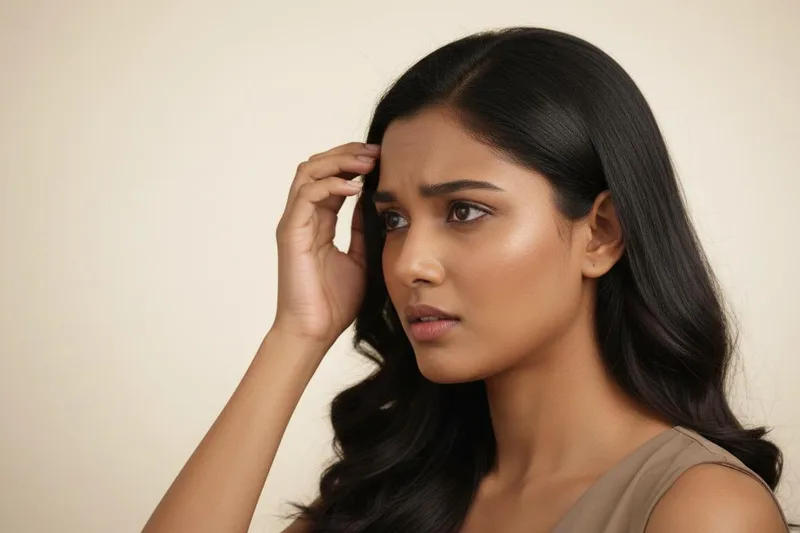
Have you ever felt an unpleasant odor coming from your scalp, that is, your scalp and hair? Has this smell not gone away even after shampooing it properly? This is actually a problem that many people have, but they are a little embarrassed to talk about with others. This is called "smelly scalp" or "smelly hair syndrome" in English. So don't worry, this is usually not a serious illness. Let's talk about this in detail and simply today.
Why does this skull smell so bad?
Simply put, this unpleasant odor is caused by the buildup of debris on our scalp. Imagine what happens when our dead skin cells, sweat, and sebum, a naturally occurring oil, all combine to create a favorable environment for germs, especially bacteria and fungi, to thrive.
There are several types of microorganisms that mainly affect this condition:
| Reason | The process that takes place |
|---|---|
| Bacteria | When bacteria combine with the sweat and oil on our scalp, their activity creates an unpleasant odor. |
| Fungus | When certain types of fungi grow on the scalp, they can cause a condition called thrush. This thrush can also cause a foul odor. |
| Yeast | Our skin naturally contains yeast. However, if these grow too much, conditions like seborrheic dermatitis can develop, which can cause a bad odor. |
What are the medical reasons for this?
Sometimes this can be a symptom of a medical condition. Here are some possible cases:
- Seborrheic Dermatitis: This is the most common cause. The skin on the scalp becomes red, flaky, and has a foul odor.
- Fungal Infections of the Scalp: Some fungal infections can cause sores, itching, and odor on the scalp.
- Hormonal Changes: This condition can be caused by hormonal changes, especially during puberty, pregnancy, or menopause, which can cause the skin to produce more oil.
- Excessive sweating (Hyperhidrosis): This is a condition that some people have. Because they sweat more than normal, that sweat combines with bacteria and produces an odor.
- Psoriasis: This is also a skin disease. When this disease affects the scalp, the skin becomes thick and flaky. Bacteria can grow there and cause an odor.
Are there other non-medical reasons?
Yes, definitely. It doesn't always have to be due to illness. Our daily habits and lifestyle also affect it.
- Diet: It may seem strange, but the ingredients in some of the spicy foods we eat (e.g. garlic, onions) can be excreted through sweat and cause a foul odor from the scalp.
- Lack of cleanliness: If you work in a dusty environment and sweat daily, and don't wash your hair often, dirt, sweat, and oil can easily accumulate and start to smell.
- Environmental pollution: Small particles in the environment, such as vehicle exhaust and dust, stick to our hair, where they combine with the oiliness and create a bad odor.
- Hair products: If you don't rinse your hair thoroughly with shampoo (especially dry shampoo), conditioner, gel, and spray, their residue can build up on your scalp. Under this buildup, bacteria and yeast can thrive, creating a foul odor.
- Sweating: This problem occurs when sweat, which is produced during exercise or exposure to the sun, accumulates on the scalp. Sometimes, there may be no body odor, but only a smell from the head.
What can be done about this problem at home?
There are some simple things you can try at home before seeing a doctor.
- Try switching up your shampoo/conditioner: Try using a "clarifying" shampoo that deeply cleanses the scalp of build-up. Shampoos that contain ingredients like tea tree oil or apple cider vinegar can also help.
- Change the frequency of washing your hair: Some people don't wash their hair for days. Some people wash their hair twice a day. Neither of these is good. Find the right balance that suits your scalp, keeps it clean, and doesn't strip it of too much oil.
- Be mindful of your diet: Keep a diary and write down what you eat each day. Also note the days when you have bad breath. See if cutting out certain foods helps reduce the odor.
- Stop using hair products for a while: Try stopping using products like gel, spray, and mousse for a few days. Allowing your scalp to "breathe" a bit can help resolve the problem.
But remember one thing. Don't try any drastic treatments or try anything you can think of at home. Be sure to talk to your doctor before doing anything like that.
What do you do if you need medical treatment?
If home remedies don't help, you should definitely see a doctor. You can see your family doctor (Primary Care Provider) or a dermatologist.
Treatment depends on the cause of your condition.
| Reason | Available treatments |
|---|---|
| Bacterial deposition | Special medicated shampoos. |
| Psoriasis | Antifungal medications, ointments, and medicated shampoos. |
| Fungal infections | Antifungal creams and pills. |
| Hormonal changes | Topical medications and oral medications. |
| Excessive sweating (Hyperhidrosis) | Topical and oral medications. These may include medications that block messages in the nervous system (anticholinergic drugs), antidepressants, and beta-blockers. |
| Yeast infections | Antifungal ointments, drugs that control the immune system (Calcineurin inhibitors), and drugs that reduce inflammation (Corticosteroids). |
When should you see a doctor?
In the following cases, you should definitely see a doctor.
- If there is no improvement with the treatments you have tried at home.
- In addition to the smell coming from the scalp, if there are other symptoms such as itching, sores, hair loss, and redness of the skin .
Having a bad smell coming from your head can be really annoying and embarrassing. But don't be embarrassed about it, because it's a treatable condition that affects many people. In most cases, it can be controlled with a few simple lifestyle changes. If that doesn't work, your doctor can prescribe medication to completely cure the condition.
Take-Home Message
- Smelly scalp is a common condition. It can be caused by a variety of factors, including hygiene, diet, and certain medical conditions.
- First, try simple things like changing your shampoo and changing your hair washing routine.
- If home treatments do not help or if there are other symptoms such as itching or sores, it is very important to seek medical advice.
- This is nothing to be ashamed of. It is a condition that can be completely cured with the right treatment.
- Never apply harsh or unproven treatments to your scalp without consulting a doctor.




💬 Comments (0)
No comments yet. Be the first to share your thoughts here.
Add Your Comment