
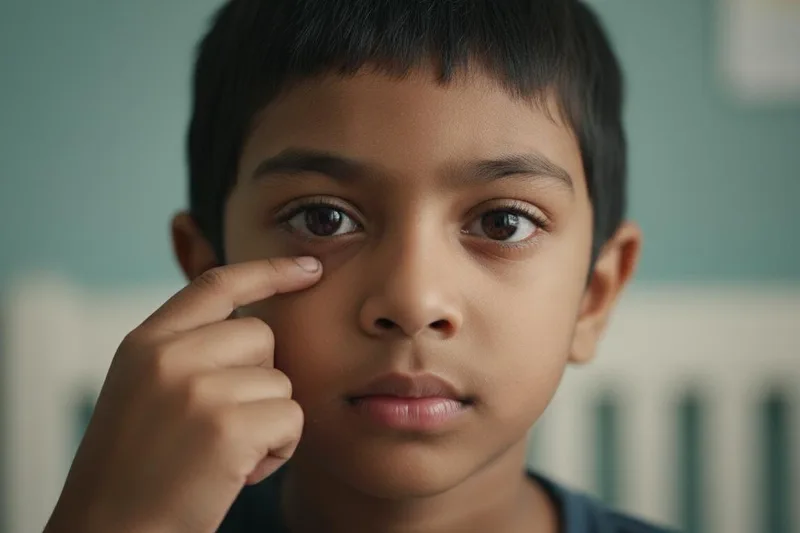
You may have noticed that your eyes are red, itchy, and sometimes crusty when you wake up in the morning. Or maybe your little one has red eyes and is crying after coming home from school. This "eye disease" is very common among us. Medically, we call it `(Conjunctivitis)`. Even though the name may sound like a big deal, don't worry, most of the time it is not serious. However, it is good for everyone to know a little about this.
What exactly is this eye disease (conjunctivitis)?
Simply put, conjunctivitis is a swelling or inflammation of the part of our eye called the `(conjunctiva)`. Now you may be wondering what this `(conjunctiva)` is. That is, there is a very thin, transparent membrane that covers the white part of our eye and the inside of the eyelid , that's what this is. When this becomes swollen, the eye looks red, that "conjunctivitis" appearance occurs.
This is very common among young children. Because it can spread very quickly when they play together, in schools, and daycare centers. But it's not just little ones, young people, adults, anyone can get this eye disease.
The good news is that most eye infections are just minor ones. While they may look a little serious on the outside, they're actually not that serious. However, it's important to manage them properly and seek medical advice.
Why do we get eye problems? What are the causes?
There are two main categories of causes of eye diseases.
1. Infectious eye diseases: This is the most common one we see.
2. Non-infectious eye diseases: This also occurs in some people.
Let's now talk about each of these types in a little more detail.
1. Infectious Conjunctivitis
As the name suggests, this type of eye disease can be transmitted to others. It is mainly caused by small organisms called viruses and bacteria .
- Viruses: Think about it, when you have a cold, a sore throat, an ear infection, or a sinus infection, there are viruses that enter the body, and these same viruses are also the most common cause of eye infections. That's why sometimes eye infections come along with colds. These viral infections spread very quickly, especially in places where children hang out.
- Bacteria: Some types of bacteria can also cause eye infections. These bacterial infections can sometimes cause a thick, yellow, or green discharge from the eye.
- Bacteria associated with sexually transmitted diseases (STDs): This is a bit of a concern. Some types of bacteria that cause sexually transmitted diseases, such as Chlamydia or Gonorrhea, can also cause eye infections. Do you know how this happens? If you touch the genital area of someone who has the disease and then touch your eye with that dirty hand, or if you put in contact lenses, the bacteria can enter your eye and cause an infection. That's why it's so important to take care of your personal hygiene.
2. Non-infectious Conjunctivitis
This type of eye disease is not contagious to others. It is caused by other external factors.
- Allergic Conjunctivitis: Some people have allergies to things like dust, pollen, pet dander, and certain foods. These allergies can also cause the eyes to become red and itchy. This is called `(Allergic Conjunctivitis) .` In this case, both eyes can show symptoms at the same time.
- Irritant Conjunctivitis: Sometimes, the eyes can become red when they come into contact with something that irritates or irritates the eyes . For example,
- Thick smoke
- Air pollution
- Chlorine in swimming pools
- Some chemicals (e.g. soap, shampoo if they get into the eyes)
Things like these can also cause the conjunctiva of the eyes to become swollen and red.
What are the symptoms of eye disease? How do you recognize it?
There are several symptoms that indicate eye disease. You may experience one or more of these:
- Red or pink eye: This is the main and most obvious sign. It's not just called "red eye disease."
- Eye discomfort:
- Eye twitching: I always feel like eye twitching or touching myself.
- Gritty feeling: An uncomfortable feeling, as if a grain of sand or something small is stuck in the eye.
- Eye discharge or discharge:
- Sometimes a liquid like water may come out.
- In the case of a bacterial infection, a thick, yellow, or greenish discharge may appear. You may also notice that your eyelids are sticky when you wake up in the morning.
- Eye pain: Some people may experience eye pain.
- Swelling of the white part of the eye and inside the eyelid: The conjunctiva may swell, making the eye appear swollen.
- Sensitivity to light: Some people may have difficulty looking at light.
These symptoms can appear in just one eye or in both eyes at once. Imagine, when you wake up in the morning, one of your eyes suddenly becomes red, itchy, and has discharge... That's when you suspect that this is an eye disease (Conjunctivitis).
What should we do when we get eye disease?
Okay, now let's say you have symptoms of an eye disease. What should you do if that happens?
1. See a doctor:
- This is the most important thing . You should definitely see a doctor, especially if your symptoms are severe, if your eye pain is increasing, if your vision feels blurry, or if you have excessive tearing.
- The doctor can determine exactly whether it's a virus, bacteria, or an allergy, because the treatment varies depending on the cause.
2. Home care:
- Keep your eyes clean: Gently wipe your eyes with a clean cotton ball soaked in clean, boiled water. Do not use the same cotton ball for one eye on the other eye.
- Avoid touching or rubbing your eyes as much as possible. This can spread the infection and damage the eye.
- Always wash your hands thoroughly with soap, especially before and after touching your eyes.
- Do not share your towels, pillowcases, or eye makeup with others. If you have an eye infection, keep these items separate.
- If you have an allergic eye condition, stay as far away from the things you are allergic to (e.g., dust, pets) as possible.
- If you wear contact lenses, stop using them until your eye condition has resolved. Consult your doctor and then start wearing them again as directed.
3. Medication:
- For bacterial infections: Your doctor will often prescribe antibiotic eye drops or ointment. You should use this medicine exactly as your doctor tells you, for the full duration of time.
- For viral infections: In most cases, there is no specific treatment for eye infections caused by viruses, and they usually clear up on their own in a few days (about a week or two). The body's immune system fights them off. However, if they are severe, doctors may prescribe antiviral eye drops for certain types of viruses.
- For allergies: Your doctor may prescribe antihistamine eye drops or tablets. These can help reduce itching and swelling.
4. If you have a contagious eye disease, avoid spreading it to others:
- If you have a contagious eye condition, it is your responsibility to help stop it from spreading to others.
- For young children, it's best to hold them off from school or daycare for a few days until their eye condition improves. Ask your doctor how long they should be kept home.
- For adults, depending on their job (especially those in healthcare, food-related jobs, and those working with children), it may be appropriate to take leave on medical advice.
How can eye diseases be prevented from spreading?
"Prevention is better than cure." There are a few simple things we can do to prevent the spread of eye diseases, especially infectious ones:
- Hand hygiene is the most important thing! Wash your hands thoroughly with soap and water regularly. Or use a hand sanitizer.
- Minimize touching and rubbing your eyes with dirty hands as much as possible.
- Do not share personal items (towels, eye makeup, pillowcases) with others.
- If someone in your household has an eye infection, separate the items they use, wash their hands frequently, and teach them about it too.
- It is a good habit to wash your hands after touching doorknobs and handles in public places (e.g. buses, trains).
Finally, things to remember (Take-Home Message)
Okay, so we've talked a lot about eye disease `(Conjunctivitis)`, haven't we? Finally, let me remind you of these facts:
- Eye disease is common, especially among young children.
- Most of the time, this is not a serious condition, but it can cause discomfort.
- If you have symptoms such as red, itchy, or crusty eyes, it is wise to see a doctor to determine the exact cause and seek treatment.
- Personal hygiene, especially hand washing, goes a long way in preventing the spread of eye diseases.
- If it is a contagious eye disease, it is also our duty to take care not to infect others.
Don't worry, with proper medical advice and care, this eye condition can be cured quickly. May you and your family have healthy eyes!
Eye diseases, Conjunctivitis, Red eyes, Itchy eyes, Infectious diseases, Eye health, Pediatric diseases


💬 Comments (0)
No comments yet. Be the first to share your thoughts here.
Add Your Comment