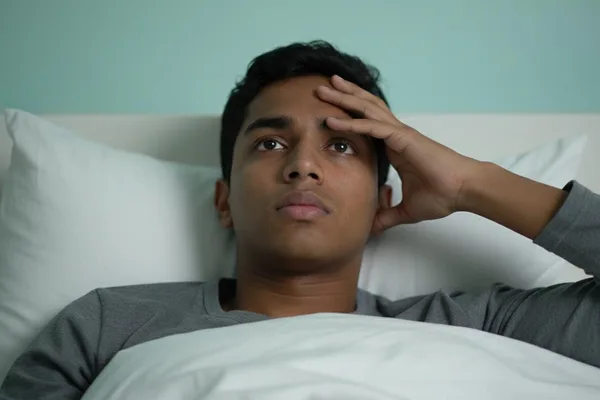
Young people, do you also have problems sleeping at night? (Common Sleep Problems) Let's talk about this!

Young people, do you also have problems sleeping at night? (Common Sleep Problems) Let's talk about this!

Do you sometimes have a big problem with not being able to sleep at night? Even though you want to sleep well, there are times when you just can't fall asleep when you close your eyes, right? Actually, this is a common thing for many of you young people. However, this lack of sleep is not a good thing. Because, if you don't get enough sleep, it affects schoolwork, play, and everything else. Not only that, you can also feel unhappy, just moody, and sometimes feel sad and anxious. Also, did you know that young people who drive without getting enough sleep are more likely to get into accidents? So, let's talk a little about this sleep and the problems related to it today.

Why do you young people have trouble sleeping?

Simply put, these sleep problems are related to the changes in your body as you get older.

Normally, a young person like you needs between 8 and 10 hours of sleep a day. Now think about it, if you wake up at 6 in the morning for school, you should be in bed by at least 10 at night, right? But the truth is, most young people don't get to sleep at that time. The main reason for that is that the way your brain works changes a bit at your age.

To be precise, your body's internal sleep clock starts working a little later. That means that your brain starts producing the hormone melatonin , which helps you sleep, at night, compared to young children and adults. This melatonin is a natural chemical that regulates our sleep and helps us fall asleep. So, it's because it's produced late that you have a hard time falling asleep quickly.

Sometimes this delay in the sleep–wake cycle is so severe that it significantly affects daytime functioning. When this happens, we call it ``Delayed Sleep Phase Syndrome'' or, as some call it, ``night owl syndrome.''

This is not the only reason why you are not able to sleep. Another thing is the bright light , especially the blue light that comes from electronic devices like phones, tablets, and computers. This blue light also delays the production of the hormone `(Melatonin)`. Then it becomes even more difficult to fall asleep. Imagine, if you use your phone before going to bed, the message goes to your brain that "it's not night yet, stay awake."

What is insomnia?

Insomnia is a problem that many people have – it means not being able to sleep or waking up during sleep. This can happen for a variety of reasons. For example:

  • If you have any physical discomfort or illness (for example, a cold , stuffy nose, headache, or some other ache).
  • If the sleeping environment is not good (the room is too hot or too cold, too much light, too much noise, etc.).
  • If you are feeling stressed or anxious (thinking about schoolwork, problems with friends, problems at home, etc.).
  • Mental health problems, for example, conditions such as depression or post-traumatic stress disorder (PTSD) .
  • Some physical illnesses.
  • Some medications.
  • Poor sleep habits (for example, staying on the phone late at night, sleeping too much during the day).

It's normal to have a day or two of insomnia every now and then. However, if you're having this kind of insomnia for several days a week, for months at a time, you should definitely talk to a doctor.

What other sleep problems might you young people have?

Apart from insomnia, there are several other sleep problems .

`(Periodic Limb Movement Disorder)` and `(Restless Legs Syndrome)`

Some young people have frequent twitching and shaking of their legs and arms while sleeping at night. We call this `(Periodic Limb Movement Disorder)` . Others, especially at night, feel like they are moving their legs, and feel a tingling, burning, numbness, or pulling discomfort in their legs. This is called `( Restless Legs Syndrome )` . Both of these conditions cause them to not sleep well at night, and their sleep is interrupted. So they are very tired during the day, irritable, and have difficulty concentrating. Some young people may have both of these conditions together.

`(Obstructive Sleep Apnea)`

Did you know that some people stop breathing for a while while they sleep? It's called `(Obstructive Sleep Apnea)` . Such a person snores a lot at night, breathes loudly, tosses and turns in bed, and sweats. Because they don't get enough sleep, they are very sleepy during the day, can fall asleep in class, and often sleep during the day.

This is caused by something blocking the airway (for example, enlarged tonsils or adenoids). Also, people who are overweight are more likely to develop this condition. If this is not treated properly, it can lead to learning, attention, behavioral problems, and even heart disease , so it is very important to take care of this.

Nightmares

Many young people experience nightmares from time to time, right? This can make it difficult to wake up at night and get back to sleep. The main reasons for this are stress or anxiety . Apart from that, illness, taking certain medications, using drugs or alcohol, and not getting enough sleep can also cause nightmares.

Sleepwalking

Sleepwalking is most often seen in young children, but some young adults and adults also do it. Sleepwalking often occurs when a person is sick, has a fever, is sleep deprived, or is under stress.

Sleepwalking is usually not a big problem. People with sleepwalking go back to bed and don't remember it. Don't try to wake someone who is sleepwalking up suddenly , as that can scare them. Take them back to bed as gently as possible.

Narcolepsy

This is a rare condition, but symptoms usually begin in childhood or adolescence. People with narcolepsy feel excessively sleepy during the day. They may fall asleep suddenly, without warning. They may sometimes lose control of their muscles, or they may have vivid, vivid dreams when falling asleep or waking up. They may not be able to sleep well at night, and they may wake up frequently. If they suddenly fall asleep while doing something, such as driving, narcolepsy can be dangerous.

How can I sleep well?

If you can't sleep well at night, don't worry. You can try changing your sleep habits a little. The most important thing is to get into the habit of going to bed and waking up at the same time every day . If you know what time you need to wake up in the morning, count back at least 8 hours from that time and set a bedtime. Try to work around these times as much as possible, including on weekends. Even if you can't do it right away, get used to it gradually.

Here are some things you can do to get better sleep:

  • Keep your bedroom dark, a little cool, and quiet.
  • Don't keep a TV or video game system in the room.
  • Stop doing homework about an hour before bed and turn off all screens, such as phones, computers, and tablets. Put your phone on silent, and if possible, leave it outside the room to charge.
  • Do something relaxing before bed. For example, take a warm bath, read a book, listen to a soothing song, or meditate .
  • Avoid drinking caffeine (coffee, tea, some drinks, chocolate) in the afternoon and evening.
  • Exercise daily (but not close to bedtime).
  • If you feel very tired during the day, take a short nap (less than an hour) early in the day. If you sleep too long during the day, it will be more difficult to fall asleep at night.

The most important things to remember (Take-Home Message)

Okay, so I hope this helps you get a good night's sleep. Remember, sleep is very important for our body and mind.

If you're constantly having trouble sleeping, waking up frequently at night, snoring almost every day, or even if you feel like you've slept well at night but feel very tired during the day, you should definitely see a doctor. There may be an underlying cause that you can't see, and if it's treated properly, it can resolve the problem.

Take care of your sleep, good sleep is essential for a healthy life!


Sleep, sleep problems, sleep in young people, insomnia, sleep apnea, sleep deprivation, tips for good sleep

⚠️ Important: The medical articles and information on Nirogi Lanka are for general awareness only, and are by no means a substitute for professional medical advice, diagnosis, or treatment. For any medical problem you have, consult a qualified physician immediately.

💬 Comments (0)

No comments yet. Be the first to share your thoughts here.

Add Your Comment

Please calculate: 9 + 4 =
Young people, do you also have problems sleeping at night? (Common Sleep Problems) Let's talk about this!
Body CareFebruary 17, 2026

Young people, do you also have problems sleeping at night? (Common Sleep Problems) Let's talk about this!

Do you sometimes have a big problem with not being able to sleep at night? Even though you want to sleep well, there are times when you just can't fall asleep when you close your eyes, right? Actually, this is a common thing for many of you young people. However, this lack of sleep is not a good thing. Because, if you don't get enough sleep, it affects schoolwork, play, and everything else. Not only that, you can also feel unhappy, just moody, and sometimes feel sad and anxious. Also, did you know that young people who drive without getting enough sleep are more likely to get into accidents? So, let's talk a little about this sleep and the problems related to it today.

Why do you young people have trouble sleeping?

Simply put, these sleep problems are related to the changes in your body as you get older.

Normally, a young person like you needs between 8 and 10 hours of sleep a day. Now think about it, if you wake up at 6 in the morning for school, you should be in bed by at least 10 at night, right? But the truth is, most young people don't get to sleep at that time. The main reason for that is that the way your brain works changes a bit at your age.

To be precise, your body's internal sleep clock starts working a little later. That means that your brain starts producing the hormone melatonin , which helps you sleep, at night, compared to young children and adults. This melatonin is a natural chemical that regulates our sleep and helps us fall asleep. So, it's because it's produced late that you have a hard time falling asleep quickly.

Sometimes this delay in the sleep–wake cycle is so severe that it significantly affects daytime functioning. When this happens, we call it ``Delayed Sleep Phase Syndrome'' or, as some call it, ``night owl syndrome.''

This is not the only reason why you are not able to sleep. Another thing is the bright light , especially the blue light that comes from electronic devices like phones, tablets, and computers. This blue light also delays the production of the hormone `(Melatonin)`. Then it becomes even more difficult to fall asleep. Imagine, if you use your phone before going to bed, the message goes to your brain that "it's not night yet, stay awake."

What is insomnia?

Insomnia is a problem that many people have – it means not being able to sleep or waking up during sleep. This can happen for a variety of reasons. For example:

  • If you have any physical discomfort or illness (for example, a cold , stuffy nose, headache, or some other ache).
  • If the sleeping environment is not good (the room is too hot or too cold, too much light, too much noise, etc.).
  • If you are feeling stressed or anxious (thinking about schoolwork, problems with friends, problems at home, etc.).
  • Mental health problems, for example, conditions such as depression or post-traumatic stress disorder (PTSD) .
  • Some physical illnesses.
  • Some medications.
  • Poor sleep habits (for example, staying on the phone late at night, sleeping too much during the day).

It's normal to have a day or two of insomnia every now and then. However, if you're having this kind of insomnia for several days a week, for months at a time, you should definitely talk to a doctor.

What other sleep problems might you young people have?

Apart from insomnia, there are several other sleep problems .

`(Periodic Limb Movement Disorder)` and `(Restless Legs Syndrome)`

Some young people have frequent twitching and shaking of their legs and arms while sleeping at night. We call this `(Periodic Limb Movement Disorder)` . Others, especially at night, feel like they are moving their legs, and feel a tingling, burning, numbness, or pulling discomfort in their legs. This is called `( Restless Legs Syndrome )` . Both of these conditions cause them to not sleep well at night, and their sleep is interrupted. So they are very tired during the day, irritable, and have difficulty concentrating. Some young people may have both of these conditions together.

`(Obstructive Sleep Apnea)`

Did you know that some people stop breathing for a while while they sleep? It's called `(Obstructive Sleep Apnea)` . Such a person snores a lot at night, breathes loudly, tosses and turns in bed, and sweats. Because they don't get enough sleep, they are very sleepy during the day, can fall asleep in class, and often sleep during the day.

This is caused by something blocking the airway (for example, enlarged tonsils or adenoids). Also, people who are overweight are more likely to develop this condition. If this is not treated properly, it can lead to learning, attention, behavioral problems, and even heart disease , so it is very important to take care of this.

Nightmares

Many young people experience nightmares from time to time, right? This can make it difficult to wake up at night and get back to sleep. The main reasons for this are stress or anxiety . Apart from that, illness, taking certain medications, using drugs or alcohol, and not getting enough sleep can also cause nightmares.

Sleepwalking

Sleepwalking is most often seen in young children, but some young adults and adults also do it. Sleepwalking often occurs when a person is sick, has a fever, is sleep deprived, or is under stress.

Sleepwalking is usually not a big problem. People with sleepwalking go back to bed and don't remember it. Don't try to wake someone who is sleepwalking up suddenly , as that can scare them. Take them back to bed as gently as possible.

Narcolepsy

This is a rare condition, but symptoms usually begin in childhood or adolescence. People with narcolepsy feel excessively sleepy during the day. They may fall asleep suddenly, without warning. They may sometimes lose control of their muscles, or they may have vivid, vivid dreams when falling asleep or waking up. They may not be able to sleep well at night, and they may wake up frequently. If they suddenly fall asleep while doing something, such as driving, narcolepsy can be dangerous.

How can I sleep well?

If you can't sleep well at night, don't worry. You can try changing your sleep habits a little. The most important thing is to get into the habit of going to bed and waking up at the same time every day . If you know what time you need to wake up in the morning, count back at least 8 hours from that time and set a bedtime. Try to work around these times as much as possible, including on weekends. Even if you can't do it right away, get used to it gradually.

Here are some things you can do to get better sleep:

  • Keep your bedroom dark, a little cool, and quiet.
  • Don't keep a TV or video game system in the room.
  • Stop doing homework about an hour before bed and turn off all screens, such as phones, computers, and tablets. Put your phone on silent, and if possible, leave it outside the room to charge.
  • Do something relaxing before bed. For example, take a warm bath, read a book, listen to a soothing song, or meditate .
  • Avoid drinking caffeine (coffee, tea, some drinks, chocolate) in the afternoon and evening.
  • Exercise daily (but not close to bedtime).
  • If you feel very tired during the day, take a short nap (less than an hour) early in the day. If you sleep too long during the day, it will be more difficult to fall asleep at night.

The most important things to remember (Take-Home Message)

Okay, so I hope this helps you get a good night's sleep. Remember, sleep is very important for our body and mind.

If you're constantly having trouble sleeping, waking up frequently at night, snoring almost every day, or even if you feel like you've slept well at night but feel very tired during the day, you should definitely see a doctor. There may be an underlying cause that you can't see, and if it's treated properly, it can resolve the problem.

Take care of your sleep, good sleep is essential for a healthy life!


Sleep, sleep problems, sleep in young people, insomnia, sleep apnea, sleep deprivation, tips for good sleep

⚠️ Important: The medical articles and information on Nirogi Lanka are for general awareness only, and are by no means a substitute for professional medical advice, diagnosis, or treatment. For any medical problem you have, consult a qualified physician immediately.

💬 Comments (0)

No comments yet. Be the first to share your thoughts here.

Add Your Comment

Please calculate: 9 + 4 =