
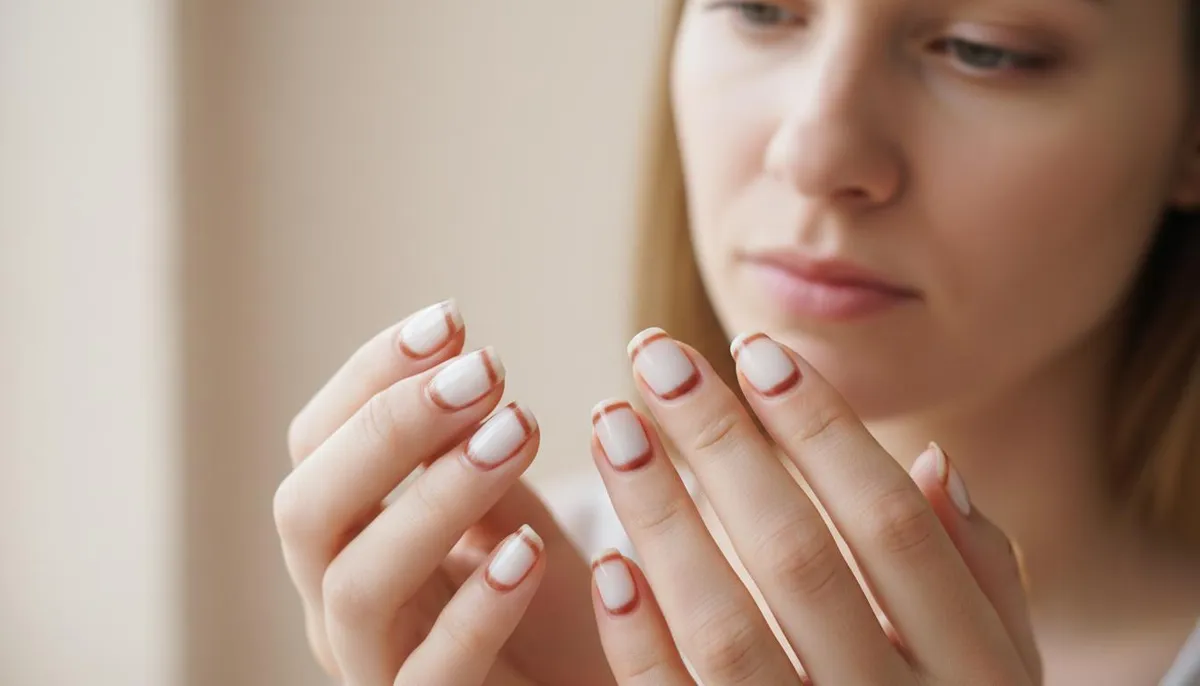
Have you ever glanced down at your fingernails or toenails while holding your morning mug of coffee or tea and thought, "Hold on—why do my nails look so pale and washed out?" Not just a tiny white speck from bumping your finger on a kitchen drawer, either, but almost the entire nail looking like frosted milk glass with a thin pink or brownish line right across the tip. Whenever patients point this out to me during a checkup, their first reaction is usually a mix of curiosity and quiet worry. In medicine, we call this distinctive pattern Terry's nails (terrys nails). While it is not a painful nail infection or a disease on its own, it can sometimes act like a quiet dashboard warning light for what is happening inside your body—so let's walk through what it really means together.
📌 Key Takeaways at a Glance
- What it looks like: Roughly 80% or more of the nail turns opaque, frosted white, hiding the usual half-moon crescent at the base and leaving a narrow pink or reddish-brown band at the tip.
- Not a nail disease itself: Terry's nails are a physical sign caused by reduced blood flow and connective tissue changes in the nail bed underneath the nail plate.
- Normal aging vs. internal health: While pale nails can appear harmlessly as we age, they are also linked to liver cirrhosis, congestive heart failure, type 2 diabetes, and chronic kidney disease.
- Next step: Book a routine visit with your Primary Care Physician (PCP) or family GP clinic for a simple physical check and basic blood work rather than trying home nail remedies.
What Are Terry's Nails and Why Do Nails Turn White?
Terry's nails are a distinctive nail change where most of the fingernail or toenail turns opaque, frosted white, leaving only a thin pink or brown band at the tip. While sometimes a harmless sign of normal aging, this pale nail appearance can signal underlying liver disease, heart failure, diabetes, or kidney trouble.
Think about what a typical healthy fingernail looks like for a second. Usually, the nail bed underneath looks rosy pink because tiny blood vessels sit right below the translucent nail plate, and you can spot a small pale half-moon crescent—called the lunula—near the cuticle at the base. With Terry's nails, that half-moon disappears completely, and the nail takes on a uniform ground-glass whiteness from the cuticle almost all the way to the free edge, ending in a crisp 0.5-to-3-millimeter pink or reddish-brown border. Pretty surprising, right?
We doctors classify this change as a form of apparent leukonychia (white nail discoloration caused by tissue changes beneath the nail rather than pigment inside the nail itself). It gets its name from British physician Dr. Richard Terry, who noticed back in 1954 that roughly 8 out of 10 patients living with severe liver scarring (cirrhosis) shared this exact frosted-glass nail pattern. Most often, it affects all ten fingernails evenly, though it can occasionally show up on just one finger or on your toenails.
What Is the Difference Between Terry's Nails, Lindsay's Nails, and Concave Nails?
When you start looking closely at pale or unusually shaped nails, it is easy to mix up a few different conditions that sound similar. Have you ever wondered how we doctors tell them apart during a quick hand exam? Look closely at where the color sits and the shape of the nail plate itself:
- Terry's nails: About 80% to 90% of the nail bed from the base upward is frosted white, leaving only a very narrow pink or brown strip—less than 20% of the nail length—at the very tip.
- Lindsay's nails (half-and-half nails): Here, the bottom half of the nail closest to your knuckle is dull white, while the top 20% to 60% toward the tip turns dark pink, red, or brownish. Lindsay's nails do not fade when pressed and are classically linked to chronic kidney disease.
- Concave or spoon-shaped nails (koilonychia): Instead of curving gently downward, the nail flattens out or scoops inward like a tiny spoon that could hold a drop of water. Concave nails are most often a clue to iron deficiency anemia rather than liver or heart issues.
- True white spots or horizontal lines: Small chalky dots (punctate leukonychia) usually come from minor everyday knocks, while paired horizontal white bands across the nail bed (Muehrcke's lines) can reflect low blood protein (albumin) levels.
What Causes Terry's Nails and Pale Fingernails?
Just think about it for a second: your fingertips sit at the farthest edges of your body's circulation, so subtle shifts in blood vessels, fluid balance, and proteins often show up there first. Researchers studying tissue samples under the nail bed have found that Terry's nails develop when tiny superficial blood vessels decrease in number while connective tissue thickens slightly underneath the nail. We don't usually stop to think about our fingernails that way, do we?
Sometimes, that vascular shift happens simply as a normal, benign part of growing older—especially past age 60 or 70—with no serious illness behind it at all. However, because Terry's nails frequently point toward internal medical conditions, we doctors always screen for several core possibilities:
- Liver conditions: Severe liver scarring (cirrhosis) and chronic viral hepatitis (such as hepatitis B or C) are the classic triggers, partly because liver dysfunction alters hormone metabolism and lowers blood protein levels.
- Congestive heart failure: When the heart muscle struggles to pump blood efficiently, reduced peripheral blood flow and chronic fluid shifts can turn nail beds pale and frosted.
- Type 2 diabetes: Long-standing elevated blood sugar gradually affects small blood vessels (microvascular circulation) and collagen proteins throughout the body, making pale or white-banded nails an important early or accompanying clue.
- Chronic kidney failure: Declining kidney filtration alters fluid balance, waste clearance, and small-vessel health in the extremities.
- Other less common links: Occasionally, an overactive thyroid (hyperthyroidism), significant malnutrition, or certain chronic viral illnesses can trigger a similar look.
How Do Doctors Diagnose the Cause of White Nails?
Remember how we talked about apparent leukonychia coming from the nail bed rather than the nail surface? During a clinic visit, your Primary Care Physician (PCP) or family GP will start by examining all of your fingernails and toenails under good lighting and gently pressing down on the tip of your nail. With Terry's nails, that brief pressure temporarily blanches or fades the white contrast, which immediately bounces back the moment your doctor lets go.
Because the nail itself does not need a biopsy or scraping, diagnosing the root cause is all about looking at your whole health picture. Your doctor will ask about your energy levels, appetite, medications, alcohol intake, and family history, then order straightforward outpatient blood tests—such as a liver function panel, kidney function tests, fasting blood glucose and HbA1c, a complete blood count, and a thyroid panel. Depending on what those results show, we may refer you to a liver specialist (hepatologist), heart specialist (cardiologist), hormone specialist (endocrinologist), or kidney specialist (nephrologist). To help you organize what different nail findings mean before your appointment, take a look at this quick guide:
| Nail Pattern or Associated Condition | Clinical Meaning & Recommended Next Step |
|---|---|
| Terry's nails in older adults (no other symptoms) | Age-related thinning of tiny nail-bed blood vessels and natural connective tissue changes can create a harmless frosted-glass nail appearance. What you should do: Mention the nail change at your next routine checkup with your PCP or family GP so they can confirm everything looks healthy with basic blood work. |
| Terry's nails with liver concerns (cirrhosis or hepatitis) | Impaired liver function alters blood protein (albumin) levels and peripheral circulation, producing classic white nails with a thin pink or brown tip. What you should do: Book an appointment promptly for liver enzyme blood tests, avoid alcohol completely, and discuss any abdominal bloating or fatigue with your doctor. |
| Terry's nails with high blood sugar (diabetes) | Elevated glucose stiffens collagen and narrows tiny capillaries beneath the nail bed, often alongside increased thirst, frequent urination, or tingling feet. What you should do: Ask your clinic for a fasting blood sugar and HbA1c test, and review your daily meal balance and physical activity plan. |
| Terry's nails with heart or kidney strain | Reduced pumping efficiency or fluid retention changes blood flow to your fingers and toes, sometimes paired with ankle swelling or breathlessness. What you should do: Schedule a timely evaluation with your PCP or family GP to check your blood pressure, heart rhythm, kidney panel, and fluid status. |
| Lindsay's nails or concave spoon-shaped nails | Half-and-half nails (20%–60% dark tip) point more toward chronic kidney disease, whereas scooped concave nails usually signal iron deficiency anemia. What you should do: Have your doctor inspect your nails in person and run a complete blood count, iron panel, and kidney function screen. |
Is There a Treatment for Terry's Nails?
Here is the most important takeaway when it comes to treatment: there is no direct cream, antifungal lacquer, vitamin gummy, or salon treatment that "cures" Terry's nails on its own. Makes sense, right? Since Terry's nails are a outward signal rather than a nail plate infection, putting topical products on top of the nail will not change the blood vessels underneath.
Instead, we doctors focus 100% of our treatment on the underlying medical condition driving the change. For example, if blood tests uncover poorly controlled type 2 diabetes, working with your care team to bring your blood sugar into a healthy range protects your small blood vessels—and over several months, as new fingernail grows slowly forward from the base, the healthy pink color often begins returning. Similarly, managing congestive heart failure with targeted medications and sodium control, treating viral hepatitis, or supporting liver health through nutrition and alcohol avoidance directly addresses the root cause. And if your doctor confirms that your white nails are simply due to normal aging with completely healthy lab work, no treatment is needed at all.
Should You See a Doctor for Terry's Nails?
Yes—without hesitation, you should have a doctor take a look. Even if you feel completely fine and full of energy, noticing that most of your fingernails have turned pale or frosted white is a smart reason to book a routine appointment at your Primary Care Physician (PCP) or family GP clinic.
Think about why that single checkup is so valuable: conditions like early fatty liver disease, mild kidney decline, or creeping blood sugar elevations rarely cause obvious pain in their early stages. Your fingernails might actually be giving you an early head start! Only a physical examination and simple blood tests can tell the difference between harmless age-related nail changes and a silent internal condition that deserves early care. If you cannot get a timely appointment with your regular doctor and you are starting to feel unwell—say with mild ankle puffiness or unusual tiredness—visiting a local Urgent Care center is also a sensible way to get initial labs started.
✔️ What You Should Do & ❌ What to Avoid
- ✔️ Schedule a routine checkup: Book an appointment with your PCP or family GP clinic and point out the nail color changes early in the visit.
- ✔️ Note any subtle body clues: Keep track of fatigue, ankle swelling, changes in thirst or urination, or appetite shifts to share with your doctor.
- ✔️ Eat a balanced, heart- and liver-friendly diet: Focus on fresh vegetables, whole grains, lean proteins, and plenty of water while cutting back on excess salt in packaged snacks, canned soups, and takeout meals.
- ✔️ Protect your hands daily: Wear lined rubber gloves when washing dishes or using household cleaners, and apply plain moisturizer to prevent dry, brittle nails.
- ❌ Do not try to scrape, buff, or bleach the white away: The pale color sits beneath the nail plate, so aggressive filing will only damage your nail and invite infection.
- ❌ Do not ignore persistent nail changes or self-prescribe supplements: High-dose herbal remedies or unregulated supplements can actually strain your liver further—always check with your doctor first.
🚨 When to Seek Immediate Emergency Care (Red-Flag Symptoms)
If you or someone near you develops any of these red-flag symptoms, do not wait — call 911 (or 999 in the UK / 000 in Australia) immediately or go straight to the nearest hospital Emergency Room (ER / A&E):
- Yellowing of your skin or the whites of your eyes (jaundice), especially if paired with confusion, slurred speech, or unusual drowsiness.
- Vomiting blood, coughing up blood, or passing dark, black, tarry stools.
- Sudden shortness of breath, difficulty breathing when lying flat, or chest pain, pressure, or tightness.
- Rapid or severe swelling in your feet, ankles, lower legs, or abdomen (belly).
- Very little or no urine output over 12 to 24 hours, or extreme thirst with dizziness and fruity-smelling breath.
💡 Key Take-Home Message
- Distinctive appearance: Terry's nails turn roughly 80% or more of the nail frosted white, hiding the half-moon crescent and leaving a thin pink or brown band at the tip.
- A clue, not a standalone disease: While sometimes a normal sign of aging, this pattern can signal liver disease, heart failure, diabetes, or kidney trouble.
- Treat the root cause: Healthy nail color gradually returns only when the underlying medical condition is properly diagnosed and managed.
- Get checked promptly: A quick visit to your PCP or family GP clinic and simple blood tests provide clear answers and peace of mind.




No comments yet. Be the first to share your question or experience below.