

If you have diabetes, your doctor may have told you to use insulin. You may already be using an insulin called Toujeo. You may have a lot of questions, such as, 'What kind of insulin is this? How does it work for the body? What are the things we need to be careful about?' Don't worry. Today, we'll talk about all of that in a very simple and friendly way.
What type of insulin is Toujeo?
Simply put, Toujeo is a long-acting insulin. This means that once injected, it stays in the body for about 24 hours, or all day, helping to control blood sugar levels. It can be used by anyone over the age of 6 with type 1 and type 2 diabetes.
Another feature of Toujeo is that it is a concentrated insulin. This means that a milliliter (mL) of Toujeo contains more insulin units than a milliliter (mL) of regular insulin. This may mean that you may need to inject less. The active ingredient in this is `(insulin glargine)`.
How exactly does this work for the body?
Think of insulin as a key to the cells in our body. This key opens the doors of the cells and helps the sugar (glucose) in the blood to enter the cells. The sugar that enters the cells is used to produce energy.
Toujeo, which means insulin, regulates our blood sugar levels in two main ways:
1. Increases sugar entry into cells: This speeds up the uptake of sugar from the blood into our muscle and fat cells.
2. It stops the production of sugar by the liver: It also controls the production of new sugar by our liver and its addition to the blood.
In both of these ways, Toujeo helps keep your blood sugar levels under control without causing them to rise unnecessarily.
How should I use Toujeo?
This is very important. The dose of Toujeo your doctor prescribes is specific to you. It is determined by many factors, including your body weight, blood sugar levels, and diet. So never use someone else's dose or change your dose without first consulting your doctor.
- Timing: This should only be done once a day. The most important thing is to do it at the same time every day . Choose a time that is convenient for you and that you won't forget.
- Where to inject: Toujeo is injected just under the skin. This can be done in the upper outer part of your thigh, stomach, or upper arm .
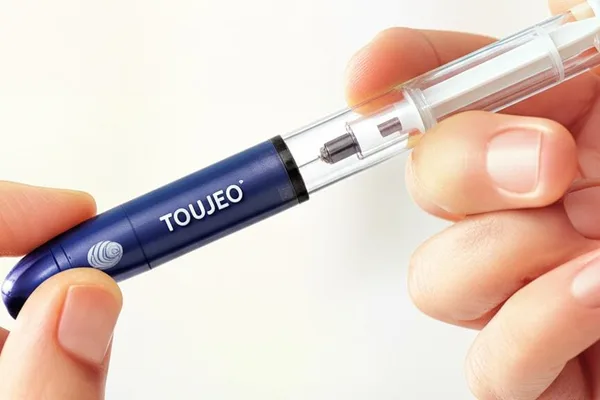
- How to use: Toujeo comes in a very easy-to-use, pre-filled insulin pen. When you are first given this, your doctor or a nurse at the clinic will show you exactly how to use it. Also, read the instruction leaflet that comes with the medicine carefully. If you have any questions, don't be afraid to ask your doctor again.
Toujeo starts working as soon as you take it. But it can take a few days or weeks for your doctor to find the right dose for you. So, measure your blood sugar levels as your doctor tells you to and keep a record of your readings. Don't forget to bring the book with you every time you go to the clinic.
Side effects and their management
Like any medication, Toujeo can cause minor side effects. Knowing about these in advance can help you cope with them. The table below lists the most common side effects and what you can do about them.
| Side effect | Characteristics and management |
|---|---|
| Low blood sugar (Hypoglycemia) | Symptoms: sweating, trembling, excessive hunger, rapid heartbeat, restlessness. Management: This is the most common side effect. Eat at the right time. Double-check the dose before injecting. Keep something sweet (sugar, toffee) nearby in case your blood sugar drops. Talk to your doctor about the symptoms of low blood sugar and what to do if it happens, and make a clear plan. |
| Injection site reactions | Symptoms: Pain, itching, swelling, redness at the injection site. Management: These are usually not serious. The best solution is to rotate the injection site . If you inject in the thigh today, in the stomach tomorrow. Do not inject in the same place over and over again. Do not inject into areas with wounds or bruises. |
| Weight gain | Reason: Insulin helps cells absorb sugar. If we don't use this energy through exercise, it gets stored in the body as fat. Also, when blood sugar levels are controlled, water retention can cause weight gain. Management: Eat a balanced diet. Exercise daily. If you have concerns about weight gain, talk to your doctor. |
Be careful when using Toujeo with other medications.
If you are taking medication for other conditions, some of those medications may interact with Toujeo, so it is important to be aware of this.
| Type of medicine | Possible impact |
|---|---|
| Other medications that lower blood sugar levels (e.g. other diabetes pills/insulin) | When these are taken together with Toujeo, there is an increased risk of dangerously low blood sugar levels (hypoglycemia). Your doctor may reduce your Toujeo dose or ask you to check your blood sugar more often. |
| Medicines that increase blood sugar levels (e.g. corticosteroids such as Prednisone, and some psychiatric medicines such as Olanzapine) | Taking this type of medication can cause your blood sugar levels to rise. Your doctor may advise you to increase your Toujeo dosage or check your blood sugar levels more frequently. |
Therefore, it is essential to tell your doctor about all the medications you are taking, including over-the-counter medications, vitamins, herbal remedies, and supplements. Do not start or stop taking any medication without first consulting your doctor.
Take-Home Message
- Toujeo is an insulin that works throughout the day. It is very important to inject it at the same time every day.
- Your insulin dose is unique to you. Never change it without medical advice.
- Be aware of the symptoms of low blood sugar (hypoglycemia) (sweating, shakiness). Have a plan in advance for what to do if it happens.
- To avoid skin problems, change the injection site every day.
- Inform your doctor about all other medications you are taking.
- Check your blood sugar levels regularly and take those records with you to the clinic. You can control your diabetes well!




💬 Comments (0)
No comments yet. Be the first to share your thoughts here.
Add Your Comment