

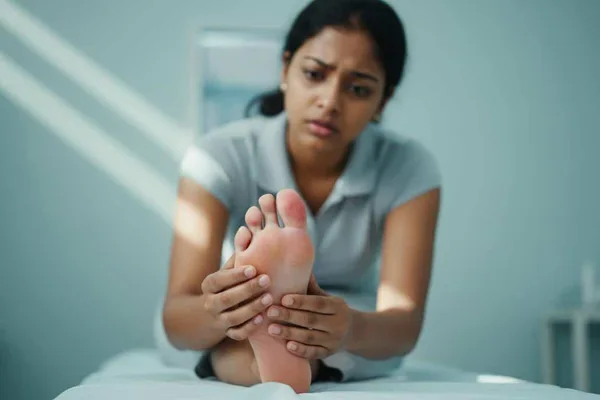
You might be someone who loves to run and jump, or maybe you're a sports person, right? What if you suddenly have severe pain and swelling in your big toe? Or what if the pain in your big toe gradually increases to the point where you can't even walk properly? Has something like that happened to you? If so, you may have a condition called "Turf Toe." Let's talk about this in more detail today.
Simply put, what is "Turf Toe"?
"Turf Toe" is, to be precise, an injury to the main joint in your big toe, the metatarsophalangeal joint or MTP joint. Think about it, when you're running, when your big toe is on the ground and your heel is lifted, the big toe bends too far back, or hyperextends . That's when this problem occurs. When the big toe bends too far, the soft tissues and ligaments , which are the bands that connect the bones together, around that joint can become stretched or torn. This is what we call a "toe sprain."
This condition is very common among American football players. The reason is that they often play on artificial turf fields, so when they suddenly start running fast (sprinting) or when they suddenly turn while running, there is a lot of pressure on the thumb. Unlike regular grass, this artificial grass is a little harder, so the risk of injury is higher.
But don't worry. Most of the time, this condition will improve with rest, ice, and over-the-counter pain relievers like ibuprofen or acetaminophen . However, sometimes, if these simple treatments don't help, surgery may be necessary.
Where exactly on our thumb does this affect?
There are two joints in the big toe. The largest of these is called the metatarsophalangeal joint (MTP joint) . This joint is where the base of the big toe, or the base, connects to the rest of the foot.
For this joint to function properly, the tendons (which connect muscles to bones), ligaments (which connect bones to each other), and other connective tissues surrounding it must be healthy. These are what give stability to the thumb and help the joint move properly without slipping. In the case of "turf toe," these tissues can range from a simple pull to a complete dislocation of the MTP joint.
Are there different levels of "Turf Toe"?
Yes, doctors use a special system to classify these "turf toe" disorders. That is what determines what type of treatment is most appropriate. There are three main levels:
- Grade 1: This is a slight stretching of the soft tissue in the thumb, not a tear. You may feel some pain when you touch it, and there may be some swelling. You may feel some discomfort when playing sports or exercising, but there is no major limitation.
- Grade 2: This is where part of the soft tissue in the thumb is torn. The area is painful, very swollen, and may even be blue/purple, like a bruise. Playing sports and exercising is severely limited.
- Grade 3: This is the most severe case. The soft tissue in the thumb is completely torn. The MTP joint may even be dislocated. There is severe pain and swelling in the thumb. It is so bad that you can't even move your thumb, so you can't even think about playing sports.
How common is this condition called "Turf Toe"?
The term "turf toe" often comes to mind when we think of players who play on artificial turf fields, but it can actually happen to anyone. It can occur in a variety of sports, whether on artificial turf or on regular hard surfaces. It can also be caused by whether the shoes you wear are flexible or rigid.
Turf toe injuries began to be reported more frequently in the 1970s. This is because football players started playing on artificial turf fields instead of regular grass. Artificial turf is a much harder surface than regular grass. It is also thought that the lighter, more flexible shoes used at the time may have contributed to this, as the way the shoe and the ground interact is different.
What are the symptoms of "Turf Toe"?
The symptoms of "Turf Toe" also vary slightly depending on the severity of the condition. If it happened suddenly, like in an accident, you may hear or feel a "click" sound. If that happens, pain in the big toe can come right away.
However, if it develops gradually, due to repetitive movements (repetitive injuries), the symptoms will appear gradually, gradually increasing over time. The following are the symptoms that can usually be seen:
- Pain and tenderness: The pain in the big toe may be constant, or it may only hurt when you press on it. Sometimes the pain in the big toe is so severe that you can't even put your foot down.
- Swelling and bruising: The base of the big toe may swell. This swelling may develop into a line of bruising that can extend all the way up the leg.
- Limited range of motion: You may not be able to wiggle your toes or bend them up and down. Your leg may feel numb, or you may not be able to push off as well as you used to.
- Joint feeling loose: The metatarsophalangeal joint (MTP joint) may feel loose and unstable. Sometimes the joint may also feel stiff.
What causes "Turf Toe"?
"Turf Toe" occurs when your big toe is bent and pressed against the ground. Often, your heel is raised off the ground, like a sprinter's starting position. If you put too much force on your big toe, it can hyperextend. When your big toe bends beyond its normal range, it can stretch or tear the ligaments , tendons, and soft tissues in the joint.
This can develop gradually over time, as a result of repetitive movements (for example, when ballet dancers jump). Or it can be caused by a sudden trauma. For example, a football player who hits another player with his toe planted on the ground. Players who make sudden movements and changes of direction with their legs are more likely to develop this type of injury.
Do flip-flops cause "turf toe"?
Although many "turf toe" injuries are related to sports, it can also be caused by the type of shoes you wear. Many flip-flops are not as supportive. They don't fit properly, so our feet have to work harder to keep the shoe on. You may not notice symptoms right away, but wearing flip-flops all the time can lead to a variety of foot problems, including "turf toe."
What are the possible complications of "Turf Toe"?
Although most "turf toe" injuries heal well, sometimes complications can occur. Some of these include:
- Persistent pain and stiffness in the joint.
- Decreased push-off strength.
- Bunions ( a condition where the joint of the big toe appears swollen and pulled).
- Hallux rigidus (a condition in which the joint of the big toe becomes stiff and painful).
- The one with the thumb permanently raised.
How do you know for sure if you have "Turf Toe"?
When you go to a doctor, they will first examine your thumb. They will press on the area and look for tenderness. They will then ask you to move your thumb and check its range of motion. If you had this in an accident, the doctor will ask you how it happened. Tell them all the details you can remember, especially how your thumb was and where you felt the pain.
Then, to see exactly if there is damage to the bones and soft tissues, the doctor will order an X-ray and, if necessary, an MRI (magnetic resonance imaging) scan. These tests can produce clear images of the bones, ligaments , tendons, and soft tissues.
How is "Turf Toe" treated?
Most sprained toes heal over time with plenty of rest. Grade 1 and 2 "turf toe" injuries usually improve with simple home treatments. Your doctor may recommend treatments such as:
- Rest: Ask your doctor how long you should rest your leg. Depending on the severity of the injury, you may need to stay away from sports and other activities for a few days or weeks. You may be given a walking boot or crutches to use until your big toe heals.
- Ice and elevation: Every few hours, rest your leg by elevating it above your heart. Place an ice pack on your big toe for about 20 minutes. Ice will reduce swelling and pain. Elevating your leg will reduce inflammation.
- Over-the-counter (OTC) pain medication: Talk to your doctor about taking medications like NSAIDs (nonsteroidal anti-inflammatory drugs) . These medications can be purchased at a pharmacy and help reduce pain and swelling.
- Physical therapy (PT): An experienced physical therapist will teach you exercises and stretches to help your thumb heal. A customized PT program can help reduce stiffness in your thumb, increase flexibility, and strengthen the muscles that support the MTP joint .
- Stabilization: Ask your doctor to show you how to tape your big toe to the other toes. This "turf toe taping" technique limits the movement of your big toe until it heals. When you return to work, make sure to wear shoes that are sturdy and provide support for your foot.
- Orthotics: Your doctor may recommend special inserts, stiff-soled shoes, or rocker bottom shoes. These orthotics help stabilize and support the big toe joint as you run, jump, and play.
- Surgery: Surgery is rarely necessary for turf toe. Surgery is usually performed to repair severe tears, fractures, or joint damage. The type of surgery performed depends on the location of the injury and the extent of damage to the bones and soft tissues.
How long does it take for "Turf Toe" to heal?
The time it takes to heal from a "turf toe" injury can vary from person to person. There are several factors that can affect it:
- The level or severity of your disability.
- Your age and how active you are.
- Other health conditions you have.
With proper rest, a Grade 1 "Turf Toe" injury can heal within a week. A Grade 2 injury can heal in two to three weeks. A Grade 3 injury can take two to six months to heal. If you have had surgery, the recovery time will be even longer.
Can we prevent "Turf Toe"?
Sometimes, especially after an accident, it's hard to prevent "turf toe." However, there are things you can do to reduce your risk. Wear shoes that are appropriate for the activity you're doing and provide good foot stability. People who play sports like football or soccer should avoid shoes that are too flexible, especially around the toe.
Before starting an activity or game, do a good warm-up and stretch. When muscles and soft tissues are warm, you are less likely to get injured. If you play a sport that puts you at a higher risk of developing "turf toe" (e.g., soccer, gymnastics, ballet), talk to your doctor. A physical therapist can help you reduce your risk of injury.
What is the future for people with "Turf Toe"? What happens if it is not treated?
Most people recover from "turf toe" without any long-term problems. However, some people may experience ongoing joint stiffness, weakness, and pain in the big toe (hallux rigidus ). Rarely, your big toe may be raised above the other toes and may not be able to keep it flat on the ground when you stand.
The important thing is that if you don't treat "Turf Toe," it can cause severe pain and long-term stiffness in the joint. Not only that, but you may also lose your ability to jump or run. In severe cases, arthritis and bone spurs can develop around the joint, or the joint may become dislocated.
When should I see a doctor?
If you have pain, swelling, or bruising in your thumb or foot, see a doctor. Even if the pain is mild, don't ignore it. It's important to see a doctor and follow the treatment plan they prescribe. If the pain is severe, if you can't put your foot down, or if the joint in your thumb appears to be dislocated, see a doctor right away.
Finally, the most important thing to remember! (Take-Home Message)
Turf toe can keep you out of sports for days, even weeks. However, with proper care and treatment, turf toe injuries usually resolve without long-term problems. The most important thing is to follow your physical therapist's instructions exactly and give your body enough time to heal. If you feel pain in your toe while playing sports or doing other activities, take a break right away. Never push through the pain. Doing so can make the injury worse. See a doctor right away and get checked out so you can get back to your normal activities as soon as possible.
` Turf toe, thumb disorders, sports injuries, foot pain, MTP joint, joint sprain, toe sprain




💬 Comments (0)
No comments yet. Be the first to share your thoughts here.
Add Your Comment