
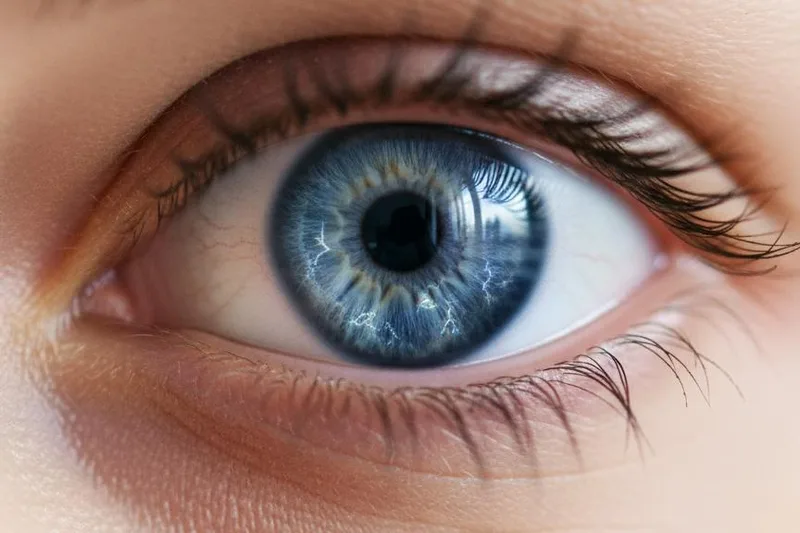
Have you ever wondered how your eyes get their color? Or how your eyes focus on something close up or something far away? The uvea is a part of the eye that is involved in all of this, like a little engineer inside the eye. Let's talk about it briefly today.
What is the Uvea?
Simply put, the uvea is the middle layer of the three main layers that make up our eye. It gets its name from the Latin word for "grape." The reason for this is that, when viewed from the outside, this part looks like a grape.
Another name for this is the 'vascular tunic'. It means 'a shirt with blood vessels.' It gets its name because it wraps around the eye like a shirt and is filled with blood vessels that provide the eye with the nutrients it needs.
The uvea is actually not a single part. It is a combination of three main parts.
- Iris
- Ciliary body
- Choroid
Main parts of the uvea and their functions
These three parts of the eye perform different, but very important, functions. Let's take a look at what they are.
| Part | What are you doing? |
|---|---|
| Iris | This is the part that gives your eyes their color. It determines the colors like blue, brown, and black. It's also a ring of muscle. It gets bigger and smaller to control the amount of light that enters the eye. It's like the ``aperture`` on a camera. |
| Ciliary body | This is located behind the iris. The muscles in this part change the shape of the lens of the eye, which helps us focus clearly when we look at something close to us or at something far away. It also produces the liquid inside the eye called ``aqueous humor``. This liquid is what gives the eye its spherical shape. |
| Choroid | This is the largest part of the uvea. It is a thin membrane filled with blood vessels. Think of your eye as a house. The choroid is like the plumbing of the house. Just as water enters the house and is distributed to places like the kitchen and bathroom, the choroid is the blood supply to the most important parts of the eye, especially the retina. It is also dark in color because it contains a pigment called ``melanin.'' This reduces unnecessary reflection of light inside the eye. |
What medical conditions can affect uvea?
Because the uvea is a collection of three different parts, there are many types of conditions that can affect it. While some conditions are minor, others can seriously affect your vision.
Below are some of the conditions that can affect the uvea:
- Uveitis: This is the most common and serious condition involving the uvea. Parts of the uvea become inflamed.
- Eye cancers: Especially those that occur inside the eye (intraocular melanoma).
- Diabetes-related retinopathy: People with diabetes can have damage to the blood vessels in their eyes.
- Eye stroke: Damage caused by decreased blood flow to the eye.
- Albinism: Lack of pigment that gives color to the skin and eyes.
- Presbyopia: The ability of the eye's lens to focus decreases with age.
- Coloboma: The absence of part of the uvea at birth.
- Eye Injuries: Any type of accident can damage the uvea.
- Some infections and other diseases: Diseases that affect other parts of the body, such as sarcoidosis, can also affect the eyes.
What are the common symptoms of these diseases?
When there is a problem with the uvea, the symptoms can vary depending on which part of the uvea is affected. However, there are some common symptoms that can be seen.
| Symptom | A simple description |
|---|---|
| Blurred vision | The state of not seeing things clearly. |
| Eye pain | Pain coming from inside or around the eyes. |
| Sensitivity to light (Photophobia) | Difficulty looking at light, feeling as if the eyes are turning blue. |
| Red eye | Redness or inflammation of the white part of the eye. |
| Vision loss | Sudden or gradual loss of vision. |
| Changes in the black eye | The pupil changes shape from round to a different shape or size. |
| Watery eyes (Epiphora) | Tears are always coming. |
How can we take care of the uvea of our eyes?
Our eyes are very precious, so there are a few simple things we can do to keep the entire eye, including the uvea, healthy.
- Get your eyes checked regularly: It's important for everyone, not just those who wear glasses, to get their eyes checked at least once a year or two . This can help identify problems before symptoms develop.
- Wear safety glasses: You can prevent accidents by wearing safety glasses when cutting metal, working with wood, working with chemicals, or playing sports.
- Avoid smoking and tobacco use: Smoking can damage the delicate blood vessels in the eyes, which directly affects the health of the uvea.
- Don't ignore eye infections: If you have an eye infection, redness that lasts more than a few days, or pain, be sure to see a doctor. Don't let it spread and become a bigger problem.
What are the best times to see a doctor?
In addition to regular eye exams, you should see an ophthalmologist without delay if you experience any of the following:
- If eye symptoms (pain, redness, blurriness) persist for more than a few days .
- If these symptoms prevent you from doing your normal activities .
- If you experience any type of vision loss or change .
Very important: Sudden loss of vision, sudden blurring of vision, or a black screen before the eyes are considered a medical emergency. If this happens, go to the nearest hospital Emergency Department (ETU) immediately.
The uvea is a part of the eye that we don't talk about much, but it's essential to its function. We don't realize its value until it's not working properly. But when there's a problem, it can be very scary. That's why it's important to have your eyes checked regularly and be aware of the symptoms.
Take-Home Message
- The uvea is a very important part of your eye that gives it color, focuses your vision, and supplies blood to the eye.
- Don't ignore symptoms like eye redness, pain, and blurred vision. They could be a sign of a uveitis problem.
- Many diseases can be detected early by having your eyes examined at least once a year.
- If you suddenly lose your vision or have a significant change in your vision, it is an emergency. Go to a hospital's Emergency Department (ETU) immediately.


💬 Comments (0)
No comments yet. Be the first to share your thoughts here.
Add Your Comment