

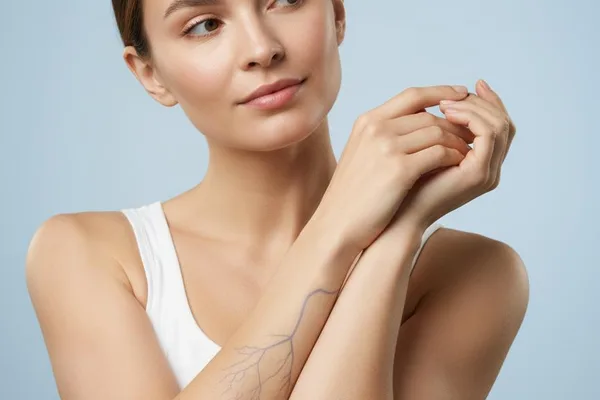
You've probably seen those blue veins under our skin, especially on our arms and legs, right? We all call them "veins," but what are they really? Have you ever wondered what the most important function of these veins is inside our body? That's what we're going to talk about in this article today, very simply and in a friendly way. Let's take a look at these veins, that is, everything about Veins.
What are veins simply?
Simply put, veins are a type of blood vessel that runs throughout our bodies. They are like a network of roads that carry goods around our bodies. Their main function is to bring oxygen-poor blood back to the heart after it has been used in various parts of the body.
Just think, about 75% of the total blood volume in our body is in these veins at any given time. That means veins are a very important part of our circulatory system.
What is the biggest difference between veins and arteries?
You may have heard of arteries. Although both of these carry blood, there is a big difference between the two.
- Arteries: These carry oxygen-rich blood from the heart to all parts of the body, much like pipes that carry clean water from the water tank to all parts of the house.
- Veins: These collect oxygen-poor blood from all over the body and return it to the heart. Much like the plumbing system that collects and removes dirty water from your home.
But there is one special case for this. And that is the pulmonary veins . These bring oxygen-rich blood from the lungs to the heart. This is the only place where a vein carries oxygen-rich blood.
The amazing way blood moves in our bodies
This is like having two bus routes running around a city. Let's see how this works.
1. First Circuit (Systemic Circuit): First, the oxygen-rich blood that has been picked up from the lungs and brought to the heart is pumped by the heart and sent throughout the body through the arteries. This blood goes to every cell and tissue in the body, providing them with the oxygen and nutrients they need.
2. The return journey: Once the oxygen is delivered, waste products from the cells, especially carbon dioxide, are added to the blood. This blood now becomes oxygen-poor blood .
3. The function of the veins: That's where the work of the veins begins. This oxygen-poor blood collects through the smallest veins (venules), enters the larger veins, and finally returns to the heart.
4. Second Circuit (Pulmonary Circuit): This oxygen-poor blood that has returned to the heart is pumped by the heart and sent to the lungs . Inside the lungs, the carbon dioxide in this blood is removed and new oxygen is added.
5. The beginning again: Now the oxygenated blood returns to the heart through the pulmonary veins. From there, the first round begins again. This cycle happens continuously every second we live.
Are veins really blue?
This is a misconception that many people have. Although they appear blue under our skin, veins are not actually blue. Veins contain blood that is dark red due to lack of oxygen. Blood in arteries is light red.
So why do we see blue? It's a trick of our eyes. When sunlight hits our skin, different color waves penetrate the skin differently. Red light penetrates the skin more deeply, but blue light doesn't and is reflected back from the surface. That's why veins appear blue to our eyes. Remember, blood is always red!
How is a vein formed?
Each vein is made up of three main layers of tissue.
| Layer | Function |
|---|---|
| Tunica Adventitia | This is the outermost layer. It gives the vein its shape and strength. |
| Tunica Media | This is the middle layer. The smooth muscle cells in this layer allow the vein to expand and contract as blood flows. |
| Tunica Intima | This is the innermost layer. It is made up of very smooth cells, so blood can flow through it without any obstruction. |
In addition, veins have another special feature. They have one-way valves that allow blood to flow in only one direction. These valves prevent blood from flowing backward, but rather flow in the same direction as the heart. These valves are especially important in our legs, where they help pump blood upward against gravity. When these valves become damaged, conditions like varicose veins occur.
Why are the walls of veins thin?
The walls of veins are much thinner than those of arteries. This is because blood flows through arteries at high pressure. The walls of arteries need to be thick to withstand that pressure. However, blood flows through veins at much lower pressure. Therefore, their walls do not need to be as thick.
What are the main types of veins?
The veins in our body can be divided into three main types.
| Vein Type | Description |
|---|---|
| Deep Veins | These are located deep between our muscles and bones. They perform the main and most important function of carrying oxygen-poor blood to the heart. 90% of the blood that goes from the legs to the heart goes through these deep veins. |
| Superficial Veins | These are located under the skin. These are the veins that we see with our eyes. They collect blood from the superficial tissues and deliver it to the deep veins. |
| Perforating Veins | These are like bridges. These small veins connect the superficial veins to the deep veins. The valves in these veins prevent blood from flowing back from the deep veins to the superficial veins. |
What is the "second heart" story told to the legs?
This is a very amazing and important story. Would you believe if I told you that, in addition to the heart in our chest, our body has another heart? It is the calf muscles in our calves.
Think about it, the blood in our legs and feet should flow upward against gravity, toward the heart. This doesn't just happen. When we walk or run, our calf muscles contract. When we do that, the deep veins that run through those muscles tighten. It's like squeezing a tube. When you squeeze them, the blood inside the veins is pushed up. Because of the valves in the veins, that blood doesn't flow back down.
That's why the muscles in our thighs are called our "second heart." This second heart only works when we walk and move our legs. That's why sitting in one place for too long is harmful to the body.
Common vein-related conditions
Sometimes the function of the veins can be impaired. These are some of the cases.
- Varicose Veins: When the valves in the veins become weak, blood flows backward and pools in one place, causing the veins to swell, twist, and become visible on the surface of the skin.
- Deep Vein Thrombosis (DVT): This is a serious condition. A blood clot (thrombus) forms inside a deep vein . If this clot breaks loose and lodges in a vein in the lungs, it can be life-threatening. We call this condition Pulmonary Embolism .
- Superficial Thrombophlebitis: Inflammation of a superficial vein under the skin with a blood clot.
- Chronic Venous Insufficiency: The veins in the legs are unable to pump blood efficiently. This can cause swelling in the legs, changes in skin color, and ulcers.
How do you recognize a vein problem?
If you have these symptoms, it is very important to pay attention to them and see your doctor immediately .
- Swelling in the legs, ankles, or feet (especially in the evening after standing all day).
- Feeling pain, stiffness, or cramps in the legs.
- Feeling tired and heavy in the legs.
- Dry, flaky, or itchy skin on the legs.
- Swollen, purple veins appear on the surface of the skin.
If you have these symptoms, don't ignore them. Early detection of some venous diseases can prevent serious conditions.
How to maintain the health of veins?
There are many simple things we can do to keep our "second heart" functioning well and our veins healthy.
- Walk as often as possible: Try to walk for at least 30 minutes a day. This will activate your "second heart" and improve blood circulation.
- Don't stay in the same position for too long: If your job requires you to sit in one place, get up and walk around for a few minutes at least once an hour. Even when you're sitting, do things like raise your legs up and down from your chair and rotate your ankles.
- Maintain a healthy weight: As body weight increases, more pressure is placed on the veins in the legs.
- Eat a healthy diet: Eat a diet low in salt, oil, and sugar, and high in vegetables and fruits.
- Be careful on long journeys: If you're traveling on a plane or bus for hours at a time, don't forget to get up and walk around every now and then, and exercise your legs.
- Keep your legs elevated: When you are resting or sleeping, place a pillow under your legs and keep them slightly elevated. This helps blood flow to the heart more easily.
Even when we are at rest, our heart, veins, and arteries are constantly working inside our bodies. Therefore, we need to help keep this amazing system of our body healthy.
Take-Home Message
- Veins are blood vessels that carry used, oxygen-poor blood back to the heart in the body.
- Veins appear blue because of the way light interacts with our skin, not because the blood inside is blue. Blood is always red.
- When we walk, the muscles in our legs act like a "second heart" and help pump blood upward. That's why walking is so important.
- If you have symptoms such as leg swelling, pain, or visible veins on the surface of the skin, do not ignore it and see your doctor.
- Avoid sitting or standing in one place for too long. Getting up and walking around regularly and doing light leg exercises can help keep your veins healthy.




💬 Comments (0)
No comments yet. Be the first to share your thoughts here.
Add Your Comment