

Have you ever felt like your legs are tired, heavy, and swollen after a long day at work? Or do you notice blue or purple veins in your legs? These symptoms may be accompanied by itching and pain in your legs. Although you may think that these are normal symptoms of fatigue, sometimes they can be signs of a problem with the veins in your body. Today, let's talk about what venous disease is, why it occurs, and what you need to know about it.
Simply put, what is venous disease?
To understand this, let's first take a look at how blood circulates in our body. There are two types of blood vessels in our body: arteries and veins .
- Arteries: Arteries carry oxygen-rich, clean blood from the heart to all parts of the body.
- Veins: The function of veins is to bring used, oxygen-depleted, and impure blood back to the heart from various parts of the body.
Think of veins as little roads that only let blood flow in one direction. Inside these roads are little valves. Like doors that only open in one direction. When we walk or move, our muscles contract. Then these valves open and push blood upwards, that is, towards the heart. When we relax, that is, when the muscles relax, these valves close. Then the blood stops flowing back down.
Venous disease is any condition that interferes with this process. If these veins or those valves we mentioned are damaged, they don't close properly. Then the blood starts to leak backward or stagnate in one place. That's where the problems start.
What are the types of venous diseases?
There are several types of vein diseases. Below are some of the most common types we see and need to be aware of.
| Name of the disease | Simple explanation |
|---|---|
| Varicose Veins and Spider Veins | This is a very common condition among us. The walls of the veins become weak and blood stagnates, causing the veins to become twisted, swollen, and visible above the skin's surface. Spider veins are finer, red/blue veins that spread out like a spider web. |
| Deep Vein Thrombosis (DVT) | A blood clot forms in a vein deep inside the body. This often occurs in the legs. This blood clot becomes dangerous if it breaks loose and gets stuck in a vein in the lungs. This condition is called a pulmonary embolism . It can be life-threatening. |
| Superficial Thrombophlebitis | A blood clot forms in a superficial vein under the skin, causing redness, swelling, and pain. While not as dangerous as DVT, it can be painful. |
| Chronic Venous Insufficiency | Over time, the valves in the veins do not work properly, causing blood to pool in the legs and causing chronic swelling. This can cause the skin on the legs to change color, become dark brown, and develop non-healing wounds (venous ulcers). |
| Venous Ulcers | Sores that do not heal easily or recur on the skin surface of the legs, especially the ankles. These are caused by the skin not receiving the necessary nutrition and oxygen due to blood stagnation. |
What are the common symptoms of these diseases?
Although the symptoms of venous disease vary slightly, these common symptoms can be seen in the legs and arms.
- Pain, cramping, or discomfort: A difficult-to-describe ache that comes from the inside of the legs.
- Heaviness in the legs: A feeling as if something heavy is hanging from the legs.
- Swelling: Swelling around the ankles and lower legs, especially in the evening after a day's work or after standing/sitting for a long time.
- Itching or burning: A feeling of itching or burning on the surface of the skin where the veins are.
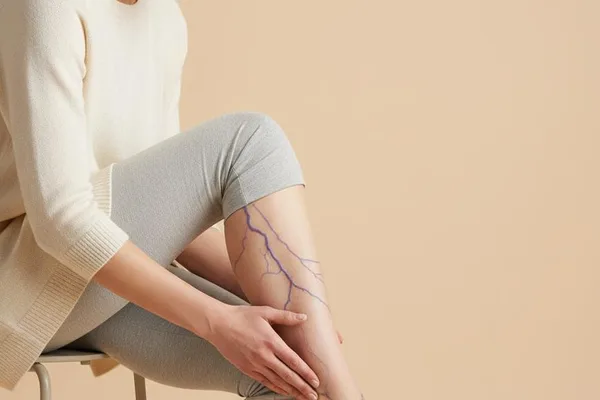
- Visible veins: Blue, purple veins appear twisted and knotted on the surface of the skin.
- Skin changes: Brown discoloration of the skin on the legs, dry skin, and scaly skin.
- Non-healing wounds: Wounds, especially those in the ankle area.
The most important thing is to see a doctor if you continue to have one or more of these symptoms, rather than assuming, "This is normal."
What are the risk factors for developing venous disease?
Actually, anyone can develop these diseases. But some people are at higher risk for them. Let's see what they are.
- Heredity: If your mother, father, or a close relative had conditions like varicose veins, you are more likely to develop them too.
- Age: As we age, the strength of our vein walls and valves naturally decreases.
- Gender: Women are more likely to develop these diseases, especially due to hormonal changes during pregnancy and after menopause.
- Pregnancy: During pregnancy, the amount of blood in the body increases. Also, the growing baby puts pressure on the veins in the abdomen. This can make it difficult for blood to flow from the legs to the heart, leading to conditions such as varicose veins.
- Overweight/Obesity: When you are overweight, there is more pressure on the veins in your legs. Your risk is higher if your Body Mass Index (BMI) is over 30.
- Staying in the same position for too long: People who stand (e.g. teachers, security guards) or sit (e.g. office workers, drivers) for too long can experience poor blood circulation in their legs.
- Tobacco use: Smoking can damage blood vessels and interfere with blood flow.
- Some hormonal treatments: Taking birth control pills or other hormonal treatments can also increase the risk.
How is the diagnosis and treatment done?
When you go to see a doctor, he will ask about your symptoms and family medical history. Then he will examine your feet. If necessary, he may refer you for several tests to confirm the diagnosis.
- Ultrasound Scan: This is the most commonly used, painless method. It can clearly see how blood flows inside the veins, whether the valves are working, and whether there are blood clots.
- Other tests: In some special cases, tests such as CT scan , MRI scan , or angiogram may be referred.
Treatment options depend on the type of disease you have and its severity. There is no one-size-fits-all treatment.
Lifestyle changes
This is the first and most important step.
- Exercise: Daily exercises such as walking and swimming activate the muscles in the legs and help with blood circulation.
- Weight control: Losing weight can reduce the pressure on your veins.
- Avoiding standing in the same position: If you work sitting down, get up and walk around at least once an hour. If you work standing up, sit down occasionally to give your legs a rest.
- Elevate your legs: When sitting in a chair, prop your legs up on another chair if possible. When sleeping, place a pillow under your legs.
- Healthy diet: Reduce foods high in salt and oil, and eat more vegetables and fruits.
Medical treatment
- Compression Stockings: These are specially designed, tight-fitting stockings that fit the legs. Wearing them puts pressure on the veins from the outside, helping the blood to move upward. Your doctor will recommend the right size and tightness for you.
- Medications: If blood clots have formed, medications such as anticoagulants may be given to dissolve them or stop new ones from forming.
- Special procedures and surgeries: In some severe cases, laser treatment, sclerotherapy (injecting a medicine into the veins), or surgery to remove the damaged veins may be necessary.
When do you need to see a doctor urgently?
Usually, venous diseases can be treated gradually. However, in some cases, you need to seek medical advice immediately. In particular, if you suspect you have a DVT or are experiencing symptoms of a pulmonary embolism , you should go to a hospital's Emergency Department (ETU) immediately .
Features that require immediate attention:
- Sudden difficulty breathing.
- Chest pain.
- Heart palpitations.
- Coughing for no reason (maybe a little blood).
- Bluish discoloration of the skin.
These symptoms indicate that a blood clot has traveled to the lungs. This is a very urgent and serious condition.
Take-Home Message
- Don't ignore symptoms like leg swelling, pain, and visible veins as normal. These may be early signs of venous disease.
- If anyone in your family has these diseases, it is important that you take care of them too.
- A healthy lifestyle (exercise, weight control, proper diet) can greatly reduce the risk of developing venous disease.
- If you suspect you have a venous disease, see your doctor immediately for advice.
- If you experience sudden chest pain or difficulty breathing, go to a hospital's Emergency Department (ETU) immediately, as it could be a sign of a blood clot in the lungs.




💬 Comments (0)
No comments yet. Be the first to share your thoughts here.
Add Your Comment