

What is Nasal Vestibulitis?
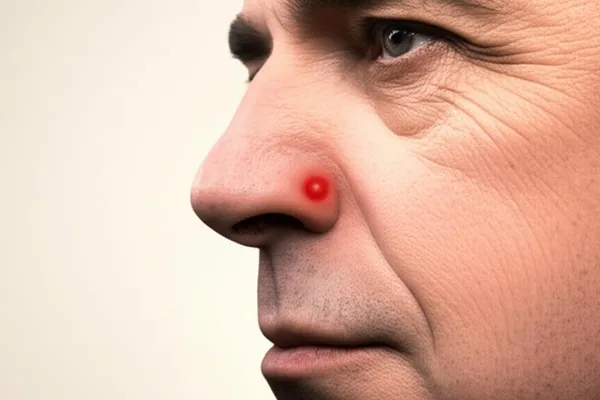
Simply put, `Nasal Vestibulitis` is an infection that occurs at the very beginning of your nostrils, that is, in the part that is towards the inside (this is called the `nasal vestibule`). You may have noticed that there are small, thick hairs inside the nose. The main function of these hairs is to filter and catch things like dust and dirt that enter the lungs when we breathe. This is a common infection. However, although very rare, it can also cause serious complications. Therefore, it is very important to be aware of this.What are the symptoms of this condition?
If someone has `Nasal Vestibulitis`, they may experience one or more of the symptoms below.| Symptom | Description |
|---|---|
| Painful swelling | Swelling with pain in the nose and nostrils. |
| Boils or blisters | The appearance of pimple-like, pus-filled blisters or boils (medically called `furuncles`) inside the nose. |
| Dryness and crusting | The inside of the nose is dry and crusts form as if a wound is healing. |
| Nosebleed | Minor bleeding may occur due to damage to the skin inside the nose. |
| Fever | If the infection is severe, you may experience a fever. |
Important: If you have these symptoms that persist or recur, be sure to see a doctor. Sometimes, tests may be needed to make sure it's not a rare type of skin cancer , such as basal cell carcinoma or squamous cell carcinoma.
Why does something like this happen?
The main cause of this is a type of bacteria called `Staphylococcus`. This bacteria usually lives harmlessly inside our nose and on the surface of our skin. But if there is a small wound or scratch on the skin inside the nose, this bacteria can enter through it and cause an infection. Imagine how the skin inside the nose can be damaged.| Reason | Description |
|---|---|
| Picking the nose with a finger | This is the most common cause. The nail can scratch the delicate skin inside the nose. |
| Nose hair removal | There is a high chance that hair follicles will be damaged by plucking hair and causing infection. |
| Blowing your nose frequently | Blowing your nose frequently and loudly can also damage the internal tissues. |
| Nose piercing | If the nose piercing site is not kept clean, it can easily become infected. |
| Stuffy nose | Young children, especially, tend to put things like toys and munchies in their noses, which can also cause injuries and infections. |
- Viral infections , for example herpes simplex and herpes zoster.
- People with weakened immune systems , such as those with diabetes and autoimmune diseases, are at higher risk of developing such infections.
- Research has found that this condition also occurs frequently in patients taking specific medications for cancer .
Could this be dangerous? (Complications)
Now listen carefully to what I'm saying. There's a part of our face called the "danger triangle of the face." This is the triangular area that extends from the corners of your mouth to the bridge of your nose. The reason this area is dangerous is because many of the blood vessels here are directly connected to the brain. Therefore, an infection in this area can very rarely spread to the brain. Although this doesn't happen very often, it's important to be aware of it.Possible complications
- Facial Cellulitis: This is a serious bacterial infection of the skin. The skin becomes red, swollen, warm to the touch, and painful. If you have these symptoms along with a fever , you should go to a hospital's emergency room (ETU) immediately.
- Cavernous Sinus Thrombosis : This is a very rare but serious complication. This occurs when bacteria from a facial infection cause a blood clot to form in a blood vessel called the `cavernous sinus` at the base of the brain. Severe symptoms such as severe headache, severe pain around the eyes, bulging of the eyes, and double vision (ophthalmoplegia) can occur.
What are the treatments for this?
First of all, if you have these symptoms, you should definitely consult a doctor before self-treating. The doctor will examine your condition and provide the most appropriate treatment. The following are the treatments that are usually given:- Topical antibiotic creams: You may be told to apply an ointment like `Bacitracin` or `Mupirocin` twice a day for about 14 days.
- Saline drops: These help moisturize and clean the inside of the nose.
- Oral antibiotics: If you have pus-filled boils inside your nose, oral antibiotics may be prescribed in addition to topical medications.
- Warm compresses: Your doctor may recommend soaking a clean cloth in warm water, wringing it out, and placing it over your nose for 15-20 minutes, three times a day. This will help reduce pain and swelling.
- Surgical removal of the abscess: If antibiotics don't work, a doctor may make a small incision to remove the pus. Never try to squeeze or pop the abscess yourself.
Take-Home Message
- Nasal vestibulitis is a common infection that occurs inside the nostrils.
- Avoid habits like picking your nose, plucking your nose hairs, and blowing your nose too hard. These can damage the delicate skin inside your nose.
- If you have symptoms such as pain, swelling, pus, or fever inside your nose, be sure to see a doctor.
- Because this infection occurs in the "danger triangle" of the face, although complications are rare, it is very important to seek proper treatment.
- Never try to squeeze a pimple inside your nose yourself for any reason. This can spread the infection.
👩🏽⚕️ Additional questions (FAQs)
💬 What is a condition called Nasal Vestibulitis?
This is a bacterial infection that develops on the skin at the front of our nose. It is named after the bacteria that invades the hair follicles inside the nose, causing them to become red and swollen.
💬 What are the main causes of this type of nose infection?
This can often be caused by frequent nose picking, nose picking, and nose plucking. Also, this bacteria can enter through frequent colds and injuries.
💬 What are the treatments for Nasal Vestibulitis?
When you see a doctor, they will often prescribe an antibiotic ointment (like Mupirocin) to apply inside the nose. However, if the condition is more severe, you may also need to take medication in the form of capsules.




💬 Comments (0)
No comments yet. Be the first to share your thoughts here.
Add Your Comment