
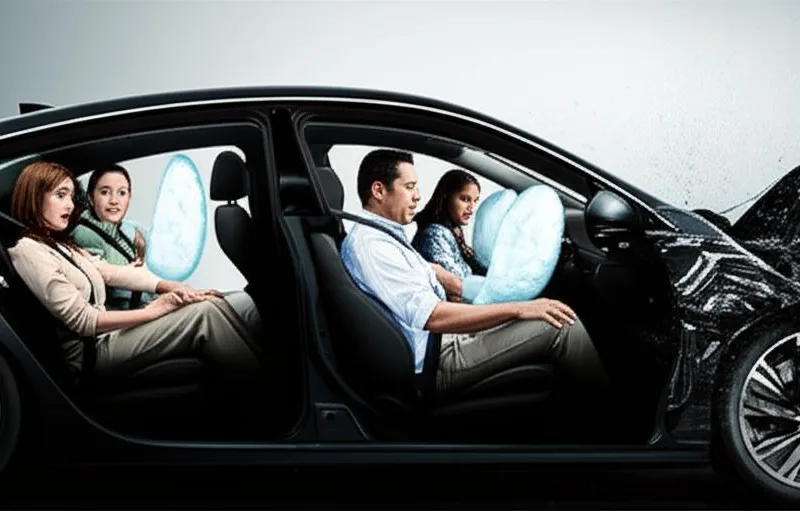
Imagine that you are driving a car. God willing, that may not happen, but suddenly you have an accident. At that time, the two most important things to save you and your family are the seat belt and the air bag. We all know about the importance of the seat belt. But what is this air bag? How does it actually work? Does it only have advantages for us? Or are there unknown disadvantages? Today, let's talk about all this very simply, in our language.
What is an Air Bag? How does it work?
Simply put, an airbag is an air-filled cushion that prevents you from being hit hard in a car accident. However , an airbag is an additional safety feature to the seat belt, not a replacement for it. You get maximum protection when you have both of these together.
Now let's see how this works. This is a very amazing technology.
1. When a vehicle crashes, a special system of sensors detects the collision.
2. At the same time, in a very short time, less than the blink of an eye, about one twentieth of a second, a signal is sent from these sensors to the airbag system.
3. Upon receiving that signal, the chemical substance sodium azide inside the air bag ignites, producing a large amount of harmless nitrogen gas (78% of the air we breathe is nitrogen gas).
4. This gas instantly inflates the air bag and causes it to jump out of the dashboard or steering wheel.
This entire process happens at incredible speed. More than 300 kilometers per hour, to be exact. It is because of this high speed that air bags can sometimes cause injuries . We will talk about how that happens later.
The most important thing is that an airbag can only be used once. Once it inflates, it's gone. After that, you should definitely go to an authorized service center of the vehicle manufacturer and have a new one installed.
How to get maximum protection from an Air Bag?
To benefit from the airbag, you need to know how to use it correctly. Let's see what you need to do with it.
| Safety Do's | Don'ts |
|---|---|
| Always wear a seat belt: The air bag works in conjunction with the seat belt. So be sure to wear a seat belt. | Thinking of it as a replacement for the seat belt: Never think that just because you have an airbag, you don't need a seat belt. |
| Maintain a proper distance: If you are the driver, stand at least 10 inches back from the steering wheel. If you are a passenger, stand as far back as possible from the dashboard. | Leaning forward and putting your feet on the dashboard: Do not lean forward to turn on the radio or adjust the AC. The passenger should never put their feet on the dashboard. |
| Placing children in the back seat: It is safest for children under the age of 13 to always travel in the back seat of the vehicle. | Placing children in the front seat: Never place children in the front passenger seat, especially those in car seats. |
| Sitting correctly in a chair: Sit upright with your back against the chair. Move the seat as far back as possible. | Unnatural seat position: Do not drive while sitting too reclined or leaning forward. |
Why are airbags dangerous for small children?
This is the point we all need to pay the most attention to. While an air bag may save an adult's life, it can be fatal to a small child. The reason for this is very simple.
Imagine, when an adult sits in the front seat, the airbag inflates and hits the chest area. This protects the head and neck. But when a small child sits in the front seat, because the child is short, the airbag, which is traveling at a speed of 300 kilometers per hour, hits the child's head and neck directly. This can cause very serious brain injuries, damage to the cervical vertebrae, and sometimes even death.
The saddest thing is that most of the accidents in which children died due to airbags were minor accidents that occurred at low speeds and would not have caused major damage even without an airbag.
So remember, if your child is under 13, the safest place for them is in the back seat of the car. If you need someone to watch the child, have that adult ride in the back seat with the child. That's the safest way for both of you.
What do you do after an accident?
If the airbag has inflated after an accident, don't worry about it.
- Dust: Don't be afraid of the white powder that comes out after the air bag inflates. It is not toxic . However, some people may experience a slight itching or irritation of the skin and eyes. Therefore, it is best to keep the injured person away from the dust. It is safer if the person helping them wears gloves and eye protection. Wash your hands thoroughly afterwards.
- Counterfeit Air Bags: When replacing an air bag , never install a cheap, counterfeit (`counterfeit`) air bag. These do not inflate properly. Sometimes, when they inflate, metal fragments from the vehicle can be thrown out and cause injury. Always have your air bag replaced by an authorized dealership.
- Medical advice: Even if the accident is minor, if the airbag has deployed, and you are experiencing any pain or discomfort in your body, be sure to see a doctor for a checkup. Some injuries may develop later.
Let's also learn about a switch that turns off the Air Bag.
Some vehicles have a switch that allows you to turn off the air bag if you want. However, this should only be used in very special circumstances. It is not generally recommended to turn off the air bag. It is only permitted to do so in the following situations:
- If a child needs to be taken care of continuously due to a medical condition and must be transported in the front seat.
- If the vehicle does not have seats in the back (e.g. some sports cars, lorries).
- If the driver is very short, they have to sit very close to the steering wheel.
- If your doctor has recommended that you have a specific medical condition that could cause more harm if the airbag were to deploy.
Being pregnant is not a reason to turn off the airbag. All a pregnant mother should do is wear the seat belt correctly, passing it over and under her stomach, and drive with the seat as far back as possible, sitting upright.
Take-Home Message
- Your first and foremost protection is your seat belt. An air bag is just an additional layer of protection. Always wear your seat belt.
- Always and on all journeys, keep children under the age of 13 in the back seat of the vehicle. This is a very simple thing that can save a child's life.
- Never, ever place a child seat (car seat) in the front passenger seat.
- The driver and front passenger should sit upright, leaning back in their seats, keeping a safe distance from the steering wheel and dashboard.
- If an airbag inflates in an accident, be sure to have it replaced with a new one. Choose an approved service center for this.
- If you have any concerns about the safety of an airbag due to a medical condition, talk to your doctor about it.
Air Bag, Vehicle Safety, Car Accidents, Child Safety , Seat Belt, Vehicle Maintenance, Sri Lanka




💬 Comments (0)
No comments yet. Be the first to share your thoughts here.
Add Your Comment