
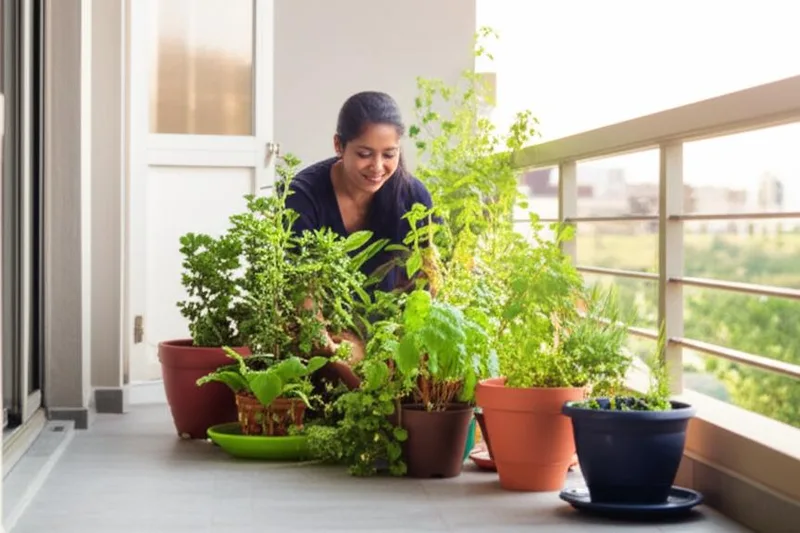
Nowadays, we all want to eat some fresh vegetables and greens without any pesticides. But one problem that many people have is that they don't have enough space at home. Especially in the city, when you live in an apartment, it's hard to even think about having a garden. But if you have a small balcony, a patio, or a window that gets plenty of sunlight, you can also grow some vegetables for yourself. That's what we call "container vegetable gardening".
Simply put, what is this container gardening?
This is very simple. Instead of planting plants in the ground, we call this the process of growing vegetables in a pot, plastic container, wooden box, or any container that can be filled with soil and planted. The biggest advantage of this method is that even someone with limited space can create their own garden. Also, it is easy to move these containers around to suit the weather and sunlight.
What are the best vegetables and herbs to grow in pots?
In fact, we can grow many of the vegetables that can be grown in a regular garden in containers. However, the results are even better if we choose plants that are specifically suited to growing in containers and that grow small. You can get a good idea of that from the table below.
| Vegetable/leaf type | Notable points |
|---|---|
| Vegetables (Gotu Kola, Mukunuwenna, Kankun, Spinach, Lettuce) | These grow quickly. Shallow, wide pots are best. |
| Tomato | Choose bush or small-fruited varieties such as ``Cherry tomatoes.`` A large, deep pot is essential. |
| Chilli / Fish Chilli | It needs good sunlight. A medium-sized pot is sufficient. |
| Eggplant / Batu | It needs a deep pot and plenty of sunlight. |
| Root vegetables (carrots, radishes, beets) | You need to choose a deep pot. Small varieties (like Little Finger carrots) are best. |
| Herbs (mint, coriander, sage, basil) | They can be easily grown even in small pots. The plants that I planted near the kitchen window. |
Companion Planting: You can grow several types of plants together in the same container. This saves space and is also beautiful. For example, you can plant tomatoes, basil, and onions together. You can also plant lettuce and other greens together. However, it is not a good idea to plant plants like potatoes with tomatoes or dill with carrots.
Okay, so let's get down to business? How do we start?
Growing vegetables in containers isn't as difficult as you might think, but to get the best results, you need to take care of a few things.
1. What kind of bowl do you choose?
Really, anything can be used as a container. Old paint buckets, large yogurt cups, coconut shells, wooden boxes, even plastic bottles can be used for this purpose.
- Clay pots: Due to their porous nature, the soil dries out quickly, so they need to be watered frequently.
- Plastic pots: These retain moisture for a longer period of time. These are good for people who forget to water often or for plants that like moisture.
Most importantly: Whatever container you use, it should have good drainage to allow excess water to drain . If the container doesn't have holes in the bottom, make a few holes about an inch or so deep near the bottom and along the sides. Otherwise, the roots may rot and the plant may die.
2. How big should the pot be?
The size of the pot should be determined by the size of the plant you are planting. It is best to choose a pot as large as possible. Small pots tend to dry out quickly because they contain little soil, so you will have to water them frequently.
Below is a general recommendation:
- Shallow-rooted plants (beans, radishes, green onions): 6-9 inches deep pot.
- Plants with medium roots (chili peppers, broccoli, okra): A 12-18 inch deep pot.
- Deep-rooted plants (tomatoes, potatoes, pumpkins): 18-24 inch deep pot.
3. What type of soil should be used?
This is a mistake that many people make. Never fill pots with soil directly from the garden. Garden soil is very clayey. Clay holds too much water when it gets wet, so the water doesn't drain well. The roots don't get the air they need.
Therefore, it is best to buy a potting mix made specifically for growing in pots from an agricultural supply store. These are lightweight, drain well, and provide the plants with the air they need. Some types of potting mix also have fertilizer mixed in. If so, don't add extra fertilizer in the beginning.
4. How to apply fertilizer?
When we water our pots, we gradually wash away the nutrients in the soil. Therefore, plants grown in pots require some amount of fertilizer to grow well.
- Slow-release dry fertilizer: These can be mixed into the soil mixture and provide nutrients over a period of weeks.
- Water-soluble fertilizer: You can apply a small amount of fertilizer dissolved in water each time you water.
Warning: Follow the instructions on the fertilizer package. Never apply more fertilizer than recommended. Doing so can cause `fertilizer burn` and kill the plants. This risk is greater because there is little soil in the pots.
5. How important is sunlight?
Most vegetables need a lot of sunlight. Especially fruit-bearing plants like tomatoes, peppers, and sweet potatoes need at least 6 hours of direct sunlight per day . 8-10 hours is better. One advantage of growing in containers is that you can move the containers to a location that gets more sunlight.
6. How to water?
The soil in the pots dries out quickly, so check it daily. Stick your finger about an inch into the top of the soil. If it feels moist, you don't need to water. If it feels dry, water it well until water runs out of the drainage holes in the pot.
- Mulching: You can conserve soil moisture by covering the soil with something like straw, dry grass, leaf litter, or coir.
- Hot spots: If your pots are on a concrete floor, the heat can affect the roots. So it's a good idea to place the pots on something like a wooden pallet.
Is it possible to grow vegetables indoors? (Indoor Gardening)
Yes, absolutely. Even if you don't have space outside, if you have a window with plenty of sunlight, you can still grow some things indoors. Herbs like mint, coriander, curry, and sage are great for this.
Small tomatoes and peppers can also be grown indoors. But they need good light and warmth. If natural light is not enough, you may need to use something like a fluorescent light. Otherwise, flowering and fruiting may be reduced.
Take-Home Message
- Choose a pot that is as large as possible and suitable for the plant you are growing.
- Be sure to check if the pot has holes for good drainage .
- Instead of garden soil, use a store-bought potting mix .
- Provide fruit-bearing plants with at least 6-8 hours of good sunlight per day .
- Water only when the soil is dry. Avoid overwatering .
- If applying fertilizer, apply only the recommended amount .


💬 Comments (0)
No comments yet. Be the first to share your thoughts here.
Add Your Comment