
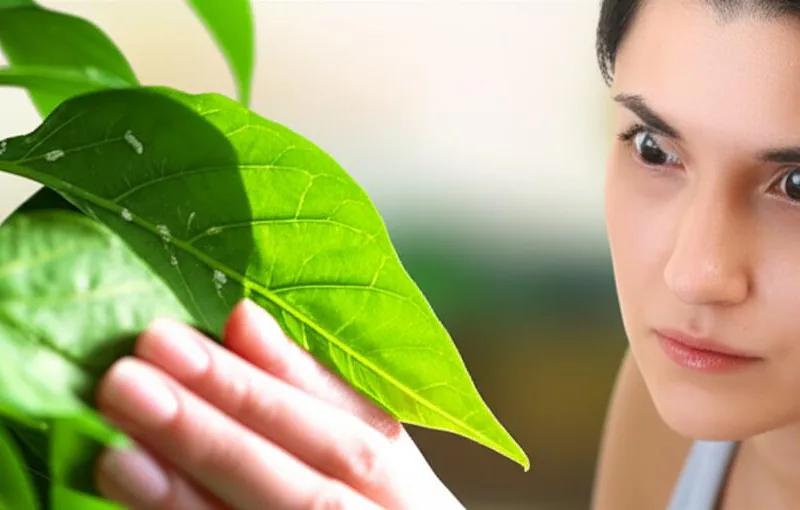
Have you ever noticed that when you gently shake a chili plant, tomato plant, or a beautifully planted flower plant in your garden, a swarm of small, white insects suddenly fly up? That's what we're talking about: whiteflies, or 'whiteflies' as they are called in English. These little creatures are a major pest that can cause a lot of damage to your garden as well as large crops. If they are not controlled in time, they can spread diseases to plants and even destroy an entire crop. So, today we'll talk about how to properly identify these whiteflies and save our garden from them.
Who are these whiteflies?
Although their name says 'fly', scientifically speaking, these are not really flies. They belong to the suborder 'Homoptera'. This is the same order that includes aphids and cicadas, which live on trees like guava. What makes them special is that they have mouthparts that can pierce plants and suck the sap.
There are more than 1500 species of whiteflies worldwide. But not all of them spread disease. There are several common species that damage crops in our countries as well. Let's look at a few examples.
| Whitefly | A simple description |
|---|---|
| Greenhouse whitefly (Trialeurodes vaporariorum) | This type is the most common. It damages vegetables such as cucumbers, tomatoes, and lettuce, especially those grown in gardens, as well as ornamental flowers. |
| Silverleaf whitefly (Bemisia argentifolia) | These insects cause more damage because they suck more plant sap than others. They get their name from the fact that when they damage plants like pumpkins, the leaves turn a silvery color. |
| Sweet potato whitefly (Bemisia tabaci) | This species not only damages sweet potato crops, but also many other crops. What's special about it is that it is resistant to many insecticides. That's why it's a bit difficult to control. |
| Bandedwinged whitefly (Trialeurodes abutilonea) | Although similar to the others, these have striped markings on their wings. They damage plants such as cotton, geraniums, and hibiscus (shoe flower). |
What do these white flies look like?
The appearance of whiteflies varies depending on the stage of their life cycle.
- Eggs: The female lays white or light brown eggs on the underside of a plant leaf. These eggs turn blue or purple and hatch in a few days.
- Nymph: The tiny larvae that emerge from the egg have a flat, oval-shaped, greenish-yellow body. They settle on a leaf and begin sucking the sap by inserting their mouthparts into the leaf.
- Adult: A fully grown whitefly looks like a tiny white moth. They have four white wings and a yellow body. They have a white, waxy coating all over their bodies.
What kind of damage do whiteflies cause to plants?
Whiteflies damage more than 1,000 types of plants. They stick their mouthparts into the leaves of the plant and suck the sap . This continues, weakening the plant.
In addition, they suck the sap and secrete a sticky, honey-like substance called "honeydew." When this substance gets on the leaves, a black mold begins to grow on them. This is called 'sooty mold.' This means that the leaves do not receive enough sunlight and cannot photosynthesize properly. This means that the plant cannot make food. This can lead to stunted growth and reduced yields. In the worst cases, the plant may even die.
Simply put, whiteflies suck the plant's energy, spread disease, and weaken the plant.
How to recognize the signs of damage?
Keep an eye out for these signs to know if there is whitefly damage in your garden.
- Leaves turn yellow, shrivel, and fall prematurely.
- Small pale or yellow spots appear on the leaves.
- Poor plant growth, no new leaves.
- A sticky feeling on the leaves and black mold.
- When the plant is shaken, white flies fly out in swarms.
How to control these pests?
The best thing to do is to take steps to control the damage before it gets worse. Here are some methods you can try.
1. Prevention
- Keep it clean: Always keep your garden and planting area clean. Remove weeds and dead leaves, as whiteflies can lay eggs in these areas.
- Check new plants: When you bring a new plant from a nursery or other source, check it carefully for whiteflies or eggs, especially on the undersides of the leaves.
- Yellow Sticky Traps: Whiteflies are attracted to the color yellow. If you apply something sticky, like grease, to a yellow polythene bag and hang it near the plants, they will stick to it. This is a good way to control and monitor whiteflies.
2. Biological Control
This means using other "friendly insects" that eat whiteflies. For example, lacewing larvae eat whiteflies. These friendly insects can be purchased from agricultural suppliers. This is an environmentally friendly method.
3. Using Insecticides
If the damage is severe, you may need to use an insecticide, but it's best to keep this as a last resort .
Very important: If using insecticide, follow the instructions on the bottle or packet exactly . Do not use more than the recommended amount. Be sure to wear protective clothing such as a face mask and gloves.
Often, when the same insecticide is used continuously, whiteflies become accustomed to it and may develop resistance. Therefore, it may be more effective to use insecticides alternately, with advice from someone knowledgeable, such as an agricultural officer.
Especially remember! Pesticides are toxic chemicals. They can be very dangerous if they are rubbed on the body, inhaled, or accidentally ingested. Therefore, store them very safely, out of the reach of small children and pets.
What to do in an emergency?
In case of any poisoning emergency, immediately take the patient to the nearest hospital Emergency Treatment Unit (ETU) . Also, call the National Poisons Information Centre at the Colombo National Hospital for advice. Always take the bottle or label of the pesticide you used to show the doctor.
Take-Home Message
- Whiteflies are a dangerous pest that sucks the sap from plants, weakens them, and spreads diseases.
- Check your garden plants regularly, especially the undersides of the leaves.
- Preventing pest damage is the best thing to do. Keeping the garden clean and checking new plants is very important.
- If you use pesticides, consider them a last resort. Follow safe practices and label instructions carefully.
- If the problem is severe or you find it difficult to control, seek help from a local agricultural extension officer or someone you know.


💬 Comments (0)
No comments yet. Be the first to share your thoughts here.
Add Your Comment