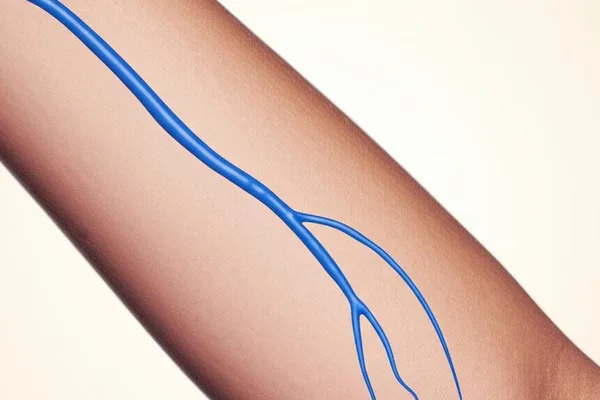
What are these blue veins in our body? Let's learn about veins in a simple way!

What are these blue veins in our body? Let's learn about veins in a simple way!
Have you ever wondered what those blue veins under your skin are and what they do? Sometimes you can see them when you look at your arms or legs, right? Those veins are the ones we're going to talk about today. They are a very important part of our circulatory system, which is essential for blood circulation. In fact, 75% of the blood in your body is contained in these veins. Isn't that amazing?

So what are these veins?

Simply put, veins are a type of blood vessel that runs throughout your body. Their main function is to collect oxygen-poor blood from various parts of the body and bring it back to the heart. Think about it, the cells in our body use oxygen to function. When that is used, the remaining oxygen-poor blood needs to be brought back to the heart to be cleaned. That is what veins do. These veins, together with other blood vessels and the heart, allow our blood to flow throughout our body.

What kind of blood flows in veins? Is it different from arteries?

Yes, there is a big difference here. Arteries mainly carry oxygen-rich blood . That is, blood that carries oxygen from the heart to the rest of the body. However, veins, as I mentioned earlier, carry blood that has less oxygen . However, there is one exception to this, which is a special case. And that is the pulmonary veins . These are located between your heart and your lungs. These four pulmonary veins bring the oxygen-rich blood that has been collected in the lungs back to the heart. Then the heart pumps that blood back to the rest of the body. Do you understand?

What are these veins (Venules)?

Venules are very small, thin blood vessels. They are like little byways that connect to our major arteries. These veins connect the blood that comes from the very fine capillaries in our body to the large veins. It is in the capillaries that oxygen is given to our cells and waste products and carbon dioxide are added to the blood. That blood with less oxygen and waste products comes through the veins to the veins, and from there it goes back to the heart. Although these veins are a little wider than capillaries, they are much thinner than veins. They are said to be about 16 times smaller than a normal vein.

What actually happens to veins?

Veins have two main purposes: 1. To collect deoxygenated blood from all over the body and return it to the heart. 2. To carry oxygenated blood from the lungs back to the heart. (Only the pulmonary veins do this, remember?) So, the function of each vein depends on where it is located in the body. The complex network of all these veins is called the venous system .

What is this venous system?

The venous system is the network of veins in your body, and how they connect to other blood vessels and organs. It is divided into two main circuits: 1. Systemic circuit 2. Pulmonary circuit Think of it like a race track. A race car needs to go a full circuit. But it can't keep running without refueling and doing little maintenance. That's how our blood works. The blood also needs to be refueled with oxygen and removed from waste products like carbon dioxide. Now let's see how this happens. First, let's look at the systemic circuit . This is the big circuit that goes all the way through your body, from your arms to your legs. 1. Clean, well-oxygenated blood leaves the heart and goes into the arteries. 2. The arteries divide into smaller channels, called arterioles, and finally into capillaries. 3. In the capillaries, the blood delivers oxygen to the tissues of the body, and removes waste products and carbon dioxide from there. 4. Now the blood is low in oxygen and high in waste products. So it needs to be "refueled" again. 5. This blood collects in venules, and from there it goes to veins. 6. The veins bring this deoxygenated blood back to the heart. This blood enters the heart through two large veins. They are the superior vena cava and the inferior vena cava . Okay, now that the blood has reached the heart, the circuit of the body is complete. Next we need to move on to the pulmonary circuit . 1. In this circuit, the oxygen-poor blood that has entered the heart goes to the lungs. 2. In the lungs, the blood is re-oxygenated (like being refueled). 3. The oxygen-rich, clean blood returns to the heart through the pulmonary veins . (This is the only time the veins are carrying oxygen-rich blood!) 4. The heart then pumps this clean blood back into the systemic circuit, starting a new cycle. Isn't it an amazing mechanism? All of this happens continuously, non-stop, inside our bodies.

What do veins look like? Why do they appear blue?

Your veins are a network of blood vessels that run throughout your body. They're spread out like the wiring inside a computer, or like the branches of an upside-down tree. In your legs, they look like two large branches branching off into many smaller branches. Many people think that veins are blue because they look blue under our skin. But that's not true. That's just how our eyes see them.
The blood in veins is actually dark red. It's a little darker than the blood in arteries, because the blood in veins has less oxygen . The reason it looks blue under our skin is because of the way our skin absorbs light. Blood is always red, in arteries and veins.

What are veins made of?

Each vein is made up of three main layers of tissue:
  • Tunica adventitia: This is the outermost layer. It gives the vein its shape and structure.
  • Tunica media: This is the middle layer. It contains smooth muscle cells. This layer helps the vein expand and contract as blood flows.
  • Tunica intima: This is the innermost, smooth layer. It contains a special type of cell called endothelial cells . These cells allow blood to flow through the vessel without any obstruction.
Arteries also have three layers, but veins are different from arteries in some ways.
  • One-way valves: Some veins, especially those in the legs, have valves that allow blood to flow in one direction only . These valves keep blood flowing in a straight line toward the heart and prevent it from flowing backward. When these valves are damaged, blood can flow backward, causing conditions like varicose veins .
  • Thickness of the walls: The walls of veins are thinner than the walls of arteries, and they also have less muscle. This is because the pressure of the blood inside veins is lower than that inside arteries. Therefore, they do not need to be as thick to withstand that pressure.

What are the main types of veins?

There are three types of veins that help our circulatory system work properly: 1. Deep veins: These are located inside our muscles and along our bones. These deep veins do the most important job of bringing oxygen-poor blood back to the heart. About 90% of the blood that goes to the heart, especially from your legs, goes through these deep veins. These have the valves that I mentioned earlier that only allow blood to flow in one direction. 2. Superficial veins: These are usually smaller than deep veins. Like deep veins, they also have valves. But they are not surrounded by muscle like deep veins. Instead, they are located just under the skin. That's why you can easily see them. These are the blue veins that you see under the skin of your arms and legs. These superficial veins collect blood from the tissues closest to the skin and send it to the deep veins (through special connecting veins). But this blood flows slowly, because it doesn't get any pressure from the surrounding muscles. The largest vein in our body is a superficial vein. It's called the great saphenous vein . It runs from your ankle to your thigh in each leg. 3. Perforating veins: These are sometimes called perforating veins. These are very short veins. They take blood from the superficial veins and connect it to the deep veins. These perforating veins also have valves. When your calf muscles contract, these valves close. Then the blood from the deep veins stops flowing back into the superficial veins.

How does blood flow through veins? Isn't the heart pumping enough?

Even though the heart pumps blood, it goes into the arteries. To bring the blood in the veins back to the heart, the help of an external force is needed.
  • How you breathe: When you breathe, your lungs expand and your diaphragm moves up and down. This creates a suction force that helps push oxygen-poor blood in your veins back toward your heart.
  • Muscle movement: Especially the muscles in your legs! Did you know that the muscles in your legs help pump blood up against gravity, which is why the muscles in your legs are called your "second heart."

What is this "second heart"?

You may not know it, but the muscles in your lower leg, specifically the muscles in your groin, act like powerful pumps. They push the deep veins in your lower leg. This "second heart" (peripheral heart) kicks into action every time you take a step.
  • When you put your foot on the ground, the weight of your body puts pressure on the deep veins in your lower legs. The blood inside those veins is then pushed up and toward the groin area.
  • Then, when you lift your heels , your calf muscles tighten, squeezing the deep veins there. Then the blood moves further up, towards the thighs.
This amazing system is what allows the blood in your legs and feet to rise up against gravity and return to your heart.
Unlike the heart in your chest, this second heart only starts pumping when your legs move. And the speed at which it pumps varies depending on how fast you move your legs. When you run, your muscles pump blood faster than when you walk.
However, this second heart is what allows your blood to circulate throughout your body, ensuring that your organs and tissues continue to receive oxygen and nutrients, allowing them to function properly. There are several diseases that can occur when veins do not function properly. Some of these are:
  • Superficial thrombophlebitis : This is when a blood clot forms in a vein just beneath the skin. This blood clot usually does not travel to the lungs. However, it can happen if the clot travels to a deep vein.
  • Deep Vein Thrombosis ( DVT ): This is a serious condition.. DVT is the formation of blood clots (thrombi) in the deep veins. This most often occurs in the legs or pelvis. If this blood clot breaks free from the vein and travels with the blood to the lungs, it can cause a life-threatening condition called pulmonary embolism .
  • Varicose veins: These are veins that look swollen and twisted. While they may not cause any major damage, they can lead to serious problems, such as blood clots.
  • Chronic venous insufficiency: When the valves in your legs that keep blood flowing in one direction become damaged, they can't pump blood back to your heart properly. This is often caused by DVT.

What are the symptoms that can indicate a problem with the veins?

Symptoms may vary depending on your condition. Common symptoms include:
  • Swelling (edema) of the legs, ankles, and soles, especially after standing for a long time.
  • Pain or tenderness when touched.
  • Feeling tired , achy, and numb in the legs.
  • The skin on the legs becomes like a piece of leather.
  • Dry, flaky skin on the legs or soles of the feet, or itching.
If you have any of these symptoms, or if you notice any veins that are purple or swollen that you didn't have before, see a doctor right away. Many vein diseases can be treated effectively if they are caught early. It's especially important to catch a condition like DVT before it becomes a pulmonary embolism.

What tests are done to check the health of veins?

Your doctor will discuss your medical history and perform a physical exam. They may also order a Doppler ultrasound and blood tests to check for conditions like DVT.

What are the treatments for vein problems?

Treatment for venous disease is mainly aimed at reducing the risk of blood clots, dissolving existing blood clots, and reducing symptoms.
  • Anticoagulant therapies: These are commonly used to treat DVT and prevent pulmonary embolism. Examples include warfarin, rivaroxaban, and apixaban. Your doctor will regularly test your blood to see how well the medication is working and adjust the dose accordingly. The dose is reduced whenever possible to reduce the risk of bleeding.
  • Clot-dissolving drugs: These are not used routinely. They are most effective if given within 48 hours of the clot forming.
  • Surgical procedures:These are rarely done, but for those who cannot take blood thinners, inserting a vena cava filter may be a good option.
There are also things you can do at home. Your doctor may tell you to wear compression socks . These help improve blood circulation in your legs. Different types of socks provide different amounts of pressure. Your doctor can help you choose the right pair for you. Compression therapy is a treatment method that is over 2,000 years old!

What can I do to keep my veins healthy?

There are many things you can do to keep your veins healthy. If you already have vein problems or have certain risk factors, it's important to do these things:
  • Don't stay in one position for too long. If you sit for most of the day, get up and walk around for two to three minutes every hour. When you're sitting, elevate your legs and bend your ankles. The more you move your legs, the more your muscles will dilate the veins and pump blood back toward your heart.
  • Maintain good foot hygiene to prevent infections. This means keeping your feet clean and dry. You can also use a moisturizer to prevent cracking and bleeding.
  • Talk to your doctor to decide if blood thinners are right for you. Also, tell your doctor if there are any changes in your symptoms.
Even if you don't have vein problems, you can do these simple things every day to keep your veins healthy:
  • Get up and move around as much as possible throughout the day, and keep your body moving. This will improve blood circulation.
  • Go for a walk (at least five days a week, for at least 30 minutes).
  • Eat a heart-healthy diet, and you'll be able to maintain a healthy weight.
  • When traveling long distances by car or plane, get up after a while, walk around, and stretch your body.
  • If you notice any symptoms of a vein problem, even if it seems minor, see a doctor immediately. Identifying problems early can help prevent them from becoming more serious.

Take-Home Message

We often don't think about how hard our hearts and blood vessels work when we're just sitting around, do we? In order for you to stay active, your circulatory system needs to keep working. That's why it's important to take care of your body in a way that helps your blood flow smoothly and efficiently.
Veins are an essential and very important part of your circulatory system. Together with the heart, arteries, and capillaries, veins work every day to carry your blood throughout your body.
When you're on a long trip, don't forget to get up and move around as much as possible. Even just elevating your legs and flexing your ankles can help the veins in your legs move blood back to your heart. If you think you have a vein problem, see a doctor right away and discuss your symptoms. Many vein problems are very treatable if caught early!

⚠️ Important: The medical articles and information on Nirogi Lanka are for general awareness only, and are by no means a substitute for professional medical advice, diagnosis, or treatment. For any medical problem you have, consult a qualified physician immediately.

💬 Comments (0)

No comments have been posted yet. Add your comment here for the first time.

Add your comment

Please calculate: 5 + 9 =
What are these blue veins in our body? Let's learn about veins in a simple way!
How the Body WorksSeptember 6, 2025

What are these blue veins in our body? Let's learn about veins in a simple way!

Have you ever wondered what those blue veins under your skin are and what they do? Sometimes you can see them when you look at your arms or legs, right? Those veins are the ones we're going to talk about today. They are a very important part of our circulatory system, which is essential for blood circulation. In fact, 75% of the blood in your body is contained in these veins. Isn't that amazing?

So what are these veins?

Simply put, veins are a type of blood vessel that runs throughout your body. Their main function is to collect oxygen-poor blood from various parts of the body and bring it back to the heart. Think about it, the cells in our body use oxygen to function. When that is used, the remaining oxygen-poor blood needs to be brought back to the heart to be cleaned. That is what veins do. These veins, together with other blood vessels and the heart, allow our blood to flow throughout our body.

What kind of blood flows in veins? Is it different from arteries?

Yes, there is a big difference here. Arteries mainly carry oxygen-rich blood . That is, blood that carries oxygen from the heart to the rest of the body. However, veins, as I mentioned earlier, carry blood that has less oxygen . However, there is one exception to this, which is a special case. And that is the pulmonary veins . These are located between your heart and your lungs. These four pulmonary veins bring the oxygen-rich blood that has been collected in the lungs back to the heart. Then the heart pumps that blood back to the rest of the body. Do you understand?

What are these veins (Venules)?

Venules are very small, thin blood vessels. They are like little byways that connect to our major arteries. These veins connect the blood that comes from the very fine capillaries in our body to the large veins. It is in the capillaries that oxygen is given to our cells and waste products and carbon dioxide are added to the blood. That blood with less oxygen and waste products comes through the veins to the veins, and from there it goes back to the heart. Although these veins are a little wider than capillaries, they are much thinner than veins. They are said to be about 16 times smaller than a normal vein.

What actually happens to veins?

Veins have two main purposes: 1. To collect deoxygenated blood from all over the body and return it to the heart. 2. To carry oxygenated blood from the lungs back to the heart. (Only the pulmonary veins do this, remember?) So, the function of each vein depends on where it is located in the body. The complex network of all these veins is called the venous system .

What is this venous system?

The venous system is the network of veins in your body, and how they connect to other blood vessels and organs. It is divided into two main circuits: 1. Systemic circuit 2. Pulmonary circuit Think of it like a race track. A race car needs to go a full circuit. But it can't keep running without refueling and doing little maintenance. That's how our blood works. The blood also needs to be refueled with oxygen and removed from waste products like carbon dioxide. Now let's see how this happens. First, let's look at the systemic circuit . This is the big circuit that goes all the way through your body, from your arms to your legs. 1. Clean, well-oxygenated blood leaves the heart and goes into the arteries. 2. The arteries divide into smaller channels, called arterioles, and finally into capillaries. 3. In the capillaries, the blood delivers oxygen to the tissues of the body, and removes waste products and carbon dioxide from there. 4. Now the blood is low in oxygen and high in waste products. So it needs to be "refueled" again. 5. This blood collects in venules, and from there it goes to veins. 6. The veins bring this deoxygenated blood back to the heart. This blood enters the heart through two large veins. They are the superior vena cava and the inferior vena cava . Okay, now that the blood has reached the heart, the circuit of the body is complete. Next we need to move on to the pulmonary circuit . 1. In this circuit, the oxygen-poor blood that has entered the heart goes to the lungs. 2. In the lungs, the blood is re-oxygenated (like being refueled). 3. The oxygen-rich, clean blood returns to the heart through the pulmonary veins . (This is the only time the veins are carrying oxygen-rich blood!) 4. The heart then pumps this clean blood back into the systemic circuit, starting a new cycle. Isn't it an amazing mechanism? All of this happens continuously, non-stop, inside our bodies.

What do veins look like? Why do they appear blue?

Your veins are a network of blood vessels that run throughout your body. They're spread out like the wiring inside a computer, or like the branches of an upside-down tree. In your legs, they look like two large branches branching off into many smaller branches. Many people think that veins are blue because they look blue under our skin. But that's not true. That's just how our eyes see them.
The blood in veins is actually dark red. It's a little darker than the blood in arteries, because the blood in veins has less oxygen . The reason it looks blue under our skin is because of the way our skin absorbs light. Blood is always red, in arteries and veins.

What are veins made of?

Each vein is made up of three main layers of tissue:
  • Tunica adventitia: This is the outermost layer. It gives the vein its shape and structure.
  • Tunica media: This is the middle layer. It contains smooth muscle cells. This layer helps the vein expand and contract as blood flows.
  • Tunica intima: This is the innermost, smooth layer. It contains a special type of cell called endothelial cells . These cells allow blood to flow through the vessel without any obstruction.
Arteries also have three layers, but veins are different from arteries in some ways.
  • One-way valves: Some veins, especially those in the legs, have valves that allow blood to flow in one direction only . These valves keep blood flowing in a straight line toward the heart and prevent it from flowing backward. When these valves are damaged, blood can flow backward, causing conditions like varicose veins .
  • Thickness of the walls: The walls of veins are thinner than the walls of arteries, and they also have less muscle. This is because the pressure of the blood inside veins is lower than that inside arteries. Therefore, they do not need to be as thick to withstand that pressure.

What are the main types of veins?

There are three types of veins that help our circulatory system work properly: 1. Deep veins: These are located inside our muscles and along our bones. These deep veins do the most important job of bringing oxygen-poor blood back to the heart. About 90% of the blood that goes to the heart, especially from your legs, goes through these deep veins. These have the valves that I mentioned earlier that only allow blood to flow in one direction. 2. Superficial veins: These are usually smaller than deep veins. Like deep veins, they also have valves. But they are not surrounded by muscle like deep veins. Instead, they are located just under the skin. That's why you can easily see them. These are the blue veins that you see under the skin of your arms and legs. These superficial veins collect blood from the tissues closest to the skin and send it to the deep veins (through special connecting veins). But this blood flows slowly, because it doesn't get any pressure from the surrounding muscles. The largest vein in our body is a superficial vein. It's called the great saphenous vein . It runs from your ankle to your thigh in each leg. 3. Perforating veins: These are sometimes called perforating veins. These are very short veins. They take blood from the superficial veins and connect it to the deep veins. These perforating veins also have valves. When your calf muscles contract, these valves close. Then the blood from the deep veins stops flowing back into the superficial veins.

How does blood flow through veins? Isn't the heart pumping enough?

Even though the heart pumps blood, it goes into the arteries. To bring the blood in the veins back to the heart, the help of an external force is needed.
  • How you breathe: When you breathe, your lungs expand and your diaphragm moves up and down. This creates a suction force that helps push oxygen-poor blood in your veins back toward your heart.
  • Muscle movement: Especially the muscles in your legs! Did you know that the muscles in your legs help pump blood up against gravity, which is why the muscles in your legs are called your "second heart."

What is this "second heart"?

You may not know it, but the muscles in your lower leg, specifically the muscles in your groin, act like powerful pumps. They push the deep veins in your lower leg. This "second heart" (peripheral heart) kicks into action every time you take a step.
  • When you put your foot on the ground, the weight of your body puts pressure on the deep veins in your lower legs. The blood inside those veins is then pushed up and toward the groin area.
  • Then, when you lift your heels , your calf muscles tighten, squeezing the deep veins there. Then the blood moves further up, towards the thighs.
This amazing system is what allows the blood in your legs and feet to rise up against gravity and return to your heart.
Unlike the heart in your chest, this second heart only starts pumping when your legs move. And the speed at which it pumps varies depending on how fast you move your legs. When you run, your muscles pump blood faster than when you walk.
However, this second heart is what allows your blood to circulate throughout your body, ensuring that your organs and tissues continue to receive oxygen and nutrients, allowing them to function properly. There are several diseases that can occur when veins do not function properly. Some of these are:
  • Superficial thrombophlebitis : This is when a blood clot forms in a vein just beneath the skin. This blood clot usually does not travel to the lungs. However, it can happen if the clot travels to a deep vein.
  • Deep Vein Thrombosis ( DVT ): This is a serious condition.. DVT is the formation of blood clots (thrombi) in the deep veins. This most often occurs in the legs or pelvis. If this blood clot breaks free from the vein and travels with the blood to the lungs, it can cause a life-threatening condition called pulmonary embolism .
  • Varicose veins: These are veins that look swollen and twisted. While they may not cause any major damage, they can lead to serious problems, such as blood clots.
  • Chronic venous insufficiency: When the valves in your legs that keep blood flowing in one direction become damaged, they can't pump blood back to your heart properly. This is often caused by DVT.

What are the symptoms that can indicate a problem with the veins?

Symptoms may vary depending on your condition. Common symptoms include:
  • Swelling (edema) of the legs, ankles, and soles, especially after standing for a long time.
  • Pain or tenderness when touched.
  • Feeling tired , achy, and numb in the legs.
  • The skin on the legs becomes like a piece of leather.
  • Dry, flaky skin on the legs or soles of the feet, or itching.
If you have any of these symptoms, or if you notice any veins that are purple or swollen that you didn't have before, see a doctor right away. Many vein diseases can be treated effectively if they are caught early. It's especially important to catch a condition like DVT before it becomes a pulmonary embolism.

What tests are done to check the health of veins?

Your doctor will discuss your medical history and perform a physical exam. They may also order a Doppler ultrasound and blood tests to check for conditions like DVT.

What are the treatments for vein problems?

Treatment for venous disease is mainly aimed at reducing the risk of blood clots, dissolving existing blood clots, and reducing symptoms.
  • Anticoagulant therapies: These are commonly used to treat DVT and prevent pulmonary embolism. Examples include warfarin, rivaroxaban, and apixaban. Your doctor will regularly test your blood to see how well the medication is working and adjust the dose accordingly. The dose is reduced whenever possible to reduce the risk of bleeding.
  • Clot-dissolving drugs: These are not used routinely. They are most effective if given within 48 hours of the clot forming.
  • Surgical procedures:These are rarely done, but for those who cannot take blood thinners, inserting a vena cava filter may be a good option.
There are also things you can do at home. Your doctor may tell you to wear compression socks . These help improve blood circulation in your legs. Different types of socks provide different amounts of pressure. Your doctor can help you choose the right pair for you. Compression therapy is a treatment method that is over 2,000 years old!

What can I do to keep my veins healthy?

There are many things you can do to keep your veins healthy. If you already have vein problems or have certain risk factors, it's important to do these things:
  • Don't stay in one position for too long. If you sit for most of the day, get up and walk around for two to three minutes every hour. When you're sitting, elevate your legs and bend your ankles. The more you move your legs, the more your muscles will dilate the veins and pump blood back toward your heart.
  • Maintain good foot hygiene to prevent infections. This means keeping your feet clean and dry. You can also use a moisturizer to prevent cracking and bleeding.
  • Talk to your doctor to decide if blood thinners are right for you. Also, tell your doctor if there are any changes in your symptoms.
Even if you don't have vein problems, you can do these simple things every day to keep your veins healthy:
  • Get up and move around as much as possible throughout the day, and keep your body moving. This will improve blood circulation.
  • Go for a walk (at least five days a week, for at least 30 minutes).
  • Eat a heart-healthy diet, and you'll be able to maintain a healthy weight.
  • When traveling long distances by car or plane, get up after a while, walk around, and stretch your body.
  • If you notice any symptoms of a vein problem, even if it seems minor, see a doctor immediately. Identifying problems early can help prevent them from becoming more serious.

Take-Home Message

We often don't think about how hard our hearts and blood vessels work when we're just sitting around, do we? In order for you to stay active, your circulatory system needs to keep working. That's why it's important to take care of your body in a way that helps your blood flow smoothly and efficiently.
Veins are an essential and very important part of your circulatory system. Together with the heart, arteries, and capillaries, veins work every day to carry your blood throughout your body.
When you're on a long trip, don't forget to get up and move around as much as possible. Even just elevating your legs and flexing your ankles can help the veins in your legs move blood back to your heart. If you think you have a vein problem, see a doctor right away and discuss your symptoms. Many vein problems are very treatable if caught early!
⚠️ Important: The medical articles and information on Nirogi Lanka are for general awareness only, and are by no means a substitute for professional medical advice, diagnosis, or treatment. For any medical problem you have, consult a qualified physician immediately.

💬 Comments (0)

No comments have been posted yet. Add your comment here for the first time.

Add your comment

Please calculate: 5 + 9 =