Explore Health Topics
Heart Health Diabetes Women's Health Pregnancy Digestive Health Mental Health
Qullañ tuqit Guias → • Calculadores ukanaka →
✨ Unlock your Free Personal Health Dashboard — smart guidance tailored to your age & vitals
🩺 Wawanakan K’umaräñapataki

How to protect your baby from allergies? Let's learn about allergies in little ones!

Dr. Priya Awami (MBBS) jupax akham siwa:

Medically reviewed by Dr. Priya Awami (MBBS) jupax akham siwa: — Updated on Nov 18, 2026 · 4 Mä minuto liytʼañataki

How to protect your baby from allergies? Let's learn about allergies in little ones!
Aka qillqatan qillqatanakapa (Tabla de Contenidos) . ▾

Because the organs and systems of babies and young children are still developing, they respond differently to various external environmental conditions and foods than adults. Among these, the main problem that many mothers face is allergies in babies.

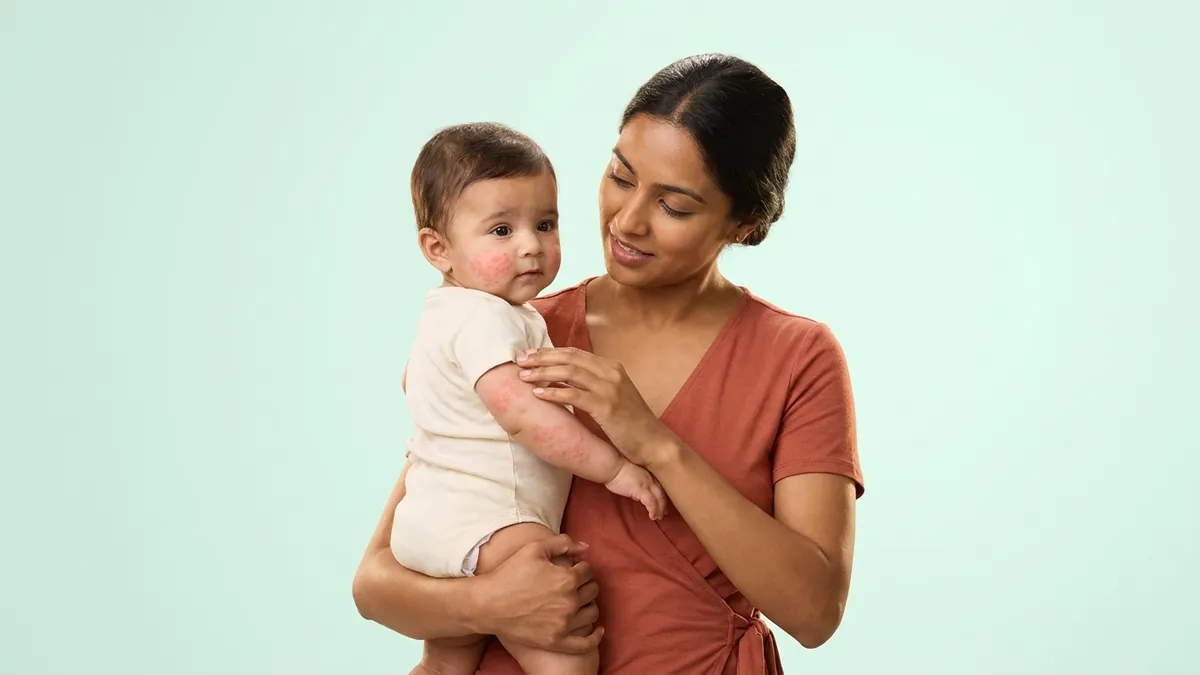
After introducing solid foods to her 6-month-old baby, Senuka, she developed red, itchy spots on her cheeks and hands, and was worried about frequent sneezing and itching in her ears. Let's learn about allergies in babies and how to prevent them scientifically through a discussion with pediatrician Dr. Priya.

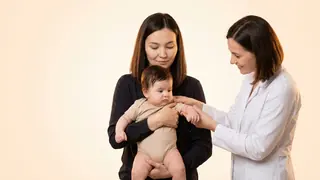
Doctor-patient dialogue: "How do babies develop allergies, doctor?"

Madhusha (concerned): "Dr. Priya, my 6-month-old baby Senuka has recently developed red, itchy spots on his cheeks and hands after he was introduced to complementary foods. He is sneezing and his ears are ringing all the time. How do babies develop allergies, doctor? How can I save my baby from this?"

Dr. Priya (smiling softly): "Madusha, don't worry. Allergies in babies and young children are an abnormal response of their immune system to harmless substances (allergens) in the external environment or food."

There are three main types of allergies that babies can develop:

1. Food Allergies: Especially when introducing foods like Cow's milk, Eggs, Peanuts, Wheat, and Soy.
2. Skin Allergies: These include Atopic Dermatitis/Eczema and Hives/Urticaria .
3. Environmental Allergies: Sneezing and nasal congestion caused by dust mites, pet dander, and pollen."

🚨 Red Flags that require immediate medical attention

Some allergies can progress to a life-threatening condition called anaphylaxis, which can cause breathing difficulties. The baby should be taken to the hospital immediately if the following symptoms appear:

1. Difficulty breathing: The baby is breathing rapidly, the chest is drawn in, or a whistling sound is heard when breathing.
2. Swelling of the face and throat: Swelling of the lips, tongue, around the eyes, or the entire face at once (a sign of airway obstruction).
3. Loss of consciousness: The baby is severely limp, drowsy, or unconscious.
4. Severe vomiting or diarrhea: Incessant vomiting or diarrhea immediately after eating an allergic food.
5. Body rash: Red, itchy bumps that spread rapidly over the entire body.

🛠️ Action Steps to Protect Your Baby from Allergies

  • Step 1: Follow the "3-Day Rule" when introducing new foods to your baby. That is, introduce only one new food at a time and wait for 3 days. That way, if an allergy occurs, it will be easier to identify which food is causing it.
  • Step 2: Do not let your baby's skin dry out, and always apply a gentle moisturizer as directed by your doctor. Use soaps with minimal fragrance and chemicals for bathing.
  • Step Three: If you suspect an allergy, see a pediatrician immediately.
  • Step Four: Use appropriate medications, such as antihistamine drops or ointments, only as prescribed by a doctor.
  • Step Five (for children with severe allergies): If your child has a life-threatening allergy, always carry an Epinephrine Autoinjector (EpiPen) as directed by your doctor. Family members and caregivers should know how to use it.

📊 Do's & Don'ts

Do's Don'ts
When introducing new foods, offer one food at a time and observe. Do not unnecessarily delay introducing complementary foods until 8-9 months for fear of allergies (early introduction prevents allergies).
Apply moisturizer daily to control dryness and eczema on your baby's skin. Do not apply steroid creams from drugstores to your baby's skin without medical advice.
Keep the bedroom clean and free of dust and fumes. Do not use detergents that contain strong perfumes or chemicals to wash your baby's clothes.
Keep a notebook with you of the foods your baby is allergic to. Avoid smoking near your baby or exposing your baby to the saliva and urine of pets.
❓ FAQ

Qullañ tuqit jiskt’äwinaka (FAQ) .

Sapa kuti jiskt’awinaka ukat qullañ tuqit jaysawinaka aka usu tuqita

❓ Frequently Asked Questions (FAQ)

[DECORATOR:faq_container]

#### What to do if a baby has a cow's milk allergy?

On medical advice, the baby should be stopped from eating cow's milk and all foods made from it (butter, cheese, yogurt). If the mother is breastfeeding, she should also avoid cow's milk. The doctor will recommend soy milk or special milk powders containing amino acids for the baby.

#### How to prevent the development of eczema in a child?

Keeping the skin moisturized is the main remedy. After bathing, gently pat the skin dry with a towel and apply a moisturizer prescribed by the doctor within 3 minutes. Use lukewarm water for bathing and limit the bathing time to 10 minutes.

#### Does applying baby powder to babies affect allergies?

Yes. When babies are given baby powder, the fine particles can enter the baby's respiratory tract and cause lung infections and respiratory allergies such as asthma/cough. Therefore, pediatricians currently do not recommend the use of powder.

#### Do allergies in babies go away on their own as they grow older?

Yes, most food allergies (e.g., cow's milk, eggs, wheat) will usually go away on their own by the time a child is 3-5 years old as their immune system strengthens. However, peanut, tree nut, and fish allergies can often last a lifetime.

[/DECORATOR:faq_container]

📖 Sources and Scientific References
📚 Cite This Medical Article (Vancouver / APA 7th / HTML Link) ▾
Vancouver (ICMJE): Sammani P. How to protect your baby from allergies? Let's learn about allergies in little ones! [Internet]. Nirogi Lanka Medical Encyclopedia; Nov 18, 2026. Available from: https://nirogilanka.com/aym/allergies-in-your-babies/
APA 7th: Sammani, P. (2026). How to protect your baby from allergies? Let's learn about allergies in little ones!. Nirogi Lanka. https://nirogilanka.com/aym/allergies-in-your-babies/
<a href="https://nirogilanka.com/aym/allergies-in-your-babies/" target="_blank" rel="noopener">How to protect your baby from allergies? Let's learn about allergies in little ones! — Nirogi Lanka</a>
🔍 Search Keywords: allergies in your babies • allergies in your babies symptoms • allergies in your babies causes and treatment • How to protect your baby from allergies? Let's learn about allergies in little ones!
💬 Uñakipirinakan arsutanakapa ukat jiskt’äwinakapa (0)

Have a question or experience to share? Post a comment or reply to other readers below.

🛡️ Plain Text Only • No Links
👤

Janiw kuna arsuwinakas jichhakamax uñt’ayatäkiti. Aka chiqanx amuyt’awim jan ukax jiskt’awim yapxatañamawa.

🩺 Artículos ukanakax jumatakix wali askiwa
Are you worried about your child's development? Let's learn about Lamb-Shaffer Syndrome!
Is your child's tongue bigger than their mouth? Let's talk about Macroglossia!
Is your or your child's body sluggish? Could it be Nemaline Myopathy?
Is your child's voice changing? (Larynx Growth and Voice Change) – Don't worry, let's talk!
Is your little one reluctant to speak? It could be because of: Childhood Apraxia of Speech (CAS)
Your 11-year-old's Well-Child Visit: Let's take care of this!
⚠️ WAKISKIRI: Nirogi Lanka ukan sitio web ukan qullañ tuqit qillqatanaka ukat yatiyawinakax taqpach yatiyawinakatakiw ukat janiw qullañ tuqit iwxt’awinaka, diagnóstico jan ukax qullañ tuqit lantintatäkiti. Kʼumaräñ tuqit kuna jan waltʼäwinakas utjaspa ukhaxa, wali yatxattʼat qulliriruw jisktʼasiñama.