
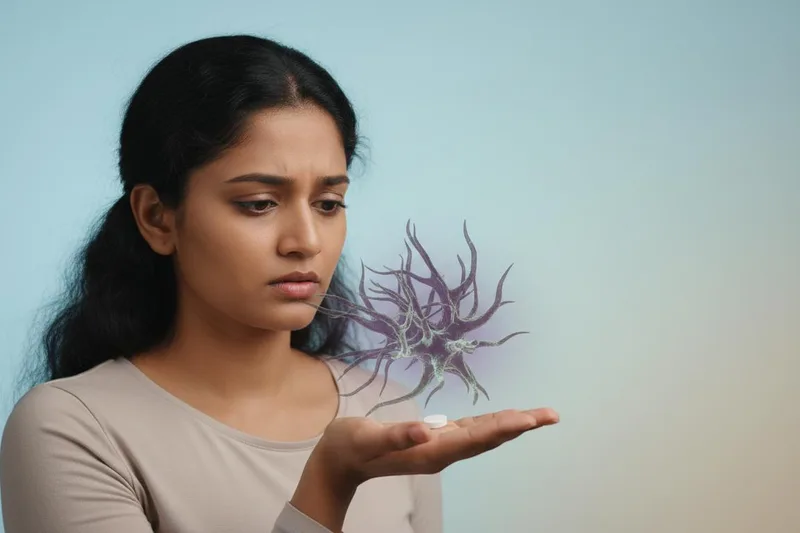
Have you ever heard that sometimes the medicine given for fungal infections doesn't work as well as you'd like? Sometimes the antifungal medicine a doctor prescribes doesn't work. That's what we call antifungal resistance . This can be a bit serious, so let's talk about it in a simple way that you can understand. This doesn't happen because your body is becoming resistant to the medicine, but because the fungus itself has become accustomed to fighting the medicine.
What are antifungal medications?
Simply put, antifungals are medications that help control or eliminate certain fungal infections that develop in our bodies. You may have experienced yeast infections, athlete's foot, jock itch, and ringworm. These are what these antifungal medications are used for. They can also help control more serious fungal infections that affect areas like the lungs, brain, and blood.
Why is antifungal resistance such a problem?
This is a serious global health problem . Just think, we have a limited number of antifungal medications. When a fungus becomes resistant to one drug, our other options are limited. Sometimes, other medications may not be as effective, or they may have serious side effects.
This is one part of the larger umbrella term ``Antimicrobial Resistance''. That is, not only fungi, but also bacteria, viruses, and parasites can become resistant to drugs designed to fight them. Even in a country like the United States, it is reported that close to three million people develop such drug-resistant infections every year, and more than 35,000 people die. So this is not something to be taken lightly.
What causes this?
There are several reasons why fungi develop resistance to fungicides. Let's take a look at what they are:
- Incorrect use of antifungal medication: This is the main reason. Things like not taking the medication for the number of days prescribed by the doctor and stopping it halfway, skipping the medication, or taking a lower dose than prescribed, give the fungus a chance to get used to fighting the medication. Imagine, if you have a skin fungus and are told to take medication for 7 days, you stop the medication after feeling better in about 3 days. Then, the fungi that are not completely dead come back to life and adapt to be resistant to the medication. The next time you give them that medication, it doesn't matter! Therefore, it is very important to take the prescribed dose at the prescribed time.
- Use of antibiotics:The antibiotics we take regularly kill off bad bacteria. However, they also kill the good bacteria in our digestive system. Then, the naturally occurring yeast called Candida starts to grow out of control. This causes a yeast infection called candidiasis, which requires antifungal medication. When you use antibiotics and antifungals frequently, you run the risk of developing resistance to both drugs.
- Use of Fungicides in Agriculture: Farmers use various fungicides to prevent mold growth on crops. People who are frequently exposed to these chemicals are more likely to develop infections from fungi that are resistant to those fungicides. This is because the fungi in that environment are constantly exposed to these chemicals and become resistant to them.
- Naturally resistant: There are some types of fungi that never respond to fungicides. They are naturally resistant to those drugs.
- Spontaneous resistance: Sometimes, a fungus suddenly becomes resistant to a drug that previously worked well. It may not be possible to find a specific reason for this.
- Transmitted resistance: This is also very important. Someone who has a drug-resistant, contagious fungal infection can pass it on to someone else. Then, even if the newly infected person has never used that antifungal, the infection they develop will not respond to that drug.
Who is most at risk?
People with weakened immune systems are more likely to develop severe fungal infections and develop resistance to antifungal medications. These include:
- People with AIDS
- People with autoimmune diseases such as lupus
- Cancer patients
- People who have had organ transplants
- People who have had stem cell (bone marrow) transplants
Because these people are less able to fight fungal infections than the average person, they are at higher risk of developing drug-resistant fungi.
What are the complications of fungicide resistance?
Some types of fungi have become extremely resistant to antifungal drugs. We call these 'superbugs' . Even if you take the medicine, these fungi continue to multiply and cause infections.
We have three main classes of antifungal drugs: azoles, echinocandins, and polyenes. A fungus that is resistant to one class of drugs may not respond to any of the current treatments.
What are these 'superbugs'?
There are several fungal infections that are difficult to treat and fall into the category of 'super fungi':
- Aspergillus fumigatus: This is a type of mold. It causes a lung infection called aspergillosis. About two hundred thousand people worldwide develop this infection each year, mainly by inhaling spores from this mold. This infection is becoming increasingly resistant to azole fungicides.
- Candida: This type of yeast lives naturally on our skin and inside our bodies. However, if Candida gets into the bloodstream, it can cause a life-threatening infection called candidemia. This infection also does not respond well to azole medications.
- Candida glabrata: C. glabrata is a fungus that affects the urinary tract. It is becoming resistant to both azoles and echinocandins, limiting safe treatment options for patients.
What is `Candida auris`?
Candida auris (C. auris) is a relatively new and dangerous 'superbug' that was first identified in 2009. It has spread rapidly around the world and caused problems. The antifungal drugs usually used to treat Candida infections do not always work against this strain of fungus. Some strains of C. auris are multi-drug resistant . This means that they cannot be controlled by any of the currently available antifungal drugs.
This fungus can enter the bloodstream and affect the heart and brain. If this happens, more than a third of those infected can die. This fungus spreads very easily in hospitals and nursing homes. It can be transmitted by being in contact with an infected person or by touching a surface that has the fungus on it. This fungus can live on surfaces for weeks and is very difficult to kill.
How are antifungal-resistant infections treated?
If one class of antifungal medication doesn't work, your doctor will try a different class. But, as I mentioned before, successful antifungal treatments are limited. If an infection doesn't respond to antifungals, doctors may try other medications. But, unfortunately, those medications can have more serious side effects .
Can we prevent this situation?
Yes, there are things we can do! The best way to prevent antifungal resistance is to take antifungal medications exactly as prescribed by your doctor.
If you have trouble remembering to take your medication, set a reminder on your phone. If you miss a dose, call your doctor right away and ask what to do. In most cases, it's best to take the next dose as soon as you remember.
Remember, resistance to fungicides can occur for a variety of reasons. Sometimes it can happen suddenly and unexpectedly. Or, it can be due to overuse of antibiotics, or the incorrect use of fungicides. People with weakened immune systems are at the highest risk. Some 'superbugs' are resistant to standard treatments. Therefore, using the medication correctly is the most important way to reduce this risk.
Finally, things to remember
So, this antifungal resistance that we talked about today, that is ``Antifungal Resistance'', is something that we all need to pay attention to. It's like the enemy getting used to the weapons we use.
- Follow your doctor's instructions exactly: Take the medicine your doctor prescribes, for the exact number of days and in the exact dosage. Do not reduce, increase, or stop taking it halfway.
- Don't use antibiotics unnecessarily: Antibiotics are not effective for viral infections like the common cold. Don't take them without a doctor's advice.
- Take care of cleanliness: Especially in a hospital environment, or when around someone with a weakened immune system, taking care of cleanliness can protect you from infectious diseases.
- Be aware: It is very important to be aware of these things and to educate others.
I hope this information is helpful to you. If you have any further questions regarding this, don't hesitate to ask a doctor. Stay healthy!
` antifungal resistance, antifungal resistance, fungal infections, superbugs, candida auris, drug resistance, fungal diseases




💬 Comments (0)
No comments have been posted yet. Add your comment here for the first time.
Add your comment