
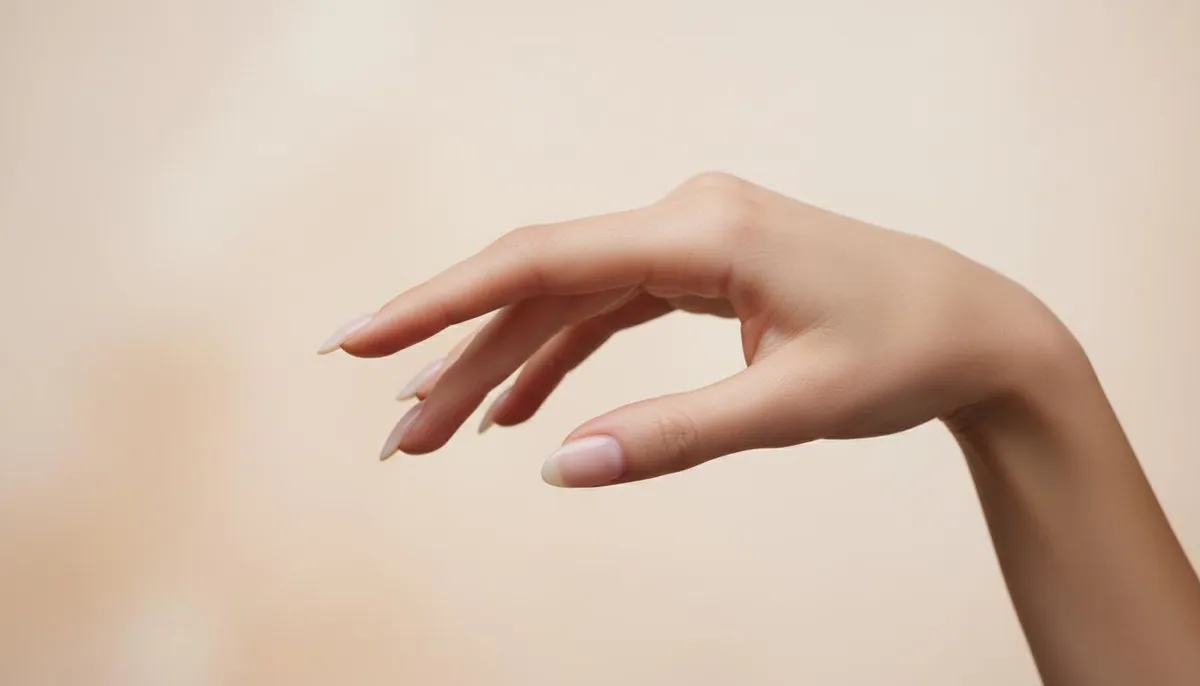
Have you ever noticed that some people have fingers that are longer and thinner than normal? Just like the legs of a spider. Maybe your own fingers are like that. In medicine, we call this condition Arachnodactyly. Don't be scared when you hear this name. Most of the time, this is not a disease, but just a physical characteristic that comes from inheritance. However, in very rare cases, this can be a symptom of another disease condition inside our body. So today, let's talk about this simply.
What is Arachnodactyly?
Simply put, arachnodactyly is the term doctors use for "spider toes." That is, unusually long, thin fingers that look like the legs of a spider.
These changes in the appearance of our hands can sometimes be a sign of genetic disorders. But that's not always the case. It's quite possible that you have naturally long, slender fingers, without any underlying disease. It's like some people inherit long hair and blue eyes.
Why do fingers get so long? What are the reasons?
Our hair color, skin color, height, and even the length and width of our fingers are determined by genes we inherit from our parents. In most cases, these physical characteristics are simply a result of that genetic inheritance.
However, very rarely, a variation in these genes can cause a significant change in the way our bodies develop. Arachnodactyly can sometimes be the result of such a genetic variation.
Most of the genetic diseases that can cause 'spider fingers' in this way belong to the category of connective tissue disorders .
What is this connective tissue?
Think of our body as a building made of bricks. These bricks (that is, our organs and muscles) are held together by mortar, which gives the building strength and shape. Similarly, the type of tissue that connects the different parts of our body, giving them support and shape, is what we call connective tissue . For example, our bones, skin, cartilage, tendons, and ligaments belong to this group.
So, when you have this connective tissue disease, this tissue doesn't develop properly. It can affect not only how we look, but also how this tissue functions.
What diseases can be associated with this condition?
There are several major connective tissue diseases that present with the symptom 'spider fingers'. It's important to be aware of these, because if you have other symptoms along with Arachnodactyly, it's wise to see a doctor for advice.
| Genetic Disorder | Key Features |
|---|---|
| Marfan syndrome | Very tall, thin body. Unusually long arms, legs, and fingers. Extra-flexible joints. Scoliosis, chest abnormalities (pectus carinatum or pectus excavatum), vision problems, and heart disease may occur. |
| Beals syndrome | Limbs and fingers are long and thin at birth. Muscle development is poor. Several joints are stiff at birth (joint contractures). |
| Ehlers-Danlos syndrome | Joints become loose and easily sprained. The skin is very stretchy and easily bruised and torn. Joint and muscle pain may also occur. Arachnodactyly can be seen in some breeds. |
| Homocystinuria | Long limbs and fingers. Failure to gain weight properly in young children. Vision problems (cataracts), knock knees, and chest abnormalities. |
| Loeys-Dietz syndrome | It affects the heart and circulatory system, as well as the skeletal system. Chest abnormalities, spinal deformities, or arachnodactyly may be symptoms. |
| Shprintzen-Goldberg syndrome | It mainly affects the way the skull develops. Facial abnormalities or problems with eye movement may occur. It can also affect the skeletal system and fingers. |
How does a doctor treat this?
The first thing to remember is that Arachnodactyly is not a condition that requires treatment. Having long, spidery fingers alone won't cause you any problems.
However, if a doctor sees that you or your child's fingers look like this, he or she may want to check for other symptoms of the genetic conditions mentioned above, as these conditions usually have other recognizable symptoms.
Your doctor may ask you these things:
- When did you first notice the nature of these fingers?
- Does anyone in your family have a connective tissue disease (e.g. Marfan syndrome)?
- Do you have other symptoms like joint pain, difficulty breathing, or vision problems?
If a genetic disease is suspected, the doctor may suggest genetic testing to confirm it.
The important thing is that many of these genetic diseases cannot be completely cured. However, there are very effective treatments available today to control their effects and lead healthy, normal lives. Therefore, it is very important to diagnose the disease early and start treatment.
What should I do if I suspect I have Arachnodactyly?
Because your fingers are long and thin, you may be wondering, 'Do I have this too? Is this a disease?' If you have such doubts or fears, the best thing to do is to see your family doctor and talk about it.
Usually, if you or your child has a connective tissue disease, you will notice other symptoms in addition to the fingers growing longer. Sometimes these symptoms can be very mild, or they may take a while to appear in infancy. If you notice any changes in your or your child's body, especially in the skeletal system, don't hesitate to talk to a doctor about it.
💡 Take-Home Message
- Arachnodactyly, or 'spider fingers,' refers to abnormally long, thin fingers.
- Most often, this is just a normal inherited physical characteristic, without any disease.
- Rarely, it can be a sign of a genetic disease involving connective tissue, such as Marfan syndrome.
- If you have long fingers, excessive joint flexion, vision problems, back or chest abnormalities, or a family history of such conditions, it is very important to seek medical advice.
- 'Spider toes' do not require treatment. The treatment is directed at the underlying condition that may be causing it.
- Don't panic unnecessarily by diagnosing yourself online. For any health issue, it's best and safest to seek the advice of your doctor.





Janiw kuna arsuwinakas jichhakamax uñt’ayatäkiti. Aka chiqanx amuyt’awim jan ukax jiskt’awim yapxatañamawa.