
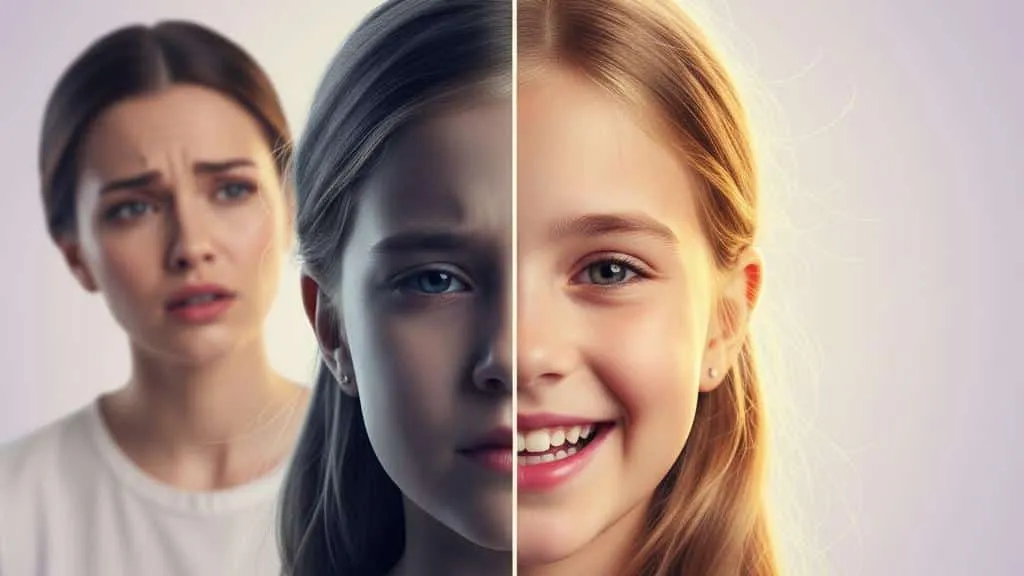
Have you noticed a big change in your child's behavior? Does your child seem incredibly happy and active some days, and then suddenly very sad, angry, and apathetic the next day? It's normal for you as a parent to feel a lot of anxiety when you see big changes like this. Today we're going to talk about bipolar disorder , a mental health condition that can also be seen in children, but that many people don't know about.
What is Bipolar Disorder?
Simply put, bipolar is a condition in which a person's mood, activity level, and thoughts suddenly change to two extremes. On one side, there can be extreme happiness, excitement, and activity (we call this a manic episode). On the other side, there can be extreme sadness, anxiety, and a feeling of hopelessness (we call this a depressive episode).
Although this condition is usually diagnosed in young adults and adults, it can sometimes occur in children as young as 6 years old. However, it can be difficult to diagnose a child with this condition. This is because the symptoms can sometimes be similar to other conditions, such as attention deficit hyperactivity disorder (ADHD), or to normal child behavior.
Therefore, if you have any doubts about your child's behavior , don't jump to conclusions. The best thing to do is to consult a specialist who knows your child well. If necessary, it is very important to get a second opinion from another doctor.
What is the difference between young children and adults?
When bipolar disorder affects a young child, the symptoms may be a little different than they are in an adult. Let's take a look at the main differences.
| Characteristic | The status of adults | The condition of young children |
|---|---|---|
| Manic Phase | Excessive happiness, enthusiasm, energy. | Rather than being overly happy, you may show extreme anger and restlessness . |
| Depressive Phase | Excessive sadness, boredom with life, decreased activity. | You may complain about physical symptoms (such as stomachaches, headaches) rather than mental distress. |
| Psychotic Symptoms | It can occur, but is relatively rare in children. | They are more likely to see or hear things that are not there than adults. |
| Speed of the disease cycle | There may be a gap of weeks, months, or years between episodes of mania and depression. | It can change very quickly. You can alternate between manic and depressive symptoms within the same day . |
Another medical condition: DMDD
Recently, another condition similar to bipolar has been identified, but different. It's called Disruptive Mood Dysregulation Disorder (DMDD). This is a condition that affects children between the ages of 6 and 18, and is characterized by long-lasting episodes of intense anger and frequent outbursts of behavior. It is not bipolar. Therefore, it is important to get an accurate diagnosis.
How can you help as a parent?
If your child is diagnosed with bipolar disorder, there are many things you can do to help them stay healthy. Here are some tips.
- Give your child the medication on time: This is the most important thing. You should give your child the medication that the doctor has prescribed (such as mood-stabilizers, antipsychotic medications) on time. If you have trouble remembering, set a reminder on your phone, use a pillbox, or write it down somewhere. If your child needs to take the medication while they are at school, talk to the teacher or school nurse about it and make a plan.
- Be aware of side effects:Many medications for this condition have been tested first in adults. Therefore, some medications can cause side effects in younger people (such as weight gain, changes in blood sugar and cholesterol levels). Ask your doctor what symptoms to look out for. You may also need to have regular blood tests.
- Talk to teachers at school: A child with bipolar disorder may need special support at school. This may include extra breaks during difficult times, reduced homework, etc. So talk to teachers and come up with a plan to help your child. Sometimes, it may be necessary to keep your child out of school for a while until symptoms stabilize.
- Establish a consistent routine: A child like this can benefit greatly from having a routine. Get up, eat, exercise, and go to bed at the same time every day. Try to reduce stress in the home environment as much as possible.
- Consider family therapy: A child's condition can affect the entire family. It can put a strain on your marriage. Other children may not understand what's going on with their sibling, or they may be angry about the attention they're getting. Family therapy can help everyone identify and deal with these issues.
- Do not take life-threatening threats lightly: No parent wants to think about their child harming themselves. Unfortunately, such things can happen even among young children. Therefore, if your child says they want to die or does things that could endanger their life, never take it lightly. Remove any weapons, dangerous drugs, etc. from the house immediately. Also, seek immediate medical attention. If necessary, take them to the nearest hospital Emergency Department (ETU).
What if your child is young?
Once a child reaches adolescence, the symptoms and treatment of bipolar disorder are very similar to those in adults. However, there can be special challenges when dealing with a child of this age.
As they get older, they may feel that you are forcing them to take treatment. Therefore, it is very important to involve them in these conversations and decisions. Together with the doctor, talk openly with your child about treatment options.
Just like adults, it is essential for these children to stay completely away from alcohol and drugs, as they can interact with medications or worsen mood. Also, sleeping and waking up at the right time, stressLearning how to control yourself is also very important.
💡 Take-Home Message
- Diagnosing bipolar disorder in children is complex. So, instead of jumping to conclusions, see a specialist. Get a second opinion if necessary.
- It is essential to take the medicine prescribed by the doctor at the right time and in the right dosage . Be aware of side effects.
- Establish a consistent routine for your child. This will go a long way in keeping their mood stable.
- Inform school teachers and other family members about this situation and get everyone's support .
- If your child is talking or behaving in a self-harming manner, never ignore it. Seek medical help immediately.


Janiw kuna arsuwinakas jichhakamax uñt’ayatäkiti. Aka chiqanx amuyt’awim jan ukax jiskt’awim yapxatañamawa.