

Do you sometimes have difficulty starting to urinate , or do you still feel like your bladder is full after you've finished urinating ? Or do you have problems like your urine coming out slowly or stopping? These are not just random things, and don't dismiss them as something normal as you get older. There may be a medical reason for this. Today we're talking about one such condition, 'Bladder Outlet Obstruction'.
What is Bladder Outlet Obstruction (BOO)?
Simply put, this means that for some reason, there is a blockage or obstruction in the urethra, the tube that carries urine from your bladder to the outside of your body. This obstruction can cause your urine to stop flowing completely or to flow very slowly.
This condition is most common in men over the age of 65. It can also occur in women, children, and sometimes even in the womb. When it occurs in the womb, we call it Fetal Bladder Outlet Obstruction.'' It can damage the baby's kidneys and other organs.
What are the symptoms of this condition?
Bladder Outlet Obstruction can cause Lower Urinary Tract Symptoms (LUTS). Take a look to see if you have these symptoms too.
| Symptom | Simple explanation |
|---|---|
| Difficulty starting to urinate | Not starting to urinate for a while after going to the bathroom. |
| Bladder not emptying completely | Feeling like there is still a little urine left after you finish urinating. |
| Frequent urination at night | Having to get up from sleep to urinate several times. |
| Weak or intermittent urine stream | The rate of urine flow is greatly reduced or it stops and then starts again. |
| Pain in the lower abdomen or pelvis | Pain due to a full bladder or kidney damage. |
| Urgent need to urinate | A strong feeling of needing to urinate right away and difficulty controlling it. |
Why is this happening? What are the main reasons?
There can be several reasons for this. In men, the most common cause is an enlarged prostate gland. However, there can be other factors as well.
| Reason | A simple explanation |
|---|---|
| Benign Prostatic Hyperplasia (BPH) | This is the most common cause in men. Since this gland surrounds the urethra, when it becomes large, it can constrict the urethra. |
| Urethral stricture | A previous infection, accident, or surgery can cause scarring inside the urethra and make it narrow. |
| Bladder Stones | Stones that form inside the bladder can block the passageway for urine to flow out. |
| Cancer conditions | Cancer of the prostate, bladder, cervix, or uterus can cause the urethra to become narrowed. |
| Pelvic Organ Prolapse | In women, organs such as the uterus or bladder descend into the vagina, causing the urethra to bend and become blocked. |
| Severe Constipation | When a lot of stool accumulates and fills the rectum, it can press on the bladder neck from the outside. |
What complications can occur if left untreated?
It is very important to treat this condition as soon as possible, because urinary retention is not a simple matter. Otherwise, serious underlying problems can occur.
- Frequent urinary tract infections (UTIs): As urine remains in the bladder, bacteria can easily grow and cause infections.
- Kidney damage: Increased pressure in the bladder can back up into the kidneys, causing kidney damage.
- Decreased kidney function: If this condition persists for a long time, the kidneys may even fail.
- Kidney and bladder stones: The risk of stone formation is higher because urine stays in one place.
- Inability to completely empty the bladder: This is an emergency and requires immediate medical attention.
How do you find this, Doctor?
When you go to see a doctor, he will first ask you about your symptoms. Then he will do a physical examination. He may recommend one or more of the following tests to diagnose the condition.
| Test | What do you see in this? |
|---|---|
| Blood Tests | Check for kidney damage. |
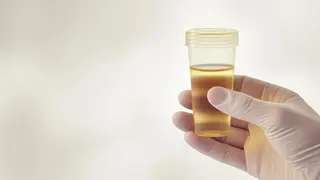
| Urinalysis | Check the urine for blood or infection. |
| Ultrasound scan (Pelvic Ultrasound) | Look at the kidneys and bladder to find where the blockage is. |
| Cystoscopy | A small camera is passed down the urethra to directly look for any narrowing or other obstruction inside the tube. |
| Urodynamic Testing | The bladder muscles and sphincter muscles are measured. |
| Post-void Residual Urine Test | After you finish urinating, a scan is used to check how much urine is left in the bladder. |
What are the treatments for this?
The treatment you receive will depend on the cause of your urinary obstruction. For example, the treatment for bladder stones is different from the treatment for prostate cancer.
- Medications: Some people can take medications like alpha-blockers or finasteride to relax the muscles in the bladder neck and allow urine to flow more easily.
- Physical Therapy: Exercises that strengthen the muscles in the pelvic area sometimes help.
- Pessary: This is a device used for women. It can be placed in the vagina to support the pelvic organs if they are prolapsed.
- Surgery and other methods:
- Foley Catheter: If the urethra suddenly becomes completely blocked, a tube is inserted to temporarily empty the bladder.
- Surgery to remove the obstruction: Depending on the cause, there are various surgeries to remove the obstruction. Most of the time, these are minimally invasive surgeries, which allow for a quick recovery.
- Laser Lithotripsy: If there are stones in the bladder, they are crushed and removed using laser beams.
Things you can do at home
While you wait for treatment, some habits may help you feel better. But you should ask your doctor before doing these.
- Sitting down to urinate: For men, it may be easier to completely empty their bladder when they urinate while sitting down than when they urinate while standing up.
- Self-catheterization: In some cases, your doctor will teach you how to cleanly insert a catheter into your bladder several times a day to empty your bladder.
When should I see a doctor?
Very important: If you have unbearable pain, or if you are unable to urinate at all , it is an emergency. Go to the nearest hospital emergency room (ETU) immediately. Also, if you have symptoms of a urinary tract infection, such as fever and chills, see a doctor immediately.
After surgery, be sure to attend the clinics as directed by your doctor. If you experience difficulty urinating again after treatment, inform your doctor about that as well.
💡 Take-Home Message
- Don't dismiss urination difficulties (slow flow , frequent urination, difficulty starting) as "just a normal part of getting older."
- Although the main cause of this condition is benign prostatic hyperplasia (BPH), there can also be other serious causes such as urinary stones, scarring, or cancer.
- Early detection and treatment can prevent serious complications such as kidney damage.
- If you have these symptoms, don't be ashamed or afraid to see a doctor for advice. In most cases, this condition can be successfully managed and cured.




Janiw kuna arsuwinakas jichhakamax uñt’ayatäkiti. Aka chiqanx amuyt’awim jan ukax jiskt’awim yapxatañamawa.