
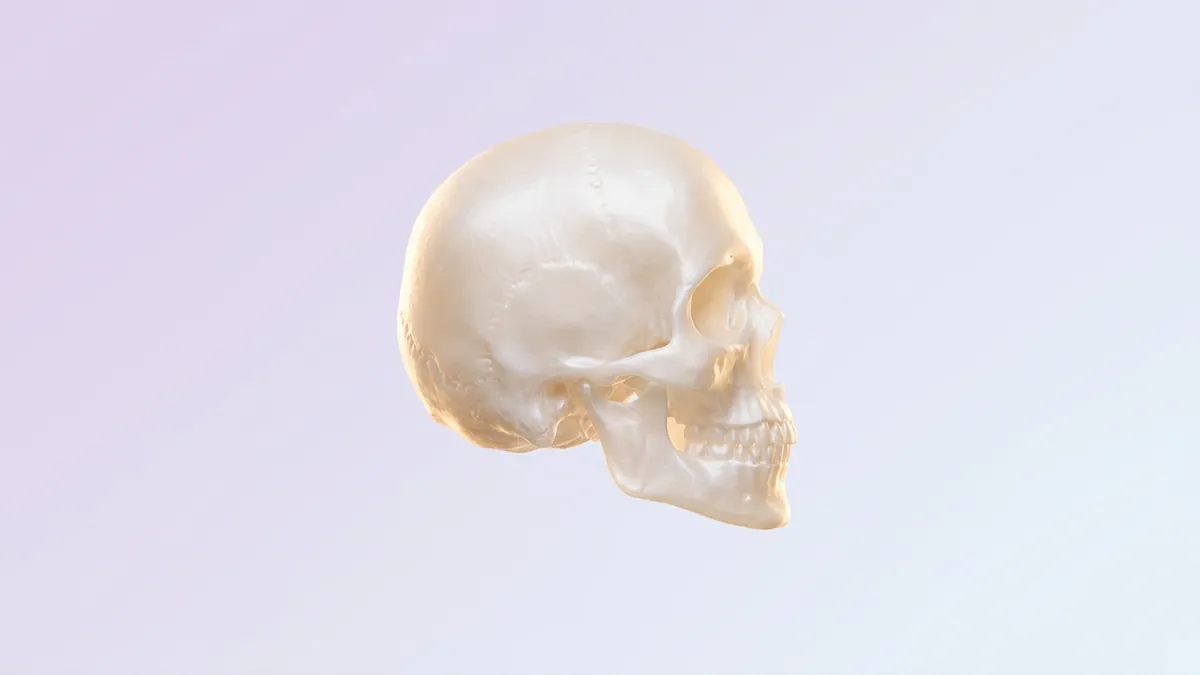
Do you think that the skull on your head is just one big bone? In fact, many people think so. But the truth is a little more complicated than that. Our skull is an amazing structure. It's like a fortress that protects our brain and the delicate organs on our face. So, let's talk a little more about this amazing fortress, shall we?
What is the skull made of?
Simply put, the skull is the collection of bones that make up our head. Although we may think of it as one thing, it is actually a structure made up of 22 small bones that are connected to each other. This includes the bones that make up the top and back of the head, as well as a few separate bones that frame our face.
Its main function is to protect the delicate and vital organs inside the skull. In addition, the skull itself supports our face and helps with facial movements. Surprisingly, this skull is one of the first structures to form after a baby is conceived in the womb. Not only that, but it continues to grow and undergo certain changes even after birth, just as the baby grows in the womb.
What are the main functions of the skull?
All of these different bones in the skull work together to serve two main purposes.
1. Providing protection: Like a helmet , the first and most important thing is to surround our brain, brainstem , and eyes and protect them from external dangers.
2. Provides structure and support: The skull provides the structure and framework for the muscles , blood vessels , and connective tissue that make up the skin of our face and scalp. These soft tissues are essential for vital processes like swallowing , breathing , and vision.
While we are still in our mother's womb, that is, during the first eight weeks of pregnancy, the parts of the skull also begin to form, as our nervous system develops. Then, throughout the pregnancy, these bones gradually take on the shape of the human skull.
Let's take a closer look at the anatomy of the skull.
Our skull can be divided into two main parts. To understand this, look at the table below.
| Part of the skull | Description and function |
|---|---|
| The part that covers the brain (Neurocranium) | This is the protective “box” around the brain. It is made up of several bony plates. The places where these bones join are called sutures . These sutures are slightly flexible to allow the brain to continue to grow after a baby is born. Have you ever felt the “little spots” on the top of a newborn baby’s head? Those are called fontanelles . These gradually close during infancy. |
| Viscerocranium | This is the front part of the skull, where our face is formed. It is made up of 14 facial bones. Together, these bones give the face its shape and structure. They protect the sinuses and eyes, and they also provide a supporting structure for the mouth. The temporomandibular joint (TMJ) is essential for chewing and eating. |
Simply put, the Neurocranium is the helmet-like part that protects the brain. The Viscerocranium is the framework that gives shape to our face.
Danger to the head! How do you know if there is a problem with the skull?
Injuries to the head and skull can be very serious . A minor bump or scrape may heal without any major health effects. However, some head injuries can cause headaches, dizziness, pain, vision problems, or loss of consciousness. If you have had a head injury, be sure to see a doctor. An X-ray of the skull may be necessary to determine if there is a problem.
We need to be aware of several serious conditions related to the skull.
| Condition | Features to look out for and what to do |
|---|---|
| Concussion | This is a condition that affects the brain after a head injury. This is when the brain is jolted inside the skull, causing damage to brain tissue. This can cause headaches, memory problems, difficulty thinking, dizziness, and mood changes. If you suspect you have a concussion, see a doctor as soon as possible. |
| Skull fracture | This is the name given to any fracture of the skull bone. These usually occur in an accident. Some fractures are minor and do not move the bone or damage the brain. However, some fractures can cause severe damage to the bone and brain tissue. If you have been hit in the head and think you have a skull fracture, go to a hospital's emergency department (ETU) immediately. |
| Intracranial hematoma (blood clot inside the skull) | Head injuries can cause bleeding inside the skull and blood clots to form. This condition can range from minor to life-threatening. These blood clots can cause serious brain damage, stroke, or even death. If you have even the slightest suspicion that you may have internal bleeding from a head injury, seek immediate medical attention without hesitation. |
| Tumors | Abnormal growths, called tumors, can develop inside the skull. These can be cancerous or non-cancerous (benign). If you suspect you have a tumor in your skull, it is important to talk to a doctor. Symptoms: Headache, dizziness, nausea, vomiting, vision changes (double vision, blurred vision), hearing loss, seizures, behavior changes, memory problems, and muscle weakness. |
Other conditions affecting the skull
Some birth conditions can also cause skull deformities. Some genetic conditions, such as trisomy disorders, can cause the skull to be abnormal in shape or size. So, if a baby's skull looks abnormal, it could be a sign of an underlying genetic condition.
Another condition is called Craniosynostosis.'' This is when the ''sutures'' between the bones of a baby's head close prematurely. As the baby's brain grows, the skull can become compressed and take on an abnormal shape. However, this condition can often be treated with surgery.
How do we keep our skull healthy?
It is very important to protect your skull from any accident that could cause brain damage.
- You can protect your head from accidents by wearing protective headgear when playing sports and engaging in hazardous jobs .
- The leading cause of head injuries in our country is vehicle accidents . Therefore, it is essential to wear a helmet properly when riding a motorcycle.
- Also, wearing seat belts and following traffic rules when riding in vehicles can prevent head injuries on the road.
If you are experiencing symptoms related to a skull fracture, see your doctor as soon as possible without delay.
💡 Take-Home Message
- The skull is not a single bone, but a complex collection of 22 interconnected bones.
- Its main function is to protect our brain, eyes, and other delicate parts of the face from external dangers.
- Never ignore even a minor head injury, such as dizziness, vomiting, memory problems, or vision changes. See a doctor immediately or go to a hospital's Emergency Department (ETU).
- Wearing helmets correctly when playing sports, riding motorcycles, and performing hazardous work can prevent serious injuries to the skull and brain.





Janiw kuna arsuwinakas jichhakamax uñt’ayatäkiti. Aka chiqanx amuyt’awim jan ukax jiskt’awim yapxatañamawa.