
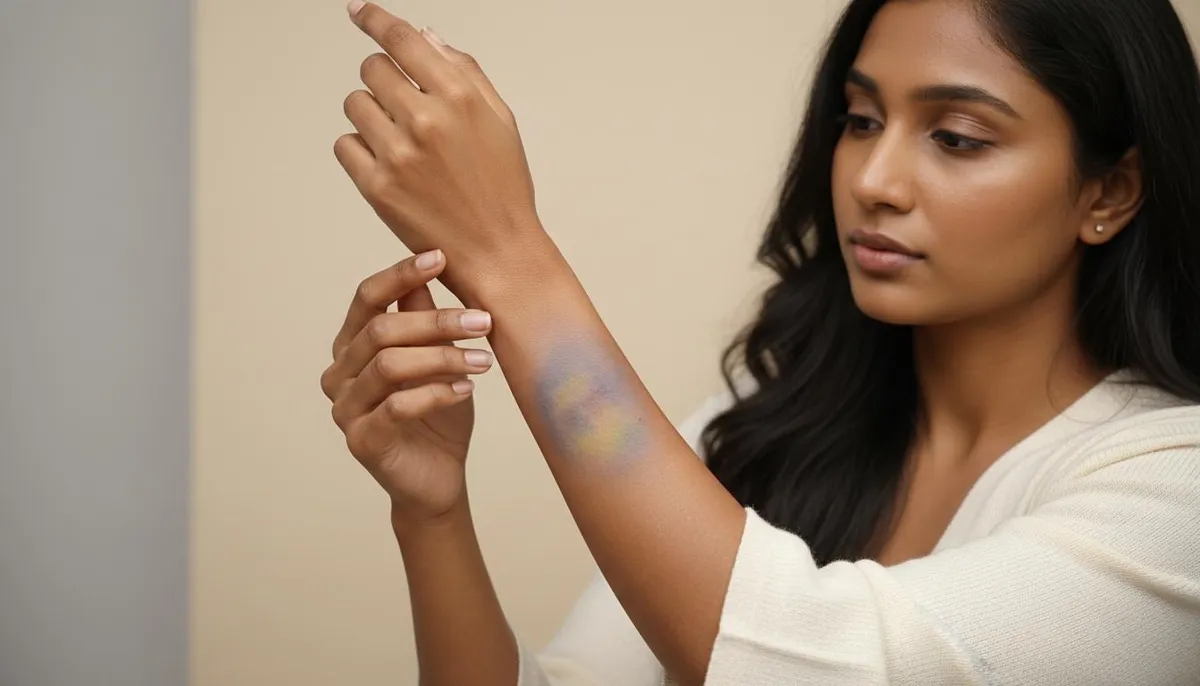
It's very common for us to get bruised and turn blue when we hit something on our body, hit a door, or even fall a little, isn't it? We call these 'bruises'. Sometimes these hurt a little, but they heal on their own in a few days. But what exactly is a bruise? Why does it change color? Let's talk about all this today.
What exactly is an ecchymosis?
Simply put, a bruise is when the small blood vessels under our skin are damaged and some blood leaks out. In medicine, we call this (Ecchymosis) . Think of it like a water pipe bursting slightly and leaking water. But since there is no wound on the surface of our skin, the blood does not come out, but instead collects under the skin. This collected blood is what we see in colors like blue, purple, black, and brown. After a while, the cells in our body come together to repair these damaged blood vessels, remove the accumulated blood, and restore the skin to its normal state.
What other conditions look like bruises?
There are several other conditions that look like bruises, caused by bleeding under the skin. Let's take a look at what they are. These are a little different from each other.
| Status name | Simple explanation |
|---|---|
| Hematoma | This is bigger than a normal bruise. It can happen after something serious, like a car accident or a big fall. It feels like a small lump that has a lot of blood under the skin, is swollen, and hurts when you touch it. |
| Petechiae | These are tiny (less than 2 millimeters) red dots, like dots made with a pen tip. These dots do not turn white when pressed with a finger. |
| Purple | These are larger than petechiae, but smaller than a common bruise (ecchymosis). They look like purple spots caused by small hemorrhages under the skin. |
Who gets bruises more?
Bruises are something that everyone experiences at some point in their lives. However, some people are more likely to get bruises than others, even with a minor bump. There can be several reasons for this.
- Having medical conditions like cancer or liver disease .
- Other family members also have a hereditary tendency to bruise easily.
- Taking blood-thinning medications, for example aspirin or other blood-clotting medications.
- Frequent use of NSAIDs (Nonsteroidal anti-inflammatory drugs), such as ibuprofen or naproxen , as painkillers.
- Having conditions that affect blood clotting, such as hemophilia or von Willebrand disease .
- A decrease in the number of platelets in the blood. We call this condition (Thrombocytopenia) .
- Having vitamin C or vitamin K deficiencies.
What are the symptoms of a bruise?
The appearance, size, and color of a bruise can vary depending on the cause, the type of bruise, and the location on the body. These are some of the common signs to look for.
- Feeling pain or stiffness when touching the bruised area.
- Skin color changes (first red/purple, then blue/black, then green/yellow/brown and then disappearing).
- Sometimes the area swells or appears as a lump, especially in the case of a hematoma.
Why does a bruise change color?
This is very interesting. The color of a bruise changes over time, as our body cleans and removes the accumulated blood. At first, it turns blue/purple as the blood becomes less oxygenated. After a few days, the body starts to break down the hemoglobin in the blood, which gives it its red color. This creates green (biliverdin) and yellow (bilirubin) compounds. That's why the bruise turns green and yellow as it heals.
Simply put, a change in the color of a bruise is a good sign that your body is healing the wound!
How do you treat bruises?
Most of the time, common bruises don't need any special treatment. They will heal on their own within a few days to two weeks. But there are a few things you can do to help reduce pain and help the bruise heal faster.
1. Relax:Rest the injured area. If possible, if it's a limb like an arm or leg, keep it elevated, like on top of a pillow. This will help reduce swelling.
2. Apply ice: It is best to apply ice for the first 24-48 hours after a bruise. Do not apply ice directly to the skin. Wrap it in a cloth and apply it for about 15 minutes . Do this several times a day. This will constrict the blood vessels and reduce further bleeding.
3. Apply heat: After a couple of days, you can apply a hot water bottle or a warm cloth to the area. This will increase blood circulation to the area and help the body absorb the accumulated blood more quickly.
4. Painkillers: If the pain is too much, you can take a painkiller like Paracetamol . However, it is wise to ask your doctor before taking NSAIDs (like ibuprofen), as these medications can sometimes increase bleeding.
When should you tell a doctor about a bruise?
A bruise is usually nothing to worry about. However, in some cases, it can be a sign of a serious underlying condition. So, if you have one, be sure to see your doctor.
| Feature to pay attention to | Description |
|---|---|
| Frequent or unexplained bruising | If you just get bruises on your body frequently, without hitting anything. |
| Very large bruises | Even a small injury can cause a very large bruise. |
| Lasting more than two weeks | A normal bruise will heal in two weeks, if it takes longer. |
| A lump in the bruise (Hematoma) | If the bruise feels like a painful, hard lump. |
| Other bleeding | If there are any bruises, nosebleeds, bleeding gums, or blood in the urine or stool. |
| Vision problems with bruising around the eye | If you feel like your vision is blurry with a bruise around your eye (black eye). |
💡 Take-Home Message
- A bruise is a collection of blood due to damage to the small blood vessels under the skin. This is normal.
- The color of a bruise changes over time to red/purple, blue, green, and yellow/brown as the body heals the wound.
- Most bruises do not require treatment. Applying ice for the first two days and then applying heat will speed up healing.
- If you have frequent or very large bruises for no reason, or if you have other unusual bleeding, be sure to seek medical advice.



Janiw kuna arsuwinakas jichhakamax uñt’ayatäkiti. Aka chiqanx amuyt’awim jan ukax jiskt’awim yapxatañamawa.