
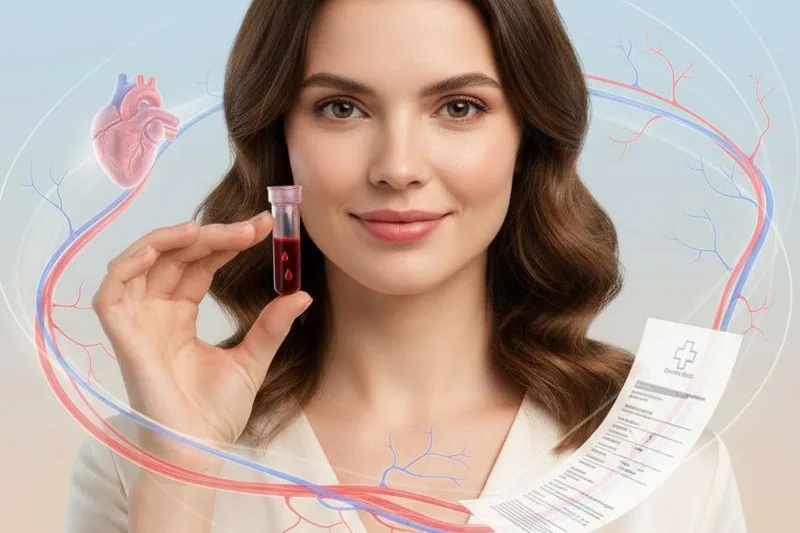
Have you ever wondered how much a drop of your blood can tell you about your heart health? In fact, heart-related blood tests are like a story about the health of our heart and blood vessels. With these tests, our doctors can understand in advance what our risk of developing heart disease is.
What are cardiac blood tests?
Simply put, these are special blood tests that look for important information about the health of your heart and blood vessels. Your doctor will use the results of these blood tests, your family history, and your overall health to assess your risk of having a heart attack or stroke.
What do these tests look for?
There are several types of blood tests that check heart function. Let's take a look at the main ones. It will be much easier for you to understand this information in a table.
| Test type | Things to see and their meaning |
|---|---|
| Cholesterol-related tests |
|
| Protein-related tests | |
| Tests that look for inflammation | |
| Diabetes related tests | Diabetes can damage blood vessels, so these are also important. |
When are these blood tests done?
Your doctor may recommend these tests if you already have heart disease, have high cholesterol or triglyceride levels, or if someone in your family has heart disease.
A cholesterol test (Lipid Profile) is usually recommended for most people. However, other specialized tests (such as NT-proBNP) are only ordered if you have multiple risk factors for heart disease. By learning more about your risk factors, your doctor can get a clearer picture of your risk.
How should you prepare before donating blood?
Most of the time, your doctor will tell you to fast for 9 to 12 hours before having these tests. This means you should not eat or drink anything other than water.
But remember one thing. Even if you are fasting, drink plenty of water . This will help your body stay hydrated. It will also make it easier for the person taking your blood to find your vein. It will also make it easier for you.
Many people like to go and donate blood in the morning because they don't eat or drink at night when they sleep, so it's easier.
What happens when you donate blood?
This is a very simple process. You have no reason to be afraid.
- You will be asked to sit in a chair.
- Then they ask you to extend your arm and place a tourniquet around your elbow to help the blood vessel open.
- Next, the needle insertion site is cleaned with an antiseptic liquid.
- Now the needle is inserted into the vein. It will feel like an ant bite, but it will only hurt a little . If you feel uncomfortable, you can look away.
- After the required amount of blood has been collected in a tube, the rubber band is removed and the needle is removed.
- Finally, a small plaster is applied to the area where the needle was inserted.
That's it. You can then go home, eat, and drink normally.
Results and their meaning
Compare the values in your report with the healthy ranges below. But remember, these are just averages. Only your doctor can accurately interpret your results.
| Test | Healthy Values (Ideal Ranges) |
|---|---|
| Cholesterol-related tests | |
| Total cholesterol | 125 to 200 mg/dL |
| LDL (bad cholesterol) | Less than 100 mg/dL (less than 70 mg/dL if you have diabetes or a high risk of heart disease) |
| HDL (good cholesterol) | Above 40 to 60 mg/dL |
| Triglycerides | Less than 150 mg/dL |
| Protein-related tests | |
| Lipoprotein (a) | Less than 30 mg/dL |
| Apolipoprotein B (ApoB) | Less than 100 mg/dL |
| NT-proBNP | Less than 125 pg/mL |
| Diabetes-related tests | |
| Hemoglobin A1c (HbA1c) | 5.6% or less |
| Fasting glucose | Less than 100 mg/dL |
What do you do if the values in your report are not normal?
Don't worry if your results are not in the healthy range. Your doctor will help you. He will probably advise you to make some changes to your lifestyle.
- Eat low-fat, healthy foods (reduce fast food and red meat).
- Exercise daily.
- If you use tobacco products, stop them.
- Control your body weight.
In addition to these things, you may also need to start taking medications (for example, cholesterol-lowering medications).
The most important thing is, never stop taking or stopping medication on your own. Always follow your doctor's instructions exactly.
When should I call the doctor?
The report usually comes back in a few days. If you haven't received your results after a week, or if you don't understand what's in the report, be sure to call your doctor for clarification.
Modern medicine has given us tests like these, which have made it possible to identify risks to heart health early. Once you know your risk, talk to your doctor about what you can do to reduce it and make a plan. Adopting a healthy lifestyle is the best way to protect yourself from heart disease.
Take-Home Message
- Cardiac blood tests are a simple, yet very important way to learn about your heart health and future risk.
- The doctor will combine these results with your family history and other health information to give you the advice you need.
- Follow the instructions exactly, such as fasting before the test. But don't forget to drink plenty of water.
- Don't worry if your results are not normal. Your doctor will guide you to manage it.
- You can significantly reduce your risk of heart disease by eating a healthy diet, exercising, and avoiding bad habits.


💬 Comments (0)
No comments have been posted yet. Add your comment here for the first time.
Add your comment