Asthma in Children: What Parents Need to Know!

Asthma in Children: What Parents Need to Know!

"Oh my baby is wheezing..." "He's coughing all the time..." "He's having trouble breathing..." It can be very frightening for parents to see their child suffering like this at night or in cold weather. This very common condition among young children is called Childhood Asthma .

Nilmini, who was deeply frightened when her 3-year-old daughter, Kavya, woke up at night with a persistent cough and a wheezing sound while breathing, met with pediatrician Dr. Priya and discussed ways to control asthma in children and the correct use of inhalers.

Doctor-patient dialogue: "What's happening to the respiratory tract, doctor?"

Nilmini (scared): "Dr. Priya, my 3-year-old daughter Kavya has been coughing continuously in the middle of the night. She makes a 'wheezing' sound when she breathes. This gets worse in cold weather. Why does a baby develop childhood asthma, doctor? How can I save my baby from this?"

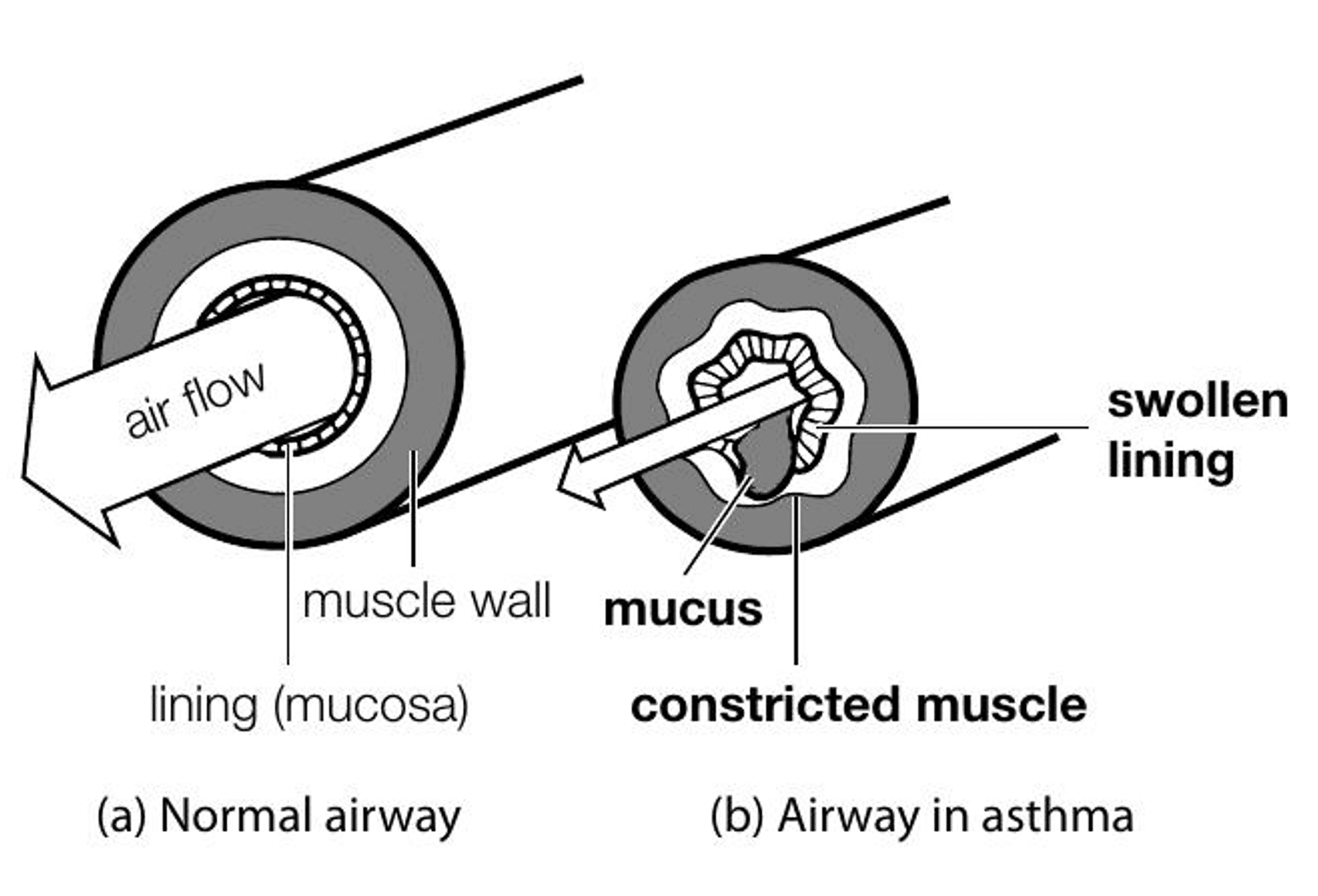
Dr. Priya (comforting Nilmini): "Nilmini, don't worry. The bronchi / airways in the lungs of young children are very sensitive. When asthma occurs, 3 things happen in these airways:

1. Bronchospasm: The muscles around the airways tighten and the airways narrow.
2. Inflammation: Swelling of the inner walls of the airways.
3. Mucus production: Mucus fills the airways and narrows them.

! Normal vs. Asthma Airway

Dr. Priya: "This causes difficulty in breathing and breathing out, causing shortness of breath and wheezing. There is a good chance that this condition will usually resolve on its own as the child grows older."

🚨 Red Flags that require immediate medical attention

If a child has an asthma attack and has the following symptoms, they should call the 1990 ambulance service without delay and be hospitalized:

1. Difficulty speaking or crying: The child may not be able to speak or cry for several words at a time due to stuttering.
2. Chest wall drawing in: The skin under the ribs and the tissues at the base of the neck are drawn inward due to difficulty breathing.
3. Blue or gray: Lips, fingernails, or gums turn blue/gray due to lack of oxygen to the body.
4. Fainting: The child becomes severely paralyzed, drowsy, or loses consciousness.
5. No relief from reliever inhaler: No relief after 4 minutes of using the quick-relief inhaler.

🛠️ Action Steps to Control Your Child's Asthma

  • First step (in case of emergency):Lay the child down (do not let them sleep). Calm the child. Give 4 puffs of the blue quick-relief medicine (e.g. Ventolin/Salbutamol) with the spacer (plastic tube that attaches to the inhaler) and the face mask attached. Give one puff at a time and let the child take 4 breaths.
  • Step Two: If your child has asthma flare-ups more than once a month, see a pediatrician immediately and develop a written asthma action plan .
  • Step 3: Take Preventers/Controllers (e.g. Pulmicort/Flixotide) as prescribed by your doctor every day (even on days when you don't have asthma). This prevents inflammation in the airways and controls the disease.
  • Step Four: Protect your child as much as possible from environmental triggers that can trigger your child's asthma, such as cigarette smoke, house dust mites, pet dander, and viral infections such as colds.

📊 Do's & Don'ts

Do's Don'ts
Always use a spacer and a mask that fits snugly to the face when giving inhaler medication to a child. Do not stop using the preventer inhaler without medical advice, assuming your child is cured.
Always send the blue reliever inhaler to the child's school or preschool and inform the teachers. Avoid smoking inside the house or in the vehicle your child is traveling in (smoke makes asthma worse).
Manage medication doses accurately according to your child's Asthma Action Plan. Avoid scaring or screaming at your child immediately after an asthma attack (fear makes breathing more difficult).
Wash and dry your bedding in hot water once a week. Do not allow your child to engage in strenuous sports without controlling their asthma.

❓ Frequently Asked Questions (FAQ)

[DECORATOR:faq_container]

#### Is asthma transmitted from one child to another?

No. Asthma is an allergic and sensitive condition of the respiratory tract, not a viral or bacterial infection. Therefore, asthma is not a contagious disease at all.

#### Can the preventer inhaler be stopped if the child has no symptoms?

No. Preventer inhalers work by preventing inflammation in the airways over the long term. The child has no symptoms because the medicine is working. Therefore, it should be continued daily until the doctor tells you to stop.

#### Can children with asthma be allowed to play and run around?

Yes. Children whose asthma is well controlled can play and participate in sports just like normal children. Children who experience asthma flare-ups during exercise can be prevented by giving their reliever inhaler 15 minutes before playing, as directed by their doctor.

#### Does asthma go away on its own as the child grows older?

Yes. The majority of children with asthma (especially those who develop it between the ages of 2-8) will outgrow the condition by the age of 12-14 as their immune system and airways develop. However, a small number may experience a relapse in adulthood.

[/DECORATOR:faq_container]

📖 Sources and Scientific References

⚠️ Important: The medical articles and information on Nirogi Lanka are for general awareness only, and are by no means a substitute for professional medical advice, diagnosis, or treatment. For any medical problem you have, consult a qualified physician immediately.

💬 Comments (0)

No comments have been posted yet. Add your comment here for the first time.

Add your comment

Please calculate: 4 + 8 =
Asthma in Children: What Parents Need to Know!
Child HealthFebruary 15, 2025

Asthma in Children: What Parents Need to Know!

"Oh my baby is wheezing..." "He's coughing all the time..." "He's having trouble breathing..." It can be very frightening for parents to see their child suffering like this at night or in cold weather. This very common condition among young children is called Childhood Asthma .

Nilmini, who was deeply frightened when her 3-year-old daughter, Kavya, woke up at night with a persistent cough and a wheezing sound while breathing, met with pediatrician Dr. Priya and discussed ways to control asthma in children and the correct use of inhalers.

Doctor-patient dialogue: "What's happening to the respiratory tract, doctor?"

Nilmini (scared): "Dr. Priya, my 3-year-old daughter Kavya has been coughing continuously in the middle of the night. She makes a 'wheezing' sound when she breathes. This gets worse in cold weather. Why does a baby develop childhood asthma, doctor? How can I save my baby from this?"

Dr. Priya (comforting Nilmini): "Nilmini, don't worry. The bronchi / airways in the lungs of young children are very sensitive. When asthma occurs, 3 things happen in these airways:

1. Bronchospasm: The muscles around the airways tighten and the airways narrow.
2. Inflammation: Swelling of the inner walls of the airways.
3. Mucus production: Mucus fills the airways and narrows them.

! Normal vs. Asthma Airway

Dr. Priya: "This causes difficulty in breathing and breathing out, causing shortness of breath and wheezing. There is a good chance that this condition will usually resolve on its own as the child grows older."

🚨 Red Flags that require immediate medical attention

If a child has an asthma attack and has the following symptoms, they should call the 1990 ambulance service without delay and be hospitalized:

1. Difficulty speaking or crying: The child may not be able to speak or cry for several words at a time due to stuttering.
2. Chest wall drawing in: The skin under the ribs and the tissues at the base of the neck are drawn inward due to difficulty breathing.
3. Blue or gray: Lips, fingernails, or gums turn blue/gray due to lack of oxygen to the body.
4. Fainting: The child becomes severely paralyzed, drowsy, or loses consciousness.
5. No relief from reliever inhaler: No relief after 4 minutes of using the quick-relief inhaler.

🛠️ Action Steps to Control Your Child's Asthma

  • First step (in case of emergency):Lay the child down (do not let them sleep). Calm the child. Give 4 puffs of the blue quick-relief medicine (e.g. Ventolin/Salbutamol) with the spacer (plastic tube that attaches to the inhaler) and the face mask attached. Give one puff at a time and let the child take 4 breaths.
  • Step Two: If your child has asthma flare-ups more than once a month, see a pediatrician immediately and develop a written asthma action plan .
  • Step 3: Take Preventers/Controllers (e.g. Pulmicort/Flixotide) as prescribed by your doctor every day (even on days when you don't have asthma). This prevents inflammation in the airways and controls the disease.
  • Step Four: Protect your child as much as possible from environmental triggers that can trigger your child's asthma, such as cigarette smoke, house dust mites, pet dander, and viral infections such as colds.

📊 Do's & Don'ts

Do's Don'ts
Always use a spacer and a mask that fits snugly to the face when giving inhaler medication to a child. Do not stop using the preventer inhaler without medical advice, assuming your child is cured.
Always send the blue reliever inhaler to the child's school or preschool and inform the teachers. Avoid smoking inside the house or in the vehicle your child is traveling in (smoke makes asthma worse).
Manage medication doses accurately according to your child's Asthma Action Plan. Avoid scaring or screaming at your child immediately after an asthma attack (fear makes breathing more difficult).
Wash and dry your bedding in hot water once a week. Do not allow your child to engage in strenuous sports without controlling their asthma.

❓ Frequently Asked Questions (FAQ)

[DECORATOR:faq_container]

#### Is asthma transmitted from one child to another?

No. Asthma is an allergic and sensitive condition of the respiratory tract, not a viral or bacterial infection. Therefore, asthma is not a contagious disease at all.

#### Can the preventer inhaler be stopped if the child has no symptoms?

No. Preventer inhalers work by preventing inflammation in the airways over the long term. The child has no symptoms because the medicine is working. Therefore, it should be continued daily until the doctor tells you to stop.

#### Can children with asthma be allowed to play and run around?

Yes. Children whose asthma is well controlled can play and participate in sports just like normal children. Children who experience asthma flare-ups during exercise can be prevented by giving their reliever inhaler 15 minutes before playing, as directed by their doctor.

#### Does asthma go away on its own as the child grows older?

Yes. The majority of children with asthma (especially those who develop it between the ages of 2-8) will outgrow the condition by the age of 12-14 as their immune system and airways develop. However, a small number may experience a relapse in adulthood.

[/DECORATOR:faq_container]

📖 Sources and Scientific References

⚠️ Important: The medical articles and information on Nirogi Lanka are for general awareness only, and are by no means a substitute for professional medical advice, diagnosis, or treatment. For any medical problem you have, consult a qualified physician immediately.

💬 Comments (0)

No comments have been posted yet. Add your comment here for the first time.

Add your comment

Please calculate: 4 + 8 =