
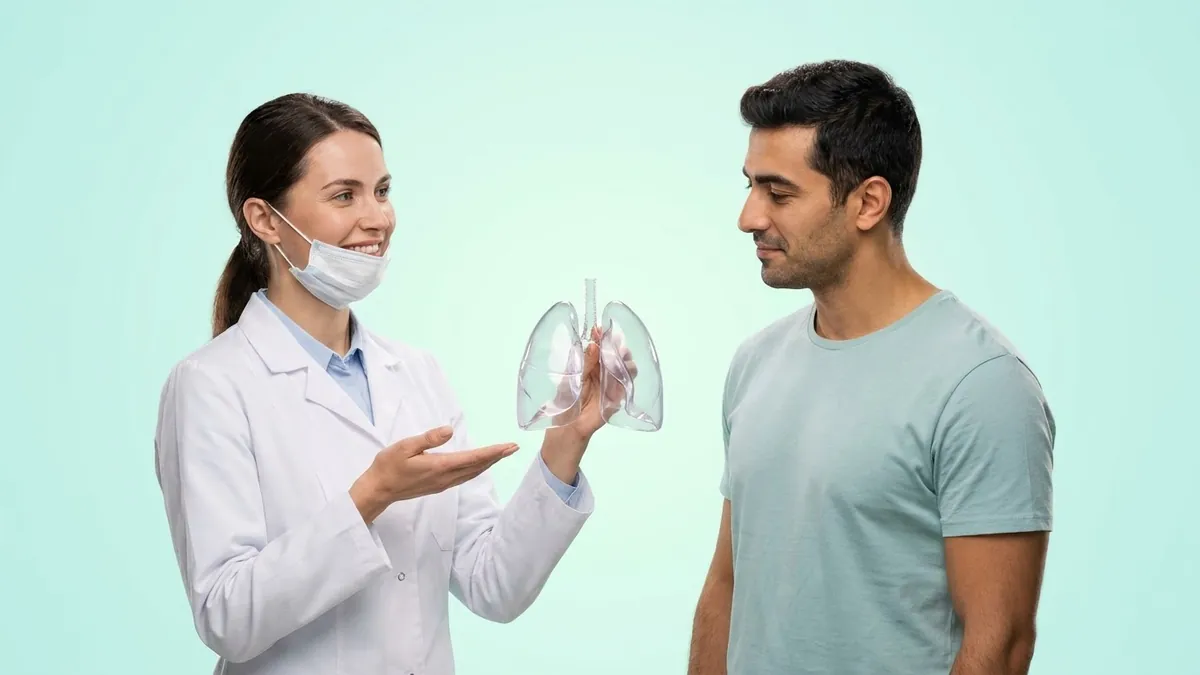
You remember the coronavirus pandemic that completely changed our lives, right? That time when the whole world suddenly stopped, and everyone was afraid. So, have we ever really thought about what really happens to our bodies when we get this coronavirus , that is, the disease called COVID-19 ? Today, we will talk about it simply, in a way that you can understand.
How does the coronavirus attack our body?
Simply put, a virus is an invader that enters the healthy cells of our body, uses those cells to make copies of itself, and spreads throughout the body.
The coronavirus is special. It has spike-like proteins on its surface. Think of it like a key. Using these keys, the virus attaches to receptors that are like doors on our healthy cells. It especially likes cells in the lungs .
To be precise, this virus enters our cells through the gates called ACE2 receptors''. Once inside, it takes complete control of that cell and uses it like a virus-making factory. Eventually, this process causes some of our healthy cells to die.
How does the virus travel through the body?
COVID-19 is spread through tiny droplets that are released when an infected person coughs, sneezes, or exhales. These can be in the air or on surfaces. If you touch a surface and then touch your eyes, nose, or mouth, the virus can travel directly to the mucous membranes in your throat.
Between 2 and 14 days after the virus enters the body, your immune system begins to fight it. That's when symptoms appear.
The important thing is that not everyone has the same symptoms. Some people can develop the disease without any symptoms at all.
Let's see what the main symptoms are.
| Symptom | A simple explanation |
|---|---|
| Fever | Increased body temperature, feeling of discomfort. |
| Cough | It often starts as a dry cough. |
| Difficulty breathing | Feeling suffocated and chest tightness. This is a dangerous symptom. |
| Feeling tired | Feeling so exhausted that you can't do anything. |
| Body aches and muscle pains | A pain that feels like your whole body is bruised. |
| Loss of smell and taste | Sudden loss of taste or smell of food. |
| Sore throat | A sore or scratchy throat. |
| Vomiting and diarrhea | Some people may also experience stomach upset and bloating. |
The virus travels down the throat, that is, along the respiratory system . Our mouth, nose, throat, and lungs belong to this respiratory system. Those gates'' (ACE2 receptors) that we talked about earlier are more abundant in the lungs than in the throat. That is why the coronavirus has a greater chance of going deeper, that is, into the lungs, than the virus of a common cold.
What happens if the disease becomes severe?
For most people, about 8 out of 10, the illness ends with a fever and cough. This is the mild form .
But for some, the disease becomes severe. Difficulty breathing (dyspnea) can begin between 5 and 8 days after symptoms start. A few days later, a more serious condition called Acute Respiratory Distress Syndrome ( ARDS ) can develop.
ARDS is a condition in which the lungs are severely damaged and the body is unable to get the oxygen it needs. This is life-threatening.
ARDS causes rapid breathing, increased heart rate , dizziness , and sweating . In this condition, the tiny air sacs (alveoli) in the lungs become damaged and fill with waste products. Breathing becomes very difficult, sometimes even stopping completely. Such patients need to be artificially ventilated with the help of a machine called a ventilator .
When the lungs are unable to properly oxygenate the blood, the amount of oxygen that the blood carries to the rest of the body also decreases. This can even cause major organs like the kidneys, liver, and lungs to fail.
So remember, if you or someone you know is having difficulty breathing, do not delay and see a doctor immediately or go to a hospital's Emergency Department (ETU).
Other effects that COVID-19 can have on the body
In addition to the lungs, COVID-19 can cause other complications.
- Redness of the eyes (Pinkeye)
- Various skin rashes
- Liver damage
- Effects on heart function
- Kidney damage
- Dangerous blood clots . These can form in the veins of the legs, lungs, or brain and cause serious conditions such as stroke.
Some people also experienced mouth sores and red-purple spots on their fingers.
How does it affect children?
Children usually do not get as seriously ill with COVID-19 as adults, but they can still get infected, and sometimes it can be severe.
Some children and young people are developing a particularly severe condition called Multisystem Inflammatory Syndrome in Children (MIS-C) associated with the coronavirus, which causes inflammation in several organs of the body.
- Fever
- Body damage
- Stomach ache
- Vomiting and diarrhea
- Effects on the heart
This condition is similar to another childhood illness called Kawasaki disease . If your child has these symptoms, it is important to seek medical advice immediately.
Long-term effects (Long COVID)
Doctors are still learning about the long-term effects of COVID-19. Some patients continue to have symptoms like fatigue, shortness of breath, and joint pain for weeks or months after they recover. This condition is called "Long COVID."
💡 Take-Home Message
- Although COVID-19 is a disease that primarily affects the respiratory system, it can affect the entire body.
- While most people have a mild illness and recover, for some it can be very severe and life-threatening.
- Difficulty breathing is a serious warning sign. In such a case, see your doctor or go to a hospital immediately.
- Children can also get COVID-19. It is important for parents to be on the lookout for MIS-C symptoms such as fever, body aches, and stomach aches.
- Keep in mind that some people may experience prolonged symptoms ("Long COVID") even after recovery from the disease.





Janiw kuna arsuwinakas jichhakamax uñt’ayatäkiti. Aka chiqanx amuyt’awim jan ukax jiskt’awim yapxatañamawa.