
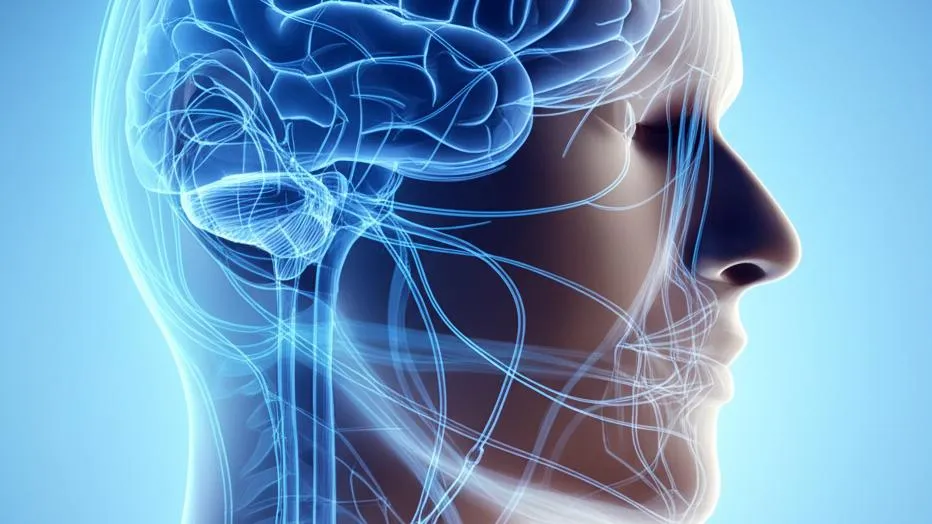
Imagine eating a delicious meal, smelling a beautiful flower, smiling when you see a friend, crying when you feel sad... Have you ever wondered how all of this happens? Behind all of this is a very special set of nerves that come directly from our brain. These control the functions of our head, neck, and chest. Today we are going to talk about these 12 very important nerves.
What are these cranial nerves?
Simply put, these are 12 pairs of nerves that start at the base of our brain and send electrical signals to and receive signals from certain organs in our head, face, neck, and chest. To be precise, our five senses function, we make various facial expressions, blink, move our tongues back and forth, and produce tears and saliva thanks to these nerves. They are an indispensable part of our nervous system.
Let's look at what these 12 nerves are and what they do.
| Nerve | Main function |
|---|---|
| 1. Olfactory Nerve | It helps with the sense of smell . This nerve carries the sensation caused by odor particles entering the nose to the brain. |
| 2. Optic Nerve | It is related to vision . It carries image information from the retina of the eye to the brain. |
| 3. Oculomotor Nerve | It helps to move the eye by activating many of the muscles around the eye. It also controls the size of the black ring in the eye, depending on the light. |
| 4. Trochlear Nerve | Another special muscle in the eye is activated to help rotate the eye downward and inward . |
| 5. Trigeminal Nerve | It consists of three main parts. It carries sensations such as touch and pain from various parts of the head, such as the skin of the face and the teeth, to the brain. |
| 6. Abducens Nerve | It controls another muscle in the eye and helps turn the eye to the sides, that is, outwards . |
| 7. Facial Nerve | It controls facial expressions (smiling, squinting) . The front of the tongue also helps with taste perception and the production of saliva and tears. |
| 8. Vestibulocochlear Nerve | This also has two parts. One helps with hearing , and the other helps maintain the body's balance . |
| 9. Glossopharyngeal Nerve | The back of the throat, the back of the tongue, is involved in taste and sensation , as well as the process of swallowing . |
| 10. Vagus Nerve | This is the longest cranial nerve. It controls many automatic functions, such as heartbeat, breathing, and digestion . |
| 11. Accessory Nerve | It helps to activate the muscles of the neck and shoulders . This nerve is responsible for turning the head from side to side and raising the shoulders. |
| 12. Hypoglossal Nerve | This nerve controls almost all of the movements of the tongue . It is used to move the tongue around to speak, eat, and move the tongue. |
Where are these nerves located?
Of these 12 pairs of nerves, two (the olfactory and visual nerves) originate in the cerebrum, the largest part of our brain. The other 10 pairs of nerves originate in the brainstem, which connects the brain and the spinal cord in our spine.
But these are just the beginning. These nerves spread to different parts of the body depending on their function. For example, the vagus nerve we talked about earlier is the longest one. It runs through the neck, chest, and all the way to the heart, lungs, and digestive system.
How to recognize a problem with the Cranial Nerves?
These 12 nerves are essential for the functioning of our head and face. Even minor damage to them can have a major impact on our daily lives. Since many of these nerves are located close to the surface of the skull, they are easily damaged in accidents.
Symptoms vary depending on which nerve is damaged. For example, if the olfactory nerve is damaged, the sense of smell is lost. If the facial nerve is damaged, the facial expressions cannot be controlled.
Common symptoms of nerve weakness include:
- Loss of feeling or numbness in part of the face
- Weakness of facial or neck muscles
- General fatigue and weakness
- Pain in the face, head, or neck
- Vision changes (double vision, blurred vision)
- Loss of balance in the body
- Difficulty swallowing food or water
What are the diseases that affect these nerves?
These nerves can be damaged by a variety of medical conditions, including:
- Trigeminal neuralgia - severe pain on one side of the face
- Bell's palsy - weakness of the muscles on one side of the face
- Stroke
- Traumatic brain injury (TBI)
- Brain tumors
- Nervous system diseases such as Amyotrophic lateral sclerosis (ALS)
- Hemifacial spasm - involuntary muscle twitching on one side of the face
- Glossopharyngeal neuralgia - severe pain in the throat and ears
How do we keep these precious nerves healthy?
Fortunately, we can largely prevent damage to these nerves by adopting good lifestyle habits.
- Eat a balanced diet .
- Maintain a healthy weight .
- Avoid smoking completely.
- If you have high blood pressure , control it according to your doctor's instructions.
- Avoid situations that could cause head injuries (e.g. wearing a helmet when riding a bicycle).
- Take steps to prevent diabetes .
- Control your alcohol intake .
- Exercise regularly.
When should I see a doctor?
If you have one or more of these symptoms, or suspect that you have a problem with these nerves, the best thing to do is to see your family doctor. He or she will refer you to a neurologist if necessary.
However, there are some symptoms that you should seek medical attention immediately if they appear. These could be signs of a serious condition such as a stroke, so it is very important to go to the Emergency Department (ETU) of the nearest hospital.
| Go to the ETU immediately! |
|---|
|
💡 Take-Home Message
- Cranial nerves are 12 pairs of essential nerves that come from our brain and control vision, hearing, smell, taste, facial movements, and more.
- Symptoms such as facial numbness, muscle weakness, vision changes, and difficulty swallowing may be a sign that there is a problem with these nerves.
- A healthy lifestyle (balanced diet, exercise, and avoiding smoking) goes a long way in protecting these nerves.
- If you experience symptoms such as sudden drooping of one side of your face or slurred speech, it could be a stroke, so go to the nearest Emergency Department (ETU) without delay.






Janiw kuna arsuwinakas jichhakamax uñt’ayatäkiti. Aka chiqanx amuyt’awim jan ukax jiskt’awim yapxatañamawa.