
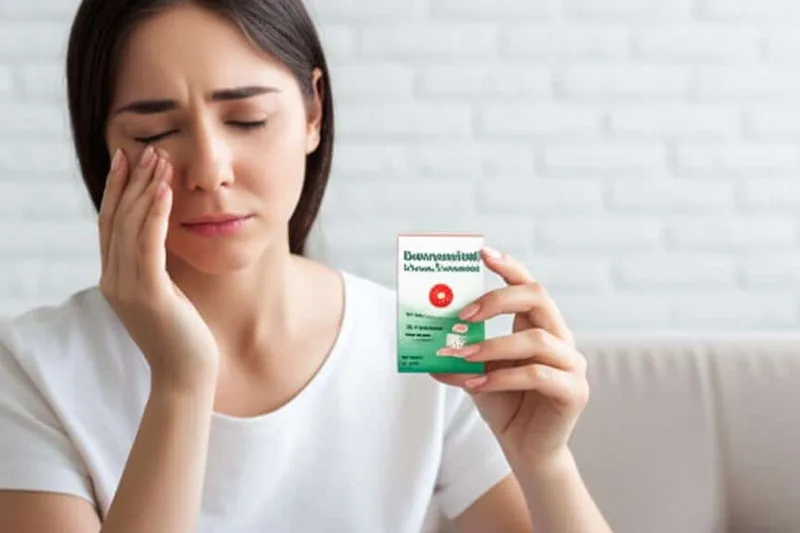
Do you also get a cold and feel tired because your nose is blocked, you constantly cough, and you have difficulty breathing? At times like these, many of us ask for a cold medicine from a pharmacy. But it is very important for your health to know exactly what these medicines are, how they affect the body, and what things to be careful about when using them. So today we will talk about this.
What is a decongestant?
Simply put, a decongestant is a medicine that helps reduce nasal congestion. When you have a cold, flu, or an allergy, the delicate membranes and blood vessels inside your nose swell. That's when your nose becomes stuffy, feels stuffy, and makes it hard to breathe.
A decongestant works by restoring the swollen blood vessels in your nose. This reduces the pressure in your nose, relieves congestion, and allows you to breathe more easily.
But remember this: A decongestant only temporarily controls symptoms. It will not cure your cold. It will only help reduce the discomfort of your cold until it clears up on its own within 7-10 days.
Decongestants can be taken as tablets, syrups, nasal sprays, and nasal drops.
How to choose a good decongestant?
Two of the most common types of decongestants are `Pseudoephedrine` and `Phenylephrine`. However, the FDA in the United States recently found that the drug `Phenylephrine`, which is taken in pill form, is not very effective in relieving nasal congestion. But it is not harmful to the body either. However, they say that nasal sprays containing `Phenylephrine` are still effective.
Often, these medications come in combination with other medications. For example, a decongestant is mixed with dextromethorphan for coughs or acetaminophen for fever and pain.
The most important thing is that if you use a decongestant nasal spray, don't use it for more than three days in a row. If you continue to use it, you may become accustomed to the medicine and your nasal congestion may worsen. This is called 'rebound congestion'.
So what is an antihistamine?
Antihistamines are a type of medication that is mainly used to control the symptoms caused by allergies. They are used to treat things like sneezing, runny nose, watery eyes, and itching.
When our body experiences an allergy, a chemical called `Histamine` is produced. All the symptoms mentioned above are caused by this histamine. Antihistamine medicine works by blocking the action of this histamine.
However, histamine is not the cause of a runny nose when you have a cold. Therefore , research has found that antihistamines are not a very effective treatment for the common cold.
There are two main types of antihistamines:
- First-generation antihistamines: These make you sleepy . For example, Chlorpheniramine (which we all know as 'Piriton') and Brompheniramine.
- Second-generation Antihistamines: These are much less likely to cause drowsiness. Examples: `Loratadine`, `Fexofenadine`.
Things to be careful about when using this medicine
Although decongestants and antihistamines are generally safe medications, they can cause side effects in people with certain health conditions and those taking other medications. So it's always wise to talk to your doctor before taking these medications.
See the table below. If you have any of these conditions, you should seek medical advice before taking these medications.
| Type of medicine | Conditions requiring medical advice |
|---|---|
| Decongestants |
|
| Antihistamines |
|
If you are pregnant or breastfeeding, do not take any of these medications without consulting a doctor. Some decongestants are not suitable for breastfeeding mothers.
Common side effects
The side effects of decongestants and antihistamines are different.
- Antihistamines mainly cause drowsiness , so they can be very dangerous if you are driving or operating machinery.
- Decongestants have the opposite effect. They can cause insomnia and restlessness . Therefore, they are not recommended for use at night.
Below are some common side effects of both of these medications.
- Antihistamines: Drowsiness, dry mouth and throat, dizziness, headache, constipation, blurred vision.
- Decongestants: Insomnia, restlessness, agitation, rapid heartbeat (palpitations), increased blood pressure.
Emergency! If the following symptoms occur, go to the nearest hospital Emergency Department (ETU) immediately.
* Difficulty breathing
* Severe allergic reactions such as swelling of the face, lips, or tongue
* Changes in vision
* Rapid or irregular heartbeat
* Severe dizziness
* Seizures
Is it safe to give this medicine to children?
This is very important. Do not give any cold medicine (containing a decongestant or antihistamine) to children under 4 years of age without medical advice. They are at risk of serious side effects. Even for older children, it is safest to consult a pediatrician before giving these medicines.
Ways to get relief from a cold without medicine
Sometimes these simple things can bring you more relief than medication.
- Drink plenty of water and warm liquids: Hot soups, steamed vegetables, and things like cilantro are very good.
- Gargle with salt water: Gargling with a teaspoon of salt dissolved in a glass of warm water can help relieve a sore throat.
- Get plenty of rest: Rest is essential for the body to fight illness.
- Put saline drops in your nose: These help prevent nasal dryness and reduce congestion.
- Catch the steam:You can open your nose by pouring hot water into a bowl, covering your head with a towel, and inhaling the steam.
Take-Home Message
- A decongestant is a medicine that is given to relieve nasal congestion. It does not cure a cold, it only relieves the symptoms.
- Antihistamines are medications used to treat allergies. They are not very effective for the common cold.
- Do not use nasal spray for more than 3 days in a row.
- Be careful about the ingredients in combination medicines for colds. Especially if they contain paracetamol, do not take separate paracetamol tablets.
- If you have other medical conditions such as high blood pressure, diabetes, heart disease, or if you are pregnant/breastfeeding, be sure to ask your doctor before taking this medication.
- If you are in doubt about something, never hesitate to seek advice from a doctor.


💬 Comments (0)
No comments have been posted yet. Add your comment here for the first time.
Add your comment