
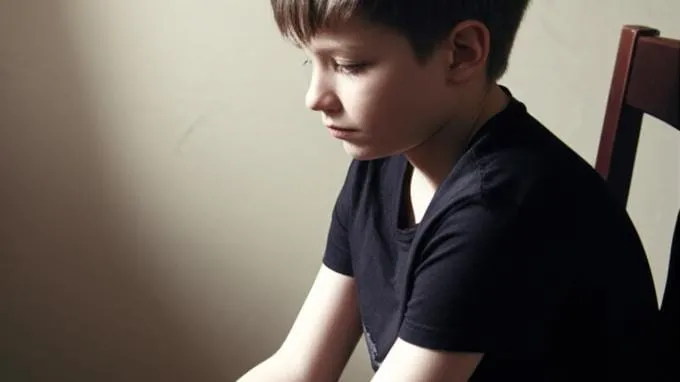
Is your child not the same as before? Does the child who used to play and laugh now stay in his room all the time and stay alone? Or does he get angry and cry over small things? We often think that depression is something that only adults experience. But that is not the truth. Young children, that is, our little ones, can also experience this condition. This is a very important topic, so let's talk about it in some detail today.
PHQ-9 depresión uñakipaña. Mä herramienta validada 9 jiskt’awinakampi sintoma depresivo ukanaka uñakipañataki. Sapa kutiw qullirir jisktʼasiñama, ukhamatwa uka usux kunjamas uk yatiñataki ukat qullañataki.
What exactly is childhood depression?
Simply put, childhood depression is a long-term, intense sadness, hopelessness, and loss of interest in daily activities in a child. In the past, even doctors thought that young children did not develop depression. But now, research has proven that this belief to be completely wrong.
In fact, statistics show that about 1 in 11 children experience depression before the age of 14. Also, on average, 1 in 33 children and 1 in 8 young adults suffer from this condition.
The important thing is that this is a very common and treatable condition . So before we panic about it, let's understand it properly.
Why do young children get depressed?
There is no single reason why a child may develop depression. There can be many factors that contribute to it.
- Family history: If a parent or family member has depression, the child is at greater risk.
- Stressful life events: Things like parents getting divorced, the death of a loved one, or moving to another area can have a profound impact on a child's mind.
- Abuse or neglect: Being physically or emotionally abused can have a profound impact on a child's mental health.
- Other illnesses: Depression can also be caused by another physical illness (for example, diabetes, cancer) or other mental illnesses (for example, anxiety, bipolar disorder, or disruptive behavior disorders).
- Problems at school: Bullying at school or having learning difficulties can also affect it.
In particular, children who experience depression at a young age are at increased risk of substance abuse . Depression can also lead to poor school performance, withdrawal from friends, and strained relationships with family. Worse still, childhood depression increases the risk of suicide.
Does my child have depression? Watch out for these signs
If your child's behavior changes like this for more than two weeks , it's time to be concerned. Let's look at what these signs are.
| Characteristics category | Things to see |
|---|---|
| Changes in emotions | Feeling sad all the time, crying easily, feeling hopeless, feeling worthless, and feeling unnecessarily guilty. |
| Behavioral changes | Withdrawal from friends and hobbies, lack of interest in anything, constant anger, irritability, inability to make decisions, difficulty concentrating. |
| Physical changes | Physical complaints such as constant fatigue, low energy, increased or decreased appetite, increased or decreased sleep, frequent headaches, and stomachaches. |
| Warning signs | Dark, scary things in drawings, self-harm or sad themes when playing, frequent talk about death or suicide. |
Take care of babies and young children too.
This condition can affect even very young babies who cannot yet talk. Their symptoms are slightly different. If the child is crying a lot, not smiling, not wanting to play, not looking at others, and is losing weight , it is very important to pay attention to this and seek medical advice.
What should I do if I see symptoms like these?
If your child has one or more of the above symptoms for more than two weeks, the first thing to do is see your family doctor.
Why should you see a doctor? Sometimes these symptoms can be caused by another physical condition. For example, thyroid problems or mononucleosis can cause these symptoms. Therefore, it is important to first rule out a physical cause.
If your doctor determines that your child needs treatment for depression, don't panic. With proper treatment , between 75% and 80% of children with depression can recover completely.
Treatment methods may include individual counseling for the child, family counseling, and possibly medication. Even young children who cannot speak can be treated very successfully with methods such as play therapy .
Can't we as parents prevent this?
Yes, we can. Just as we reduce risk factors to prevent heart disease or diabetes, parents can do a lot to reduce the risk of depression.
- Healthy lifestyle: Provide your child with a nutritious diet, adequate exercise, and restful sleep.
- Pressure Management: Do not give the child pressure that is not appropriate for their age (e.g., excessive learning load).
- Life skills: Teach your child how to face and solve problems in life. These skills are like a shield that protects the child from depression.
- Your mental health: This is very important. Children of parents with depression are four times more likely to develop depression. So, if you are also suffering from depression or other mental health issues, seek treatment for your child first.
The "wait and see" approach doesn't work here at all. If you notice a change in your child's behavior, don't ignore it. The most important thing is to act quickly.
💡 Take-Home Message
- Childhood depression is a real, treatable condition.
- Be aware of changes in your child's emotions, behavior, and physical health that last more than two weeks.
- If you have any doubts, do not "wait and see" your family doctor ) as soon as possible.
- Before undergoing treatment, it is essential to consult a doctor to ensure that there are no other physical conditions.
- To protect your child's mental health, it is very important to maintain your own mental health as a parent.





Janiw kuna arsuwinakas jichhakamax uñt’ayatäkiti. Aka chiqanx amuyt’awim jan ukax jiskt’awim yapxatañamawa.