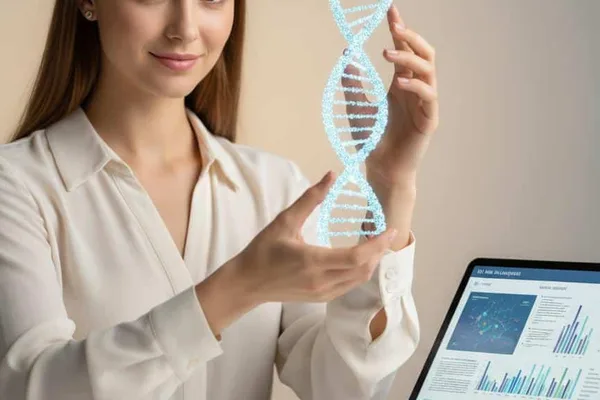
Let's learn about DNA Fingerprinting in simple terms.

Let's learn about DNA Fingerprinting in simple terms.

Are you someone who watches crime dramas and movies on TV? Then you are probably very familiar with words like 'DNA test done' and 'DNA match'. But what exactly is DNA Fingerprinting? Is it something that is only used to catch criminals? No, it is an amazing technology that is important for many things more than that. Let's talk about it simply today.

What is this 'genetic map' inside our bodies?

Simply put, DNA Fingerprinting is a chemical test that reveals the genetic makeup of a person or any living thing. To understand this, we first need to know what DNA is.

The word DNA is short for deoxyribonucleic acid . It's found in every cell in your body. Think of it as the blueprint for your entire life.

This DNA chain is made up of 4 types of chemical compounds. We call these 'bases'. These come together in pairs to form 'base pairs'. There are about 3 billion of these pairs in your DNA! The order in which these pairs are linked together tells your cells how to make copies of each other.

This entire set of chemical compounds is what we call the 'genome.' This is your complete genetic information repository.

The amazing thing is that the genome of any person in the world is 99.9% identical. But that remaining tiny 0.1% difference is what physically and mentally differentiates you from me, and me from anyone else. Our appearance, our behavior, our way of thinking, our susceptibility to certain diseases, all of these are affected by this tiny difference. DNA Fingerprinting technology uses chemicals to separate the DNA strands and extract those 0.1% fragments that are unique to you. We see that result as a pattern of lines. We can compare that pattern with another sample.

What is DNA Fingerprinting used for?

Since its invention in 1984, this technology has been used primarily in litigation and legal matters. It has also become indispensable in medicine. Let's take a look at its main benefits.

Field of use Examples and descriptions
For legal matters and criminal investigations
Identifying criminals DNA can be taken from a hair, blood, or saliva sample found at a crime scene and matched with a suspect's DNA. It can also be used to exonerate someone from guilt.
Confirmation of kinship This is used for things like confirming the parents of a child (paternity tests) and finding missing siblings.
Identification of dead bodies This is used to confirm the identity of bodies that have been dead for a long time, such as those killed in an accident or natural disaster, and that have been destroyed beyond recognition.
Medical benefits
Organ transplants When someone needs an organ transplant, such as a kidney or liver, DNA testing is used to see if the donor and recipient tissues are compatible.
Identification of hereditary diseases This helps to identify certain hereditary conditions in advance and to determine whether a person has a genetic predisposition to developing a certain disease.
Finding treatments for diseases This technology is very important for researchers to identify the genetic changes that cause these hereditary diseases and develop appropriate treatments and drugs for them.

How is this test done?

DNA fingerprinting is not as complicated or painful as you might think. It involves taking a sample of cells from your body. There are several ways to take this sample.

  • Scrape cells from the inside of the cheek with a cotton swab.
  • From your skin.
  • From the root of a hair shaft.
  • From saliva, sweat, or other bodily fluids.

But the easiest and most commonly used method is to take a blood sample.

What happens in the lab?

After the sample is taken from you, it is sent to the lab. Here's what happens:

1. DNA isolation: First, chemicals are added to separate only the DNA from the cells in your sample. Then, the DNA is dissolved in water.

2. Cutting DNA into pieces: Next, another chemical process cuts these long DNA chains into small pieces that have repeating patterns that are important to us.

3. Copying the fragments: The next step is to make millions of copies of these small DNA fragments, making them much easier to test.

4. Passing through a gel: Now these DNA fragments are mixed with a gel and an electric current is passed through it. Then the DNA fragments are separated into large and small ones based on their size.

5. The pattern appears: Finally, when a special dye is added to this, when viewed under UV light or with a laser, a striped pattern appears, just like a barcode on products in a supermarket .

6. Comparison: This barcode-like pattern is your DNA fingerprint. You can then compare this to a pattern taken from another sample and tell with a very high degree of accuracy whether they match or not.

This technology has become a very important tool that influences many aspects of our lives today.

Take-Home Message

  • DNA Fingerprinting is a highly accurate test that identifies the genetic pattern unique to each individual.
  • This is essential for legal purposes such as criminal investigations, establishing kinship, and identifying unidentified bodies.
  • In medicine, this technology is used to find compatible individuals for organ transplants, diagnose hereditary diseases, and find treatments for them.
  • The result of this test is like a 'genetic barcode' that is unique to each individual.
  • If you have any medical concerns or questions regarding this, always talk to your doctor for advice.

DNA Fingerprinting, DNA fingerprinting, DNA testing, genetic testing, genome, Deoxyribonucleic acid, genetic map

Frequently Asked Questions (FAQ)

What happens in the lab?

After the sample is taken from you, it is sent to the lab. Here's what happens:

⚠️ Important: The medical articles and information on Nirogi Lanka are for general awareness only, and are by no means a substitute for professional medical advice, diagnosis, or treatment. For any medical problem you have, consult a qualified physician immediately.

💬 Comments (0)

No comments have been posted yet. Add your comment here for the first time.

Add your comment

Please calculate: 9 + 1 =
Let's learn about DNA Fingerprinting in simple terms.
How the Body WorksJuly 6, 2026

Let's learn about DNA Fingerprinting in simple terms.

Are you someone who watches crime dramas and movies on TV? Then you are probably very familiar with words like 'DNA test done' and 'DNA match'. But what exactly is DNA Fingerprinting? Is it something that is only used to catch criminals? No, it is an amazing technology that is important for many things more than that. Let's talk about it simply today.

What is this 'genetic map' inside our bodies?

Simply put, DNA Fingerprinting is a chemical test that reveals the genetic makeup of a person or any living thing. To understand this, we first need to know what DNA is.

The word DNA is short for deoxyribonucleic acid . It's found in every cell in your body. Think of it as the blueprint for your entire life.

This DNA chain is made up of 4 types of chemical compounds. We call these 'bases'. These come together in pairs to form 'base pairs'. There are about 3 billion of these pairs in your DNA! The order in which these pairs are linked together tells your cells how to make copies of each other.

This entire set of chemical compounds is what we call the 'genome.' This is your complete genetic information repository.

The amazing thing is that the genome of any person in the world is 99.9% identical. But that remaining tiny 0.1% difference is what physically and mentally differentiates you from me, and me from anyone else. Our appearance, our behavior, our way of thinking, our susceptibility to certain diseases, all of these are affected by this tiny difference. DNA Fingerprinting technology uses chemicals to separate the DNA strands and extract those 0.1% fragments that are unique to you. We see that result as a pattern of lines. We can compare that pattern with another sample.

What is DNA Fingerprinting used for?

Since its invention in 1984, this technology has been used primarily in litigation and legal matters. It has also become indispensable in medicine. Let's take a look at its main benefits.

Field of use Examples and descriptions
For legal matters and criminal investigations
Identifying criminals DNA can be taken from a hair, blood, or saliva sample found at a crime scene and matched with a suspect's DNA. It can also be used to exonerate someone from guilt.
Confirmation of kinship This is used for things like confirming the parents of a child (paternity tests) and finding missing siblings.
Identification of dead bodies This is used to confirm the identity of bodies that have been dead for a long time, such as those killed in an accident or natural disaster, and that have been destroyed beyond recognition.
Medical benefits
Organ transplants When someone needs an organ transplant, such as a kidney or liver, DNA testing is used to see if the donor and recipient tissues are compatible.
Identification of hereditary diseases This helps to identify certain hereditary conditions in advance and to determine whether a person has a genetic predisposition to developing a certain disease.
Finding treatments for diseases This technology is very important for researchers to identify the genetic changes that cause these hereditary diseases and develop appropriate treatments and drugs for them.

How is this test done?

DNA fingerprinting is not as complicated or painful as you might think. It involves taking a sample of cells from your body. There are several ways to take this sample.

  • Scrape cells from the inside of the cheek with a cotton swab.
  • From your skin.
  • From the root of a hair shaft.
  • From saliva, sweat, or other bodily fluids.

But the easiest and most commonly used method is to take a blood sample.

What happens in the lab?

After the sample is taken from you, it is sent to the lab. Here's what happens:

1. DNA isolation: First, chemicals are added to separate only the DNA from the cells in your sample. Then, the DNA is dissolved in water.

2. Cutting DNA into pieces: Next, another chemical process cuts these long DNA chains into small pieces that have repeating patterns that are important to us.

3. Copying the fragments: The next step is to make millions of copies of these small DNA fragments, making them much easier to test.

4. Passing through a gel: Now these DNA fragments are mixed with a gel and an electric current is passed through it. Then the DNA fragments are separated into large and small ones based on their size.

5. The pattern appears: Finally, when a special dye is added to this, when viewed under UV light or with a laser, a striped pattern appears, just like a barcode on products in a supermarket .

6. Comparison: This barcode-like pattern is your DNA fingerprint. You can then compare this to a pattern taken from another sample and tell with a very high degree of accuracy whether they match or not.

This technology has become a very important tool that influences many aspects of our lives today.

Take-Home Message

  • DNA Fingerprinting is a highly accurate test that identifies the genetic pattern unique to each individual.
  • This is essential for legal purposes such as criminal investigations, establishing kinship, and identifying unidentified bodies.
  • In medicine, this technology is used to find compatible individuals for organ transplants, diagnose hereditary diseases, and find treatments for them.
  • The result of this test is like a 'genetic barcode' that is unique to each individual.
  • If you have any medical concerns or questions regarding this, always talk to your doctor for advice.

DNA Fingerprinting, DNA fingerprinting, DNA testing, genetic testing, genome, Deoxyribonucleic acid, genetic map

Frequently Asked Questions (FAQ)

What happens in the lab?

After the sample is taken from you, it is sent to the lab. Here's what happens:

⚠️ Important: The medical articles and information on Nirogi Lanka are for general awareness only, and are by no means a substitute for professional medical advice, diagnosis, or treatment. For any medical problem you have, consult a qualified physician immediately.

💬 Comments (0)

No comments have been posted yet. Add your comment here for the first time.

Add your comment

Please calculate: 9 + 1 =