

Have you ever wondered how we remember things, learn new things, and find our way? All of this is helped by a tiny, yet very important part of our brain. That part is called the hippocampus . The name may sound a bit strange, but the work it does inside our brain is huge and very valuable. Today, let's talk about this amazing hippocampus.
What really happens in the hippocampus?
Simply put, the hippocampus is a key player in our learning and memory . Here are some of the important things it does:
- Learning: When you learn something new, the information first goes to the hippocampus. It is the part of the brain that processes it, makes sense of it, and helps send it to other parts of our brain .
- Short-term memory and long-term memory: Imagine you meet a new friend. You remember their name and something they said in a short time because of the short-term memory of the hippocampus. Then, the hippocampus takes this memory, decides, "Okay, this is important," and stores it in other appropriate places in our brain as long-term memory . It's like taking a letter and filing it away if it's important.
- Visual-spatial memory: This is what helps you remember where a store is, how to get home, and how things are arranged in a room when you're walking down the street. It also remembers how you relate to the things around you.
- Verbal memory: The hippocampus is what helps us remember the exact words we need when we speak, without having to wonder, "Oh, what's that word?"
- Declarative or explicit memory: You remember things like events in your life, lessons learned, and facts with the help of the hippocampus.
How does the hippocampus work with other parts of the brain?
The hippocampus doesn't work alone. It's part of a group of parts of our brain called the Limbic System . This group controls our emotions, memories, sense of smell, and other autonomic behaviors that we don't realize we have, such as our heartbeat, breathing, and sweating.
The hippocampus works closely with its friends in the limbic system , the amygdala and the hypothalamus . It is especially with the amygdala that emotions are linked to memories.
Imagine this. You're walking down the street and you see a very cute, cuddly dog. It wags its tail, comes up to you, and licks your hand. You feel very happy and in love. What happens here is that your hippocampus and your amygdala work together to associate this experience – the dog, the feeling of happiness you felt – and store it all together as a memory in your brain. The next time you see a dog, that old memory comes up, and you can look at that animal without fear, with joy.
But, imagine that the first dog you saw barked at you and tried to jump on you, and you felt scared. Even then, the hippocampus and its other friends join forces and store that scary memory. The next time you see a dog, it reminds you, "There could be danger! Be careful!" This is what we call the 'fight-or-flight response' . That is, the hippocampus helps us remember good things as well as dangerous things.
Where is the hippocampus located? What does it look like?
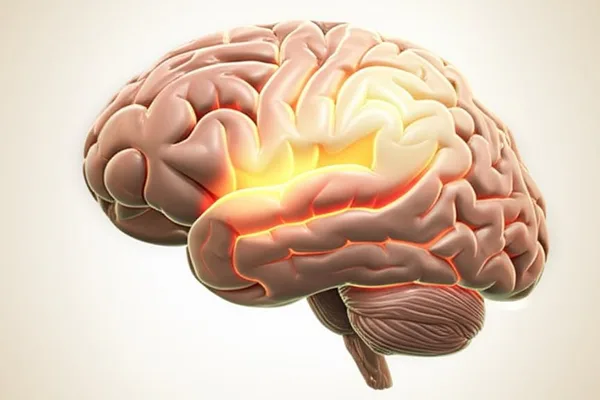
There are two hippocampi inside our heads, right next to our ears, in the temporal lobe. Yes, not one, but two! One on the left side of the brain, the other on the right.
Visually, the hippocampus resembles a seahorse . It has a small, curved shape like the letter 'S'. That's why it's called 'hippocampus', which comes from the ancient Greek word for "seahorse." It's about 5 centimeters long, and it's made up of many cells stacked on top of each other.
What is the Hippocampal Formation?
The hippocampus is not alone, there are many other small parts that help it. Together, we call them the 'Hippocampal Formation' . Here are some of its main parts and their functions:
- Dentate gyrus: This is the part that handles spatial memories, helps us form new memories, and helps us make decisions.
- Hippocampus proper (Cornu Ammonis): This is the main part of the hippocampus. It is responsible for forming, organizing, and storing memories. It also has four other subregions , CA1, CA2, CA3, and CA4, to help it.
- Subiculum: This takes information from the hippocampus and sends messages to other parts of the brain. This means it helps retrieve and use memories.
- Entorhinal cortex: This is like the main gateway for information to and from the hippocampus. Information enters and leaves the hippocampus through this.
What happens if the hippocampus is damaged?
Imagine what would happen if the hippocampus, which performs such an important function, were to suffer an accident, illness, or other brain damage? Then the processes we talked about earlier, such as forming memories, remembering things, and processing names, dates, places, and events, could be seriously disrupted.
Here are some common conditions that can damage the hippocampus:
- Alzheimer's disease
- Amnesia (memory loss)
- Dementia
- Encephalitis (inflammation of the brain)
- Epilepsy
- Hypoxia (this is a lack of oxygen supply to the brain)
- Post-traumatic stress disorder (PTSD) Schizophrenia
Not only that, but as we age , the size and function of the hippocampus also decrease slightly. That's normal. So as we age, our memory may become a little weaker, and we may not be able to remember things as quickly as we used to.
What are the common symptoms of hippocampus-related problems?
Someone with a problem with the hippocampus may exhibit symptoms like these:
- Memory loss : Difficulty remembering things, especially new ones.
- Mood changes: You may frequently feel anxious, sad, or angry.
- Seizures : In some cases, this condition may occur.
Also, these things can cause problems:
- Difficulty carrying on a conversation properly.
- Difficulty making decisions.
- Difficulty following instructions.
- Inability to find your way even in familiar places.
- Losing memory of where frequently used items like keys and mirrors are.
- I can't remember the answer to a question I asked a while ago.
- Inability to form new memories.
But here's an important thing. Most of the time, when the hippocampus is damaged, it mainly affects short-term memory . Our long-term memory is not stored in the hippocampus, but in other parts of the brain. That's why some people with conditions like Alzheimer 's disease, which you've seen, can remember things that happened a long time ago, events from their childhood, but can't remember the name of someone they met a short time ago or what they had for breakfast.
How do you know if your hippocampus is damaged?
If you or someone you know has these symptoms, the best thing to do is not to panic and see a doctor. The doctor will examine you and may do things like:
- Physical exam
- Neurological exam
- Psychological evaluation
- Magnetic Resonance Imaging (MRI) scan
- Positron Emission Tomography (PET scan)
- Computerized tomography (CT) scan
The doctor may also decide to perform further tests to rule out other conditions with similar symptoms.
What are the treatments for hippocampus-related conditions?
Your doctor will prescribe treatment based on the cause of your symptoms and the discomfort you are experiencing. Not everyone will get the same treatment. Common treatments include:
- Use of medications: Control symptoms or treat the cause of the disease.
- Psychotherapy: Psychotherapy , especially cognitive behavioral therapy (CBT), can help with memory and behavior problems.
- Cognitive exercises or rehabilitation: Various activities that help improve things like memory and attention.
The doctor will discuss with you the best treatment for your condition.
How can I strengthen my hippocampus?
The hippocampus is part of a larger structure in our brain. So, keeping our overall health in good shape is the best way to keep our brain healthy. You can protect your brain and strengthen the hippocampus by doing these things:
- Keep your other medical conditions (e.g. diabetes, high blood pressure) well controlled.
- Eat a balanced, nutritious diet.
- Exercise regularly. Walking for at least 30 minutes a day is also good.
- Reduce stress as much as possible and find ways to control it.
- Get at least 7-8 hours of good sleep a day.
- Always learn new things. It can be anything, like a new language, a musical instrument, a new subject. This keeps the brain active.
Also, you can do these things to further improve your brain health:
- Talking to others, spending time with friends (being social).
- Starting a new hobby or reviving an old one.
- Reading books.
- Listening to songs, listening to music.
Your doctor can check your general health and give you more good advice to improve your brain health.
The most important thing we need to remember is
So, you probably understand now that the hippocampus is a small but very powerful and important part of our brain. It helps us learn, remember things, and adapt to our environment. It is constantly working to learn from and respond to our environment. Because of this, the hippocampus is more likely to be damaged by some disease or accident.
Living alone can be very difficult for someone with a condition that affects the function of the hippocampus. They may forget to take their medication, forget to do their daily chores, forget to turn off the stove when leaving the house, or lose their way while driving. These things can be dangerous for you and others. Therefore, there are times when someone with a condition that affects this part of the brain may need someone to care for them 24 hours a day.
If you are a caregiver for someone with memory problems like this, you may feel like you are taking on a huge responsibility. It can be overwhelming to be with a loved one who doesn't even know you or remember why you need help. If you need help with your mental health, or if you need help caring for a loved one with memory problems, don't be ashamed or afraid to talk to a doctor or someone you trust. You are not alone.
So, the hippocampus is a very important part of our lives. Let's all try to keep it healthy.
👩🏽⚕️ Additional questions (FAQs)
💬 Is the 'Hippocampus' in the brain our memory store?
That's right! The hippocampus is a small, seahorse-shaped part of our brain. It's where we form short-term memories about new things we learn, new people, and new experiences, and store them as permanent memories throughout the brain.
💬 What happens if this part is damaged?
If the hippocampus is damaged, even if you remember things that happened in the past (childhood), you will not be able to remember what you ate this morning (anterograde amnesia). It will also be difficult to find where you are (navigation).
💬 Is this the first part to be destroyed in Alzheimer's disease?
Yes! When Alzheimer's (a severe memory loss disease) develops, the first area attacked and cells die is in the hippocampus. That's why those patients first start forgetting things they've recently done and heard.
` Hippocampus, brain, memory, learning, limbic system, Alzheimer's disease, neuroscience




💬 Comments (0)
No comments have been posted yet. Add your comment here for the first time.
Add your comment