
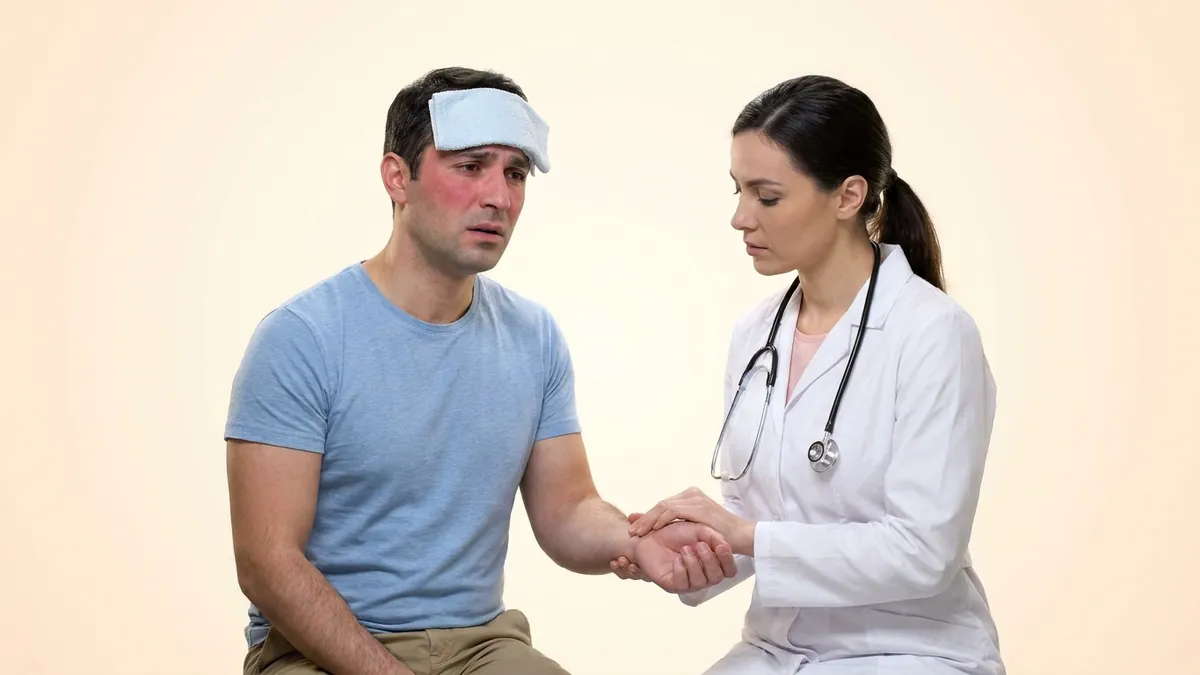
What do you think if you come back from a trip to a foreign country, or even a trip to a difficult area in Sri Lanka, and you develop a cold-like illness, feel weak, and develop a fever? Usually, we think, “It must be a viral fever.” However, it could be something more serious. Malaria is one such dangerous disease. This is a mosquito-borne disease that can be life-threatening if not treated properly. So, let’s talk about malaria in simple terms today.
What is Malaria?
Simply put, malaria is a disease caused by a parasite that enters our bodies through the bite of an infected mosquito. We call this parasite Plasmodium . Although malaria is no longer widespread in Sri Lanka, this disease is still seen among people who have traveled to African countries, some parts of South America, and countries in Southeast Asia.
In fact, millions of people around the world get malaria every year, and hundreds of thousands die from it. So it's not a disease to be taken lightly. The mosquito that transmits this disease is called the Anopheles mosquito. They need warm climates to thrive. That's why they're most common in African and Asian countries.
Types of parasites that cause malaria
There are several types of Plasmodium parasites that cause malaria. Each type causes a slightly different type of disease. Let's look at the main types.
| Parasite type | Specialty |
|---|---|
| Plasmodium falciparum (P. falciparum) | This is the most severe and dangerous type of malaria. This parasite multiplies very quickly in the blood, destroying large numbers of red blood cells. It can also block the tiny blood vessels in the brain, causing a life-threatening complication called cerebral malaria. |
| Plasmodium vivax (P. vivax) | This type can lie dormant inside your liver and reactivate months, even years, after a mosquito bite. |
| Plasmodium ovale (P. ovale) | This is also very similar to the vivax type and is most common in West Africa and the Pacific Islands. |
| Plasmodium malariae (P. malariae) | If left untreated, this type can cause a chronic infection that lasts a lifetime. This type is seen all over the world. |
How is malaria transmitted?
This is a very simple cycle. Imagine, an Anopheles mosquito bites a person with malaria. Then the parasites in the patient's blood enter the mosquito's body. Then, about a week later, those parasites develop in the mosquito's salivary glands . Now, when this mosquito bites a healthy person, those parasites enter the other person's body with the saliva.
The most important thing is that malaria is not a disease that can be spread from person to person, like a cold or the flu, through touching, sharing food, or sneezing. It is also not sexually transmitted. To get it, you must be bitten by an infected mosquito.
However, very rarely, it can be transmitted through other means.
- By giving blood from an infected person to a healthy person.
- By transplanting an organ from an infected person.
- By sharing injection needles contaminated with infected blood.
- If a pregnant mother gets malaria, the baby can also be infected.
What are the symptoms of malaria?
Symptoms usually begin to appear about 10 to 15 days after being bitten by an infected mosquito. These symptoms are very similar to those of a common cold, so they can be difficult to recognize at first.
| Common symptoms | Symptoms of a severe condition (immediate medical advice required!) |
|---|---|
|
Important: Some types of malaria, such as P. vivax, can take more than two weeks to develop symptoms. So if you develop a fever even within a month of traveling abroad, you should tell your doctor about the trip.
When should I see a doctor?
Malaria is a disease that can get worse quickly. So it's best to start treatment as soon as possible . If you have traveled to a malaria-prone country and develop a fever or other symptoms, see a doctor immediately .
If you have severe symptoms such as confusion, seizures, or difficulty breathing, go to the nearest hospital's Emergency Department (ETU) without delay.
How to diagnose the disease?
If your doctor suspects malaria after listening to your symptoms and travel history, they will order several tests to confirm it.
- Blood smear: This is the most important and accurate test. A sample of your blood is taken, a special dye is added, and the sample is examined under a microscope to see if there are parasites. This can also determine the type of parasite and how many are in your blood.
- Rapid Diagnostic Test (RDT): This is similar to a COVID antigen test. It can provide results quickly with a finger prick. However, it cannot accurately identify the type of parasite, so a blood smear is often required.
- PCR test: This checks for the presence of parasite DNA in the blood. This can identify the type of parasite very accurately.
What are the treatments for malaria?
Treatment is decided based on several factors.
- The type of parasite you are infected with.
- Severity of symptoms.
- Where you contracted the disease (to find out if there are drug-resistant parasites in that area).
- Whether you are pregnant or not.
- your age.
The doctor will look at all of this and prescribe the most suitable medicine for you. Usually, the medicine groups used are (Chloroquine) and (Artemisinin-based combination therapy – ACT). Never take any medicine you feel like without the advice of a doctor. Patients in serious condition are hospitalized and treated with intravenous (IV).
How to protect yourself from malaria?
Be careful of these things, especially if you are traveling to a country where malaria is common.
- Wear clothing that covers your body well: long pants, long-sleeved shirts. Reduce the chance of mosquitoes biting you.
- Use insect repellents: Apply insect repellent containing ingredients such as DEET or Picaridin to exposed skin.
- Use mosquito nets: It is essential to use a mosquito net when sleeping, especially if the windows are not screened.
- Take preventive medication: Before traveling to a malaria-prone area, see your doctor and get a malaria prevention pill (prophylaxis). These pills should be taken before, during, and for a set period of time after the trip.
- Malaria Vaccine: The World Health Organization has now recommended the vaccines (RTS,S/AS01) and (R21/Matrix-M) for children in the African region, where malaria is prevalent. This is a major achievement in malaria control.
💡 Take-Home Message
- Malaria is a serious, potentially life-threatening disease transmitted by infected mosquitoes.
- If you develop symptoms such as fever and body aches after traveling abroad, especially to a country where malaria is common, see a doctor immediately.
- It is very important to tell your doctor about your travel details.
- Early diagnosis and treatment can prevent severe complications.
- Before traveling to an area where malaria is common, talk to your doctor about ways to protect yourself from malaria and about preventive medications.





Janiw kuna arsuwinakas jichhakamax uñt’ayatäkiti. Aka chiqanx amuyt’awim jan ukax jiskt’awim yapxatañamawa.