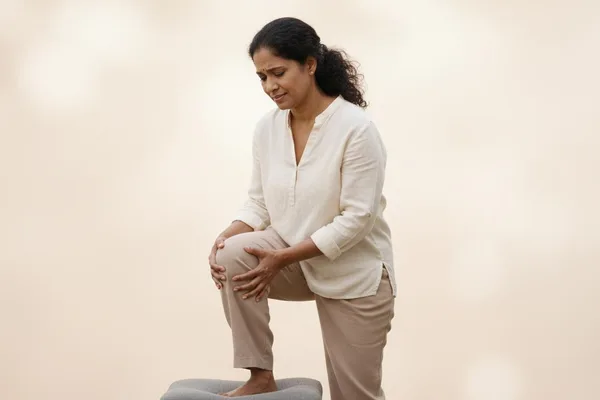
Do you suffer from knee pain? Let's learn about Knee Osteoarthritis!

Do you suffer from knee pain? Let's learn about Knee Osteoarthritis!

Do you think it's normal for your knees to hurt as you get older? Or do you hear a 'cracking' sound when you walk up a flight of stairs or get up after sitting for a while? This pain and stiffness could be a sign of osteoarthritis. Today, we'll talk briefly about this problem that many people have, namely, knee osteoarthritis .

What exactly is Knee Osteoarthritis?

Simply put, knee osteoarthritis is the breakdown of the protective covering called cartilage in your knee joint over time. Think of your knee joint as a shock absorber in a car. It is this cartilage that absorbs the pressure when we run, jump, and walk, helping the bones in the joint move smoothly without rubbing against each other.

Over time, the problem begins when this 'shock absorber', that is, the cartilage, wears down. When the cartilage wears down, the bones start to rub against each other. That's when symptoms like pain, swelling, and knee stiffness appear. This is not something that happens overnight, but a condition that develops gradually over time.

The important thing is that osteoarthritis is not a completely curable disease. But don't worry. There are many effective treatments and lifestyle changes that can help manage the symptoms and prevent the condition from getting worse.

Are there stages to this condition?

Yes, because this knee pain condition develops gradually, doctors divide it into several stages to explain its severity. This will help you understand your condition.

Stage Situation and feeling
1st stage (Minor) This is the beginning stage. The cartilage is just beginning to heal. You may not feel any pain.
Stage 2 (Mild) Now you are slowly starting to feel pain and stiffness in your knee, but the cartilage hasn't worn away enough for the bones to rub against each other yet.
Stage 3 (Moderate) By now, a significant amount of cartilage has worn away. The pain is more felt when running, walking, and bending the knee. The knee also feels stiffer when standing up after a long period of time.
Stage 4 (Severe) This is the worst case. The cartilage has almost completely worn away. The bones rub against each other, causing severe pain, stiffness, and difficulty moving. At this stage, the doctor may consider knee replacement surgery.

Do you also have these symptoms?

While pain is the main symptom of knee osteoarthritis, there are several other symptoms. See if these are familiar to you.

  • Knee pain : Pain can occur not only when applying weight or moving, but sometimes even when just sitting.
  • Knee stiffness: You may feel a tightness or inability to bend or straighten your knee, especially when you first get up in the morning or after standing for a long time.
  • Swelling: The knee looks swollen and bloated.
  • Crackling sound: When you bend or straighten your knees, you hear a crackling, gurgling sound from inside.
  • Instability: The knee feels lifeless, like it "gives out" when standing, meaning it bends without control.
  • Locking of the knee: When you try to move your knee, it suddenly feels like it is locked or stuck.

Things that can happen if you ignore this

If knee pain is ignored as if it's just a symptom, further complications can occur.

  • Joint instability: When you reduce the use of your knee due to pain, the surrounding musclesThis weakens the joint, making it more unstable, increasing the risk of walking problems and falls.
  • Bone spurs : Bones rub against each other, causing small bumps to form on the bones. These can cause increased pain and stiffness in the joint.
  • Baker's cyst: A fluid-filled sac (cyst) can develop behind the knee. This can cause pain and stiffness behind the knee.
  • Mood disorders: Constant pain and limitations such as inability to walk can cause some people to develop mood disorders such as anxiety and depression.

Why does this knee pain occur? What are the risk factors?

The main reason is that cartilage wears out naturally with age, just like the tires on a car wear out as we drive. But there are several other risk factors that can accelerate this wear and tear.

Risk Factor Explanation
Obesity If your body mass index (BMI) is over 30, your knees have to bear more weight, which causes the cartilage to wear out more quickly.
Old accidents A previous injury to the knee (e.g., a ligament tear) may have reduced joint stability and accelerated wear.
Excessive strain on the knee The risk is higher if certain jobs (e.g., heavy lifting) or sports (e.g., soccer, weightlifting) put excessive pressure on the knees.
Generation If someone in your family has this condition, you may be more likely to develop it.

How do you find this, Doctor?

When you go to see a doctor with knee pain, he will first ask you about your symptoms and then examine your knee.

  • Is the knee swollen, red, or painful to the touch?
  • How far you can bend and extend your knee (range of motion).
  • Is the joint unstable or loose?
  • Check the way you walk.

After this initial examination, an X-ray may be ordered to confirm the condition. An X-ray can clearly show whether the cartilage has worn away and is touching the bone, or if there are any bone spurs. Sometimes, an MRI or CT scan may be recommended if more details are needed.

What are the treatments for this?

Doctors usually resort to surgery as a last resort. There are many treatments that can be tried before that.

Nonsurgical treatments

  • Painkillers: The doctor will prescribe appropriate medications to control pain and swelling.
  • Physical therapy: Exercises are given to strengthen the muscles around the knee and to improve knee mobility. This is very important.
  • Losing weight: Losing a little weight can greatly reduce the pressure on your knees.
  • Knee brace: These help to provide support to the knee and increase stability.
  • Types of injections:
  • Cortisone injection: A type of steroid that is given to quickly reduce pain and swelling.
  • Gel injection (Viscosupplementation): A lubricant is injected into the joint, making movement easier.
  • PRP (Platelet-rich plasma) injection: Plasma extracted from your own blood is injected back into the joint to stimulate the healing process.

Surgical treatments

If other treatments are unsuccessful and the pain is unbearable, surgery may be considered.

  • Osteotomy: The bone in the knee is cut and reshaped to shift the body's weight to the healthy part of the joint.
  • Knee replacement: The worn out joint is removed and replaced with an artificial joint made of metal and plastic. This can be total or partial.

Can't you prevent your knees from getting worn out?

While this cannot be completely prevented, there are things you can do to reduce the risk and control the progression of the condition.

  • Maintain a healthy weight: This is the most important thing.Even losing 10% of your weight can significantly reduce your risk of knee osteoarthritis.
  • Exercise: Do low-impact exercises like swimming and cycling, which strengthen the muscles around the knee.
  • Reduce stress on your knees: If you run, choose soft surfaces like grass instead of hard pavement. If you do heavy lifting, use proper posture.
  • Seek treatment early: It's important to see your doctor as soon as you start experiencing knee pain, rather than ignoring it. The sooner you start treatment, the better your chances are of managing your symptoms and staying healthy without the need for surgery.

Take-Home Message

  • Knee osteoarthritis is the wear and tear of the protective cartilage covering of the joint.
  • Pain, knee stiffness, swelling, and a grinding sound are the main symptoms.
  • Excess weight, old accidents, and heredity are the main risk factors.
  • It is very important to control body weight and do knee-friendly exercises.
  • If you experience knee pain, do not ignore it and consult your doctor as soon as possible.

Knee Pain, Knee Osteoarthritis, Knee Pain, Joint Pain, Cartilage, Knee Swelling, Arthritis
⚠️ Important: The medical articles and information on Nirogi Lanka are for general awareness only, and are by no means a substitute for professional medical advice, diagnosis, or treatment. For any medical problem you have, consult a qualified physician immediately.

💬 Comments (0)

No comments have been posted yet. Add your comment here for the first time.

Add your comment

Please calculate: 7 + 9 =
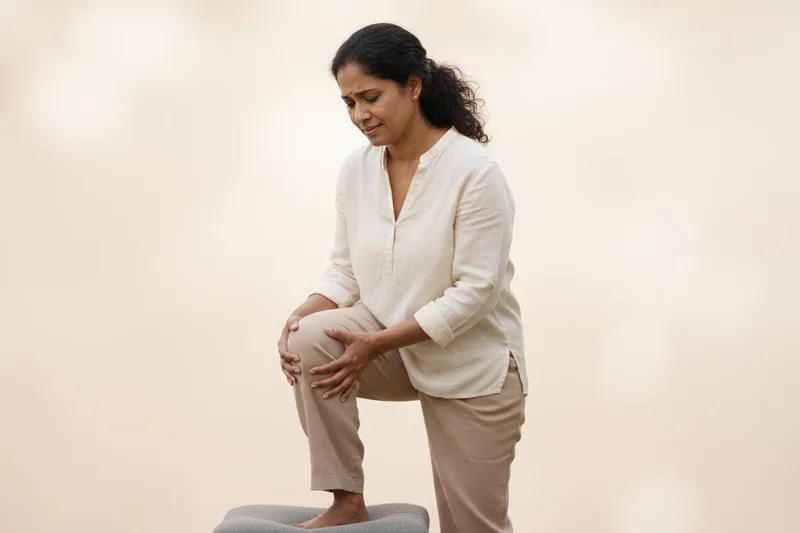
Do you suffer from knee pain? Let's learn about Knee Osteoarthritis!

Do you suffer from knee pain? Let's learn about Knee Osteoarthritis!

Do you think it's normal for your knees to hurt as you get older? Or do you hear a 'cracking' sound when you walk up a flight of stairs or get up after sitting for a while? This pain and stiffness could be a sign of osteoarthritis. Today, we'll talk briefly about this problem that many people have, namely, knee osteoarthritis .

What exactly is Knee Osteoarthritis?

Simply put, knee osteoarthritis is the breakdown of the protective covering called cartilage in your knee joint over time. Think of your knee joint as a shock absorber in a car. It is this cartilage that absorbs the pressure when we run, jump, and walk, helping the bones in the joint move smoothly without rubbing against each other.

Over time, the problem begins when this 'shock absorber', that is, the cartilage, wears down. When the cartilage wears down, the bones start to rub against each other. That's when symptoms like pain, swelling, and knee stiffness appear. This is not something that happens overnight, but a condition that develops gradually over time.

The important thing is that osteoarthritis is not a completely curable disease. But don't worry. There are many effective treatments and lifestyle changes that can help manage the symptoms and prevent the condition from getting worse.

Are there stages to this condition?

Yes, because this knee pain condition develops gradually, doctors divide it into several stages to explain its severity. This will help you understand your condition.

Stage Situation and feeling
1st stage (Minor) This is the beginning stage. The cartilage is just beginning to heal. You may not feel any pain.
Stage 2 (Mild) Now you are slowly starting to feel pain and stiffness in your knee, but the cartilage hasn't worn away enough for the bones to rub against each other yet.
Stage 3 (Moderate) By now, a significant amount of cartilage has worn away. The pain is more felt when running, walking, and bending the knee. The knee also feels stiffer when standing up after a long period of time.
Stage 4 (Severe) This is the worst case. The cartilage has almost completely worn away. The bones rub against each other, causing severe pain, stiffness, and difficulty moving. At this stage, the doctor may consider knee replacement surgery.

Do you also have these symptoms?

While pain is the main symptom of knee osteoarthritis, there are several other symptoms. See if these are familiar to you.

  • Knee pain : Pain can occur not only when applying weight or moving, but sometimes even when just sitting.
  • Knee stiffness: You may feel a tightness or inability to bend or straighten your knee, especially when you first get up in the morning or after standing for a long time.
  • Swelling: The knee looks swollen and bloated.
  • Crackling sound: When you bend or straighten your knees, you hear a crackling, gurgling sound from inside.
  • Instability: The knee feels lifeless, like it "gives out" when standing, meaning it bends without control.
  • Locking of the knee: When you try to move your knee, it suddenly feels like it is locked or stuck.

Things that can happen if you ignore this

If knee pain is ignored as if it's just a symptom, further complications can occur.

  • Joint instability: When you reduce the use of your knee due to pain, the surrounding musclesThis weakens the joint, making it more unstable, increasing the risk of walking problems and falls.
  • Bone spurs : Bones rub against each other, causing small bumps to form on the bones. These can cause increased pain and stiffness in the joint.
  • Baker's cyst: A fluid-filled sac (cyst) can develop behind the knee. This can cause pain and stiffness behind the knee.
  • Mood disorders: Constant pain and limitations such as inability to walk can cause some people to develop mood disorders such as anxiety and depression.

Why does this knee pain occur? What are the risk factors?

The main reason is that cartilage wears out naturally with age, just like the tires on a car wear out as we drive. But there are several other risk factors that can accelerate this wear and tear.

Risk Factor Explanation
Obesity If your body mass index (BMI) is over 30, your knees have to bear more weight, which causes the cartilage to wear out more quickly.
Old accidents A previous injury to the knee (e.g., a ligament tear) may have reduced joint stability and accelerated wear.
Excessive strain on the knee The risk is higher if certain jobs (e.g., heavy lifting) or sports (e.g., soccer, weightlifting) put excessive pressure on the knees.
Generation If someone in your family has this condition, you may be more likely to develop it.

How do you find this, Doctor?

When you go to see a doctor with knee pain, he will first ask you about your symptoms and then examine your knee.

  • Is the knee swollen, red, or painful to the touch?
  • How far you can bend and extend your knee (range of motion).
  • Is the joint unstable or loose?
  • Check the way you walk.

After this initial examination, an X-ray may be ordered to confirm the condition. An X-ray can clearly show whether the cartilage has worn away and is touching the bone, or if there are any bone spurs. Sometimes, an MRI or CT scan may be recommended if more details are needed.

What are the treatments for this?

Doctors usually resort to surgery as a last resort. There are many treatments that can be tried before that.

Nonsurgical treatments

  • Painkillers: The doctor will prescribe appropriate medications to control pain and swelling.
  • Physical therapy: Exercises are given to strengthen the muscles around the knee and to improve knee mobility. This is very important.
  • Losing weight: Losing a little weight can greatly reduce the pressure on your knees.
  • Knee brace: These help to provide support to the knee and increase stability.
  • Types of injections:
  • Cortisone injection: A type of steroid that is given to quickly reduce pain and swelling.
  • Gel injection (Viscosupplementation): A lubricant is injected into the joint, making movement easier.
  • PRP (Platelet-rich plasma) injection: Plasma extracted from your own blood is injected back into the joint to stimulate the healing process.

Surgical treatments

If other treatments are unsuccessful and the pain is unbearable, surgery may be considered.

  • Osteotomy: The bone in the knee is cut and reshaped to shift the body's weight to the healthy part of the joint.
  • Knee replacement: The worn out joint is removed and replaced with an artificial joint made of metal and plastic. This can be total or partial.

Can't you prevent your knees from getting worn out?

While this cannot be completely prevented, there are things you can do to reduce the risk and control the progression of the condition.

  • Maintain a healthy weight: This is the most important thing.Even losing 10% of your weight can significantly reduce your risk of knee osteoarthritis.
  • Exercise: Do low-impact exercises like swimming and cycling, which strengthen the muscles around the knee.
  • Reduce stress on your knees: If you run, choose soft surfaces like grass instead of hard pavement. If you do heavy lifting, use proper posture.
  • Seek treatment early: It's important to see your doctor as soon as you start experiencing knee pain, rather than ignoring it. The sooner you start treatment, the better your chances are of managing your symptoms and staying healthy without the need for surgery.

Take-Home Message

  • Knee osteoarthritis is the wear and tear of the protective cartilage covering of the joint.
  • Pain, knee stiffness, swelling, and a grinding sound are the main symptoms.
  • Excess weight, old accidents, and heredity are the main risk factors.
  • It is very important to control body weight and do knee-friendly exercises.
  • If you experience knee pain, do not ignore it and consult your doctor as soon as possible.

Knee Pain, Knee Osteoarthritis, Knee Pain, Joint Pain, Cartilage, Knee Swelling, Arthritis
⚠️ Important: The medical articles and information on Nirogi Lanka are for general awareness only, and are by no means a substitute for professional medical advice, diagnosis, or treatment. For any medical problem you have, consult a qualified physician immediately.

💬 Comments (0)

No comments have been posted yet. Add your comment here for the first time.

Add your comment

Please calculate: 7 + 9 =