
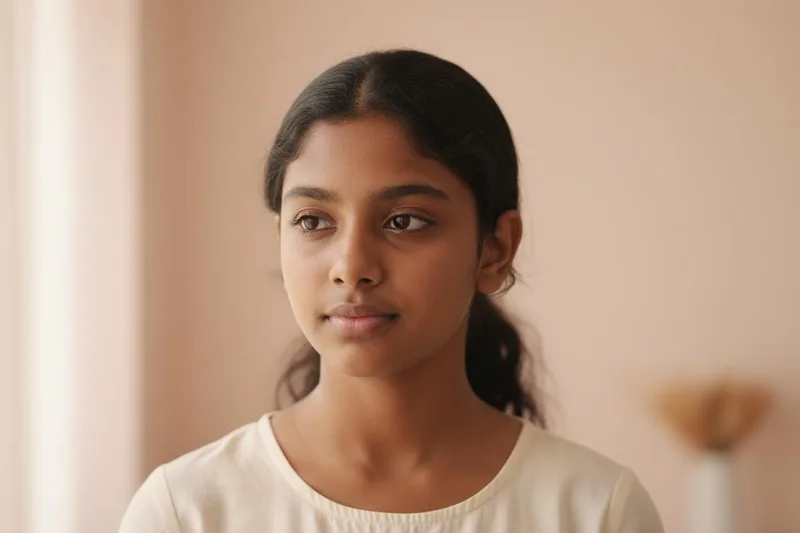
Why don't these changes happen to everyone at the same time?
This is the most important thing. Not everyone is the same. Think about it, even if you plant the same type of flower in the same garden, some will bloom beautifully before others, and some will bloom a little later. But in the end, all plants will bloom, right? That's how we are. Everyone's body structure and the time of the clock inside their body are a little different. Therefore, the time when you reach ``Puberty`` may be earlier or later than your friend. This is very normal. Most of the time, these are the things that you talk about between yourself at this age. If you are a boy, you may feel sad and say, "Oh, his voice has changed, his beard has barely grown, and I still sound like a child." If you are a girl, you may feel sad and ashamed, "Oh, everyone else's breasts have grown, why am I the only one so late?" But this is really not a matter of worry or shame . Remember that everyone's body clock works a little differently.Puberty in Girls
When a girl goes through puberty, the first and biggest change she notices is breast development. Let's look at that first.When does breast development begin?
Typically, most girls start to develop breasts around the age of 10 or 11. This means they start to feel like a small lump in the chest area, which gradually gets bigger. But this doesn't happen at the same age for everyone. Some girls can start this change as young as 7 years old. For others, it can be as late as 13 years old. It's perfectly normal for breasts to start developing at any time within these two age ranges.So don't worry about your best friend developing breasts before you, okay? Her body clock is probably a little faster than yours. That's all.
First Menstrual Period
Another important event in a girl's life is her first menstrual period. We usually call this "getting her period." So, this period (Menstrual Period) usually begins about 2 or 2 1/2 years after the breasts start to develop.There is no rule that this has to happen at the exact same time. For some people, it may be a little earlier, for some it may be a little later. This too varies from person to person, and is very normal. There are many other changes that occur in the body during this time. Things like the hip area widening, and maybe acne starting to appear.Puberty in Boys
Okay, now let's look at what happens to boys. The average age for boys to start experiencing these changes is around 10 or 11 years old . But to be precise, it's perfectly normal for these signs of puberty to start anytime between the ages of 9 and 15. So what are these changes?- Hoarseness of voice : The soft, thin voice of childhood changes, and a slightly deeper, hoarse, masculine voice begins to emerge. Sometimes the voice may suddenly go higher and lower, which is also normal during this time.
- Beard and body hair growth: The mustache starts to grow first, followed by the underarms. Hair also starts to grow in the armpits, chest, and private areas (around the genitals).
- Growth of the sexual organs : The testicles and penis grow in size. This is also an important sign of puberty.
- Muscle growth and height gain: The muscles in the body become a little bigger, stronger, the shoulders become broader, and a masculine appearance is achieved. Also, during this time, the height suddenly starts to increase.
Is there no way to get bigger "faster"?
I know this is a problem that many of you have. You may be thinking, "Oh, isn't there a cure to grow up faster, to be like everyone else?" But the truth is, there is nothing you can do to speed up these natural changes in your body. Eating a well-balanced diet, exercising daily, and getting a good night's sleep are all good for your overall health. You should definitely do those things. But none of those things will speed up the natural process of puberty.Special foods (e.g., some people say 'if you eat this, you will grow a beard quickly'), individual vitamins (Dietary Supplements), and special body lotions.Creams can never speed up this natural process. It's really a waste to spend money on such things.Your body will begin these changes in its own time, at its own pace. Trust it. Allow it.
When should we see a doctor?
We've just talked about the age ranges at which these changes usually start. Most of the time, if you're within these normal ranges, there's nothing to worry about. But sometimes you might feel a little suspicious, like, "Why is it so late for me?" At such times, it's a good idea to see a doctor and get advice. In such a case, you should definitely see a doctor and talk about your situation:- If you are a girl, you are 13 years old and your breasts have not yet started to develop, or you have not yet had your first menstrual period .
- If you are a boy, if you are 15 years old and still do not show any signs of puberty (for example, a change in voice, the growth of a beard or hair, or the development of sexual organs).
- Even if you are younger than these ages, if you have great fear, anxiety, and doubt about these changes in your body, that is, if you constantly feel like "I don't know if there is something wrong with me."
The most important things you need to remember
Okay, so let's finally remind you of some of the most important things you need to take away from what we've talked about. These are your "Take-Home Message."- Everyone is different, and you are special: It's normal for your friends and you to have differences in these body changes. There's nothing strange or wrong with someone being a big kid earlier and someone being a little older. You're great just the way you are.
- This is not a competition: don't make life a competition of who grows up first, who grows a beard first, who gets their period first. Everyone has their own unique journey in their body, let that journey take its course.
- Patience is the best medicine: It takes time for these big changes in your body to settle in. It doesn't happen overnight. So you have to be patient.
- It's important to stay healthy: eat a good, nutritious diet, get some exercise during the day, and get a good night's sleep. These things will help your overall health and help these changes happen.
- Don't panic, ask for help:If you have a problem, a question, or a doubt, don't keep it bottled up inside. Don't be afraid to talk about it with an adult you trust (a mother, father, teacher, older brother, sister) or even a doctor. That will be a huge help to you.
Ultimately, your body loves you. Give it the time it needs to make those changes. You are worth it just the way you are, and you are amazing!
Puberty, body changes, girls, boys, growth, youth


💬 Comments (0)
No comments have been posted yet. Add your comment here for the first time.
Add your comment